
Most cosmetic quality problems are easier to prevent than to repair after shipment. A leaking bottle, weak pump, shade variation, unstable texture, incorrect label, or crushed carton can damage buyer confidence even when the formula idea is strong. For B2B beauty brands, quality planning must start before sampling and continue through bulk production.
This article explains common cosmetic quality problems and how factories prevent them in OEM/ODM, private label skincare, custom formulation, packaging sourcing, and export projects. Mooyam Cosmetic works with brands, wholesalers, distributors, Amazon sellers, and DTC buyers; we do not accept retail orders.
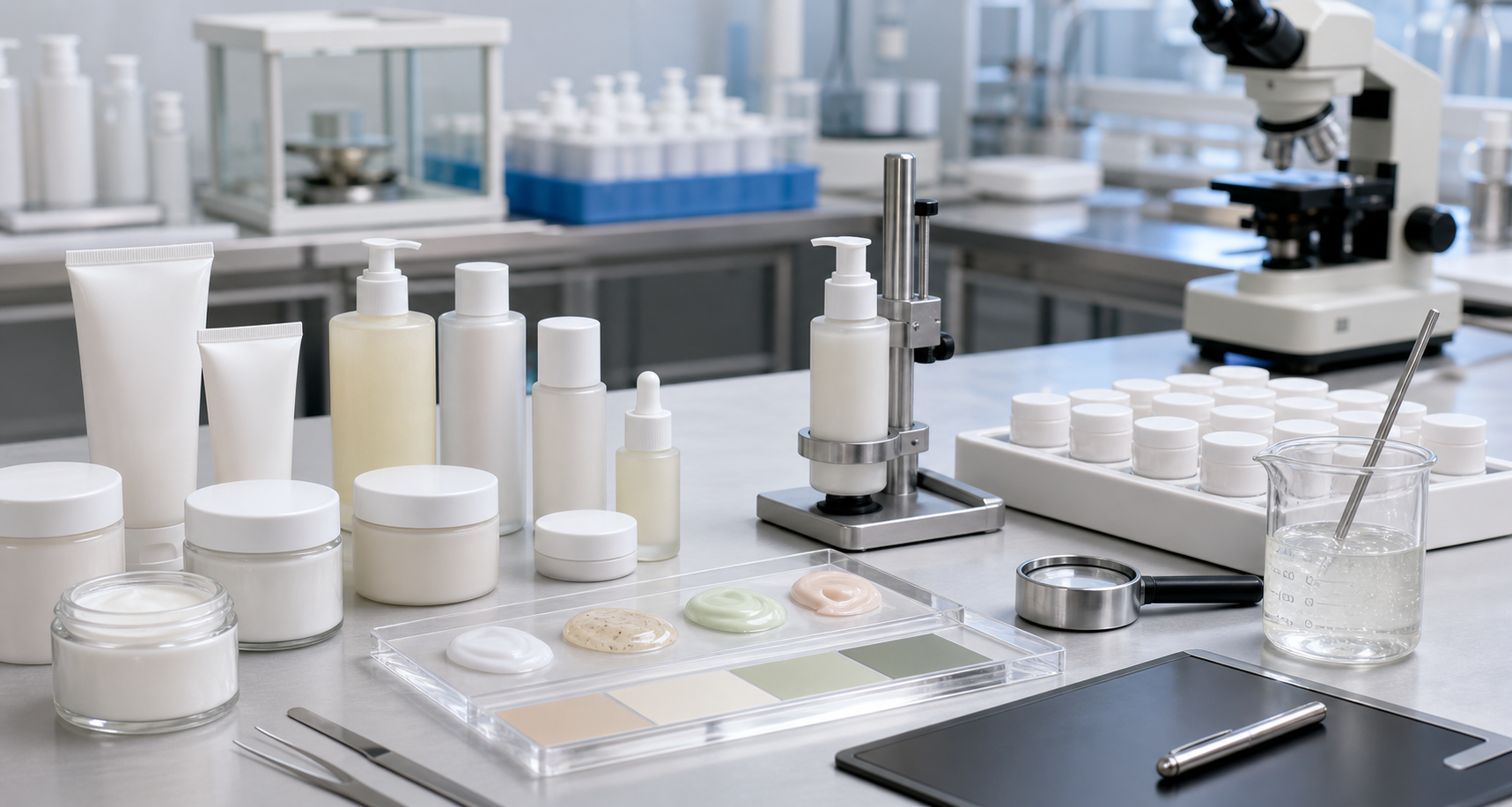
- Common cosmetic quality problems often come from unclear specifications, weak sample approval, formula-packaging mismatch, unstable components, or rushed production decisions.
- Factories prevent problems through raw material control, packaging inspection, compatibility review, controlled filling, retained samples, batch records, and final inspection.
- Buyers should define acceptable standards for appearance, odor, texture, fill weight, label position, leakage, carton condition, and claim wording.
- Compliance and labeling requirements vary by target market, so brands and importers should confirm local rules before sale.
- Mooyam Cosmetic supports practical OEM/ODM project planning from sample development to bulk production and export support.
Why Quality Problems Happen in Cosmetic Manufacturing
Cosmetic products combine formula, packaging, artwork, filling equipment, storage conditions, transport, and market expectations. A small change in one part can affect the whole project. A rich cream may not work with a narrow pump. A serum may look different in clear glass than in a lab beaker. A label may lift if the bottle surface is curved or oily. A carton may look premium but fail during export handling.
Quality problems also happen when buyers and suppliers use different definitions. One buyer may see a tiny scratch as unacceptable for a premium retail channel. Another buyer may focus mainly on function and carton count. A professional cosmetic OEM manufacturer or cosmetic ODM manufacturer should help turn expectations into written specifications before bulk production begins.
Common Cosmetic Quality Problems and Prevention
| Quality Problem | Typical Cause | Factory Prevention Method |
|---|---|---|
| Color, odor, or texture variation | Raw material variation, unstable formula, poor batch control, or unclear approved sample. | Formula records, approved standard sample, controlled mixing, appearance checks, and retained samples. |
| Leakage or weak sealing | Poor closure match, cap torque issue, tube seal weakness, pump mismatch, or transport stress. | Packaging compatibility review, torque checks, seal checks, leakage review, and carton testing when needed. |
| Label or printing defects | Artwork error, surface mismatch, wrong material, poor alignment, or insufficient component inspection. | Artwork approval, incoming packaging inspection, line setup checks, and random finished-goods review. |
| Fill weight inconsistency | Incorrect line setup, viscosity change, equipment drift, or weak in-process checks. | Defined fill tolerance, scheduled weight checks, line adjustment records, and final sampling. |
| Carton damage or wrong packing | Weak carton, unclear assortment plan, poor packing method, or export handling risk. | Carton specification, packing instruction, count verification, shipping mark review, and export support. |
Formula-Related Problems
Formula-related issues may include separation, color shift, odor change, viscosity drift, graininess, air bubbles, poor spreadability, or mismatch with the approved sample. These issues can be caused by raw material variation, incomplete compatibility review, inadequate process control, or unrealistic benchmark expectations. They can also appear when a buyer changes fragrance, active direction, or packaging late in the process.
Factories prevent formula problems by controlling raw materials, recording batch steps, checking bulk appearance, keeping retained samples, and recommending stability or compatibility review where appropriate. For custom formulation, the buyer should approve a final sample that reflects the intended packaging, fragrance, texture, and claim direction. For private label skincare, any modification should be documented so the production standard is clear.
Packaging-Related Problems
Packaging creates many of the most visible quality problems. Bottles can scratch, caps can loosen, pumps can fail, tubes can leak, jars can warp, labels can peel, and cartons can collapse. The cause is not always poor manufacturing. Sometimes the issue is formula-packaging mismatch, decoration method, shipping stress, or a component selected mainly for appearance without enough functional review.
Prevention starts with packaging sourcing that considers formula viscosity, fill size, decoration, carton strength, MOQ, cost, and sales channel. If a product will sell through Amazon, distributors, salons, spas, or cross-border ecommerce, the packaging must survive handling as well as look attractive. Buyers should test samples with the final or near-final component before artwork approval.
Production and Filling Problems
During production, problems can appear as inconsistent fill weight, label shift, incorrect coding, cap torque variation, scuffed boxes, mixed components, or wrong carton count. These problems are usually prevented through line setup checks, in-process inspection, clear packing instructions, and trained operators. A good factory does not wait until the end of production to discover repeat defects.
Buyers can help by providing a clear purchase order, approved artwork, carton mark requirements, SKU list, shipment plan, and any channel-specific requirements. If a brand has multiple SKUs, the supplier should control component separation and production sequence carefully to avoid mix-ups.
Claim, Labeling, and Market-Fit Problems
Quality is not only physical. Incorrect claim wording, missing importer information, unsuitable ingredient copy, or unsupported performance language can create commercial risk. Cosmetic claims and labeling requirements vary by target market. A manufacturer can support formula information, ingredient lists, packaging details, and quality records, but the brand or importer should confirm market-specific rules before sale.
Practical prevention means discussing claim direction during sample development, not after labels are printed. Cosmetic-friendly wording should match formula support and avoid medical-style promises, guaranteed results, or unverified certification claims.
Buyer Checklist to Reduce Quality Risk
- Prepare a product brief with target market, sales channel, texture, packaging direction, MOQ, price range, and launch timeline.
- Confirm whether the project is stock private label, modified ODM, or full custom formulation.
- Approve one final sample as the standard for appearance, odor, texture, packaging, and use experience.
- Ask how raw materials, packaging components, bulk formula, filling, labels, cartons, and retained samples will be controlled.
- Define acceptable and unacceptable defects before mass production.
- Review packaging with the real formula, especially pumps, tubes, droppers, airless bottles, jars, and carton structure.
- Keep claim wording within cosmetic scope and confirm target-market requirements with the responsible importer or compliance advisor.
- Request clear records for batch number, production date, sample approval, inspection, and shipment packing.
How Mooyam Cosmetic Helps Prevent Quality Problems
Mooyam Cosmetic provides cosmetic OEM/ODM manufacturing service for B2B beauty projects, including product brief review, sample development, low MOQ discussion, bulk production, and export support. Buyers who need a faster launch route can review private label skincare manufacturing, while brands seeking a unique product direction can discuss custom formulation development.
For execution, our team can support cosmetic packaging sourcing and customization, formula-packaging matching, production planning, filling checks, and retained sample management. Buyers can also review quality control and compliance considerations before approving labels, claims, and bulk production standards.
FAQ
What is the most common cosmetic quality problem?
Packaging-related issues are very common because they are visible and affect user experience. Leakage, pump failure, label defects, scratches, and carton damage can often be reduced through better component review and inspection.
Can custom formulation increase quality risk?
Custom formulation adds development steps, so it needs careful sample approval, compatibility review, and production records. It can still be controlled well when specifications and testing expectations are clear.
Does low MOQ mean lower quality?
No. Low MOQ affects cost, component options, and production planning, but quality control can still include practical checks for formula, packaging, filling, labels, and cartons.
How can buyers avoid formula and packaging mismatch?
Test the approved formula with the intended packaging before final approval. Pumps, droppers, tubes, airless bottles, jars, and labels should be reviewed with the real product, not only empty samples.
Are cosmetic factories responsible for compliance?
Factories can provide formula information, production records, labels for review, and quality support. Market-specific compliance responsibilities vary, so brands and importers should confirm local requirements before sale.
What should be included in a defect standard?
A useful defect standard covers appearance, odor, texture, fill weight, leakage, cap or pump function, label position, printing, carton packing, batch coding, and critical defects that block shipment.
Does Mooyam Cosmetic accept retail purchases?
No. Mooyam Cosmetic supports B2B brand, distributor, wholesale, private label, and OEM/ODM manufacturing projects only.
Reduce Quality Risk Before Bulk Production
Looking for a reliable cosmetic OEM/ODM manufacturer? Contact Mooyam Cosmetic to discuss your product idea, formula route, packaging options, MOQ, sample development, bulk production, quality control, and export support.