
Formula stability is one of the most important checkpoints in cosmetic manufacturing because it shows whether a product can keep an acceptable appearance, texture, odor and package fit before it reaches customers. A formula that looks beautiful on day one can still separate, thin out, discolor, change smell or clog a pump after heat, cold or transport stress.
This guide explains how overseas brands can manage cosmetic formula stability with a cosmetic OEM manufacturer or cosmetic ODM manufacturer. It is written for private label skincare buyers, custom formulation projects, Amazon sellers, DTC brands, distributors and purchasing teams planning bulk production. Mooyam Cosmetic supports B2B OEM/ODM projects and does not accept retail orders.
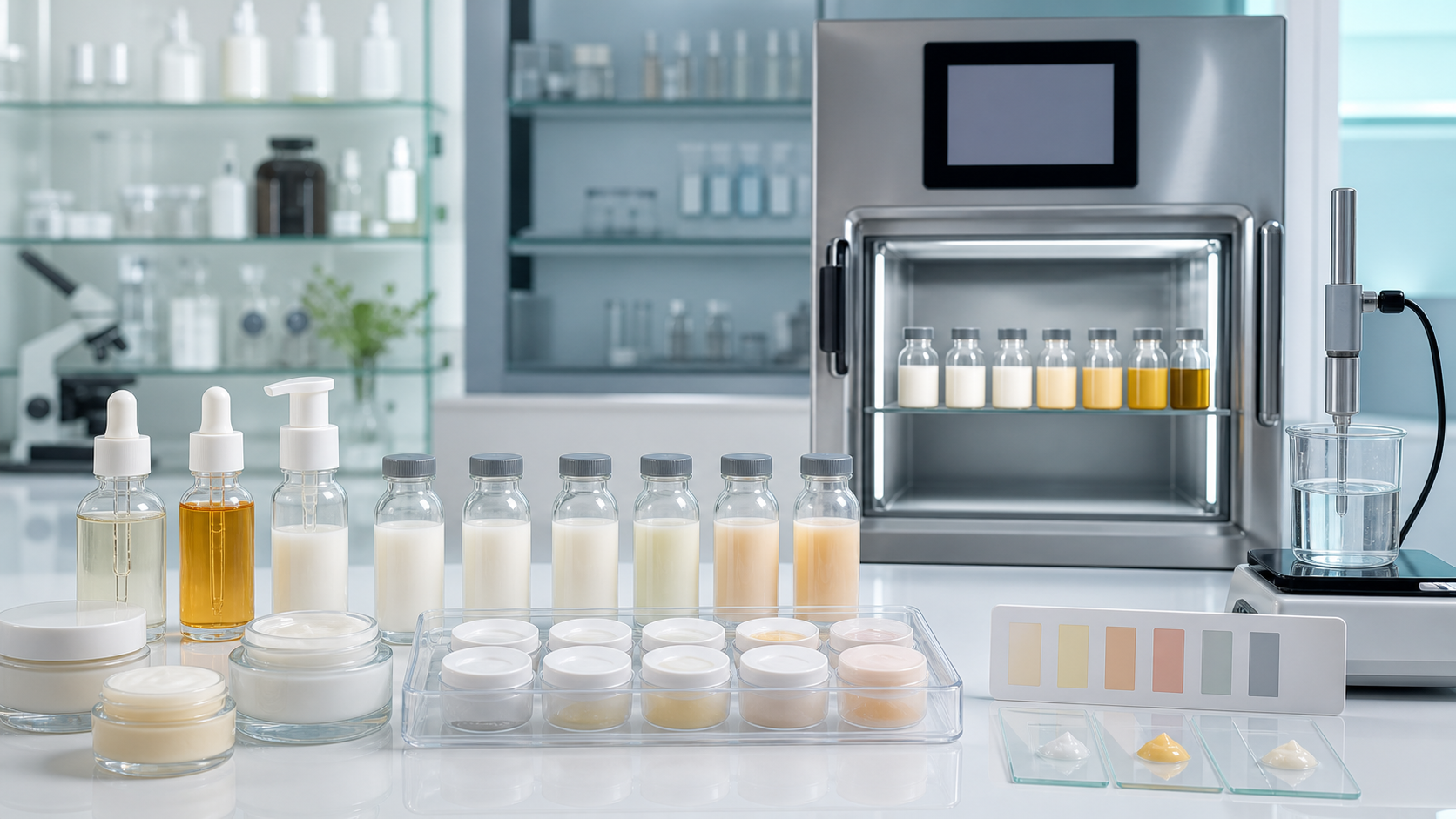
Quick Summary
- Formula stability checks how a cosmetic product behaves over time, temperature change and packaging contact.
- Common observations include separation, color shift, odor change, viscosity drift, crystal formation, microbial risk and package performance.
- Stability planning should happen before final packaging and bulk production approval.
- The right test plan depends on product type, claims, target market, distribution channel and launch timeline.
What Formula Stability Means for Beauty Brands
Formula stability does not mean a product is frozen in time. It means the product remains within an acceptable specification during reasonable storage and use conditions. A serum should not separate into layers, a cream should not become watery or grainy, a cleanser should not lose its expected viscosity, and a balm should not sweat oil or become too hard for normal use.
For a brand, stability is a business issue. Unstable products can lead to customer complaints, returns, delayed launches, damaged distributor relationships and rework costs. Stability problems are also harder to solve after packaging and artwork have been approved because the formula, component, decoration and carton may all be connected.
Mooyam Cosmetic approaches stability as part of the full OEM/ODM service workflow: product brief, sample development, packaging sourcing, quality control, bulk production and export support should all point toward a manufacturable product.
Main Causes of Formula Stability Problems
Most stability issues come from a mismatch between formula design, ingredient system, package choice and storage condition. A lightweight lotion may need a stronger emulsifier system. A high-active serum may need better pH control or packaging protection. A natural oil blend may need oxidation management. A product with suspended particles may need viscosity and density work so the particles do not sink or float unevenly.
Packaging can also create instability. Some formulas interact with pumps, liners, tubes, droppers, coatings or decoration. A formula may be stable in a glass lab jar but unstable in the final tube. That is why packaging selection should be tested with the actual formula instead of treated as a late design decision.
| Stability Risk | Typical Signal | Buyer Action |
|---|---|---|
| Emulsion instability | Separation, creaming, water release or grainy texture | Request formula adjustment and retest before final approval. |
| Viscosity drift | Formula becomes too thin, too thick or hard to fill | Confirm viscosity target, filling method and package match. |
| Color or odor change | Yellowing, fading, rancid odor or fragrance shift | Review ingredient sensitivity, antioxidant route and package protection. |
| Package incompatibility | Leaking, swelling, clogged pump, stained label or cap failure | Test the final component with filled samples under stress conditions. |
| Microbial risk | Unexpected growth risk in water-containing products | Review preservation system and relevant microbial testing needs. |
Stability Test Conditions to Discuss
Different factories and markets may use different conditions, but the common logic is to expose samples to scenarios that reveal weakness faster than normal storage. Elevated temperature can show separation, odor shift or packaging deformation. Low temperature can reveal crystallization or texture change. Freeze-thaw cycles can stress emulsions. Room temperature observation helps compare normal aging. Light exposure may matter for formulas with sensitive color or active ingredients.
Buyers should not assume every project needs the longest and most expensive test package. A simple private label cleanser may need a different plan from a custom high-active serum or a sunscreen-adjacent product. The important point is to agree on the test plan before launch timing is fixed.
How to Build Stability into Development
Stability should not be treated as a final box to check. It should influence the brief, benchmark discussion, sample approval, package choice and production specification. When a brand asks for a very light texture, strong fragrance, high level of botanical extracts, unusual packaging or aggressive claim language, the stability risk may increase.
During custom formulation, buyers should share the target market, storage expectations, shipment route, sales channel, desired claims and benchmark products. This helps the manufacturer select a realistic formula system and avoids unnecessary sampling cycles.
| Stage | Stability Question | Practical Output |
|---|---|---|
| Brief | What product type, claims, market and package are planned? | Initial risk review and sample direction. |
| Lab sample | Does texture, pH, viscosity, color and odor match the target? | Reference sample and early observations. |
| Package match | Does the formula work in the actual bottle, jar, tube, pump or dropper? | Compatibility checks and packaging confirmation. |
| Pre-production | Are specifications, artwork and acceptance criteria clear? | Approved standard for bulk production QC. |
| Production | Does the batch match the approved reference and records? | Batch inspection, filling review and shipment preparation. |
Low MOQ Projects Still Need Stability Planning
Some startups believe stability work is only for large orders, but low MOQ products still reach real customers. The difference is that the test plan should be proportionate. A practical low MOQ route may use an existing base formula, verified packaging and focused checks instead of an experimental formula and custom component at the same time.
For private label skincare, stability history of the base formula can shorten development, but the brand should still test the final fragrance, color, packaging and decoration. For a fully custom formula, the timeline may need more sampling and observation before mass production.
Buyer Checklist for Formula Stability
- Confirm whether the project is private label, semi-custom or full custom formulation.
- Share target market, sales channel, shipping route and expected storage conditions.
- Approve texture, pH, viscosity, color and odor standards before production.
- Test the actual final packaging, not only temporary lab containers.
- Ask what conditions are used for heat, cold, freeze-thaw and room temperature observation.
- Separate routine factory checks from third-party or claim-related testing.
- Keep enough approved reference samples for future reorder comparison.
- Build stability time into the launch calendar instead of compressing it at the end.
Quality Control and Compliance Notes
Formula stability is connected to quality control, but it is not the only requirement. A project may also need microbial review, filling checks, label review, batch coding, packaging inspection and documentation based on the target market. Claims such as hypoallergenic, dermatologist tested, clean, natural, acne-safe or sensitive skin friendly may require extra review or evidence depending on where the product is sold.
Mooyam Cosmetic can support quality control and compliance planning for manufacturing projects, but final regulatory requirements vary by market. Buyers should avoid medical claims, guaranteed outcomes and unsupported certification statements unless they have the correct documentation.
FAQ
What is cosmetic formula stability?
It is the ability of a formula to remain within acceptable appearance, odor, texture, viscosity, pH and packaging performance limits during expected storage, shipping and use.
How long does stability testing take?
Timing depends on formula type, test conditions and buyer requirements. Some checks can be observed during sampling, while extended stability work may require more time before launch.
Can packaging affect formula stability?
Yes. Pumps, tubes, jars, droppers, liners, coatings and labels can interact with the formula or fail under heat and transport stress. Final packaging should be tested with the actual product.
Is an existing private label formula already stable?
An existing base may have useful stability history, but changes to fragrance, color, active direction, packaging or market claims can still require review.
What should buyers send before requesting stability guidance?
Send the product type, benchmark sample, target texture, ingredient preferences, packaging idea, destination market, MOQ expectation, price range and launch schedule.
Does Mooyam Cosmetic accept retail orders?
No. Mooyam Cosmetic works with beauty brands, distributors, Amazon sellers, DTC brands and wholesale buyers on OEM/ODM manufacturing projects. We do not accept retail orders.
Plan a Stable OEM/ODM Skincare Product
If your brand is developing a serum, cream, cleanser, toner, mask or balm, Mooyam Cosmetic can help align formula route, sample development, packaging sourcing, quality control and bulk production. Contact us with your product brief, target market, packaging preference and MOQ expectation so we can review the next development step.