Product quality is one of the main reasons overseas beauty brands stay with a cosmetic manufacturer after the first order. A formula may look attractive in a sample, but the real test is whether every batch can match the approved standard, fill correctly, ship safely, and support the brand’s target market responsibilities.
This guide explains how cosmetic manufacturers control product quality from raw materials to finished goods. It is written for skincare startups, Amazon and DTC sellers, distributors, private label buyers, and sourcing managers comparing a cosmetic OEM manufacturer or cosmetic ODM manufacturer for brand and wholesale projects. Mooyam Cosmetic supports OEM/ODM manufacturing projects; we do not accept retail orders.
Quick Summary
- Cosmetic quality control starts before production, with supplier review, raw material checks, packaging confirmation, and an approved sample standard.
- Important controls include formula appearance, odor, color, pH when relevant, viscosity, fill weight, packaging function, leakage, labels, cartons, and retained samples.
- Private label skincare and custom formulation projects need different QC plans because formula route, packaging sourcing, MOQ, and claims vary.
- Mooyam Cosmetic helps buyers align sample development, bulk production, quality control, documentation, and export support for OEM/ODM projects.
Why Quality Control Matters in Cosmetic Manufacturing
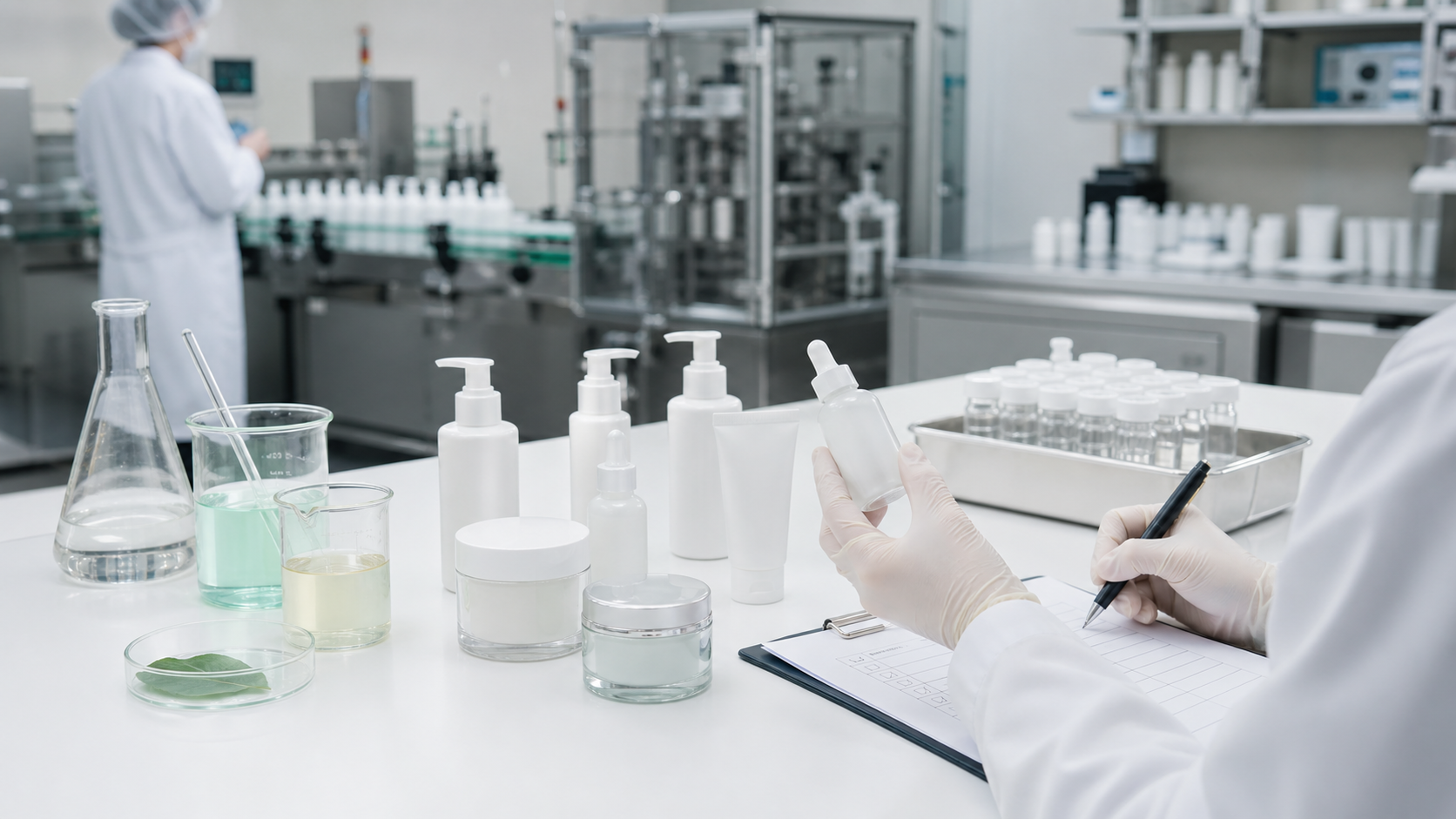
Quality control is not only a final inspection at the end of filling. In cosmetic manufacturing, quality is built through many small decisions: which raw materials are approved, how formulas are weighed, how mixing parameters are recorded, which packaging is compatible, how filling weight is checked, and how nonconforming goods are handled.
For international buyers, weak QC can create expensive problems. A serum may separate during transport. A pump may fail after a few uses. A label may peel in humid storage. A shade may look different from the approved sample. A carton may be too weak for export handling. These problems can damage customer trust, marketplace ratings, distributor relationships, and reorder plans.
A reliable cosmetic OEM/ODM manufacturing partner should explain the control points before the purchase order, not only after a problem appears. Buyers should ask how the factory defines the approved standard and how that standard is protected during bulk production.
Quality Begins With a Clear Product Standard
The approved sample is the foundation of quality control, but it should not stand alone. The factory and buyer should record the product name, formula route, target fill volume, packaging type, fragrance, color, texture, claims direction, artwork version, carton details, and destination market. For custom formulation, the specification may also include pH range, viscosity range, appearance, odor, color, and other product-specific requirements.
This standard helps both sides avoid subjective decisions. Instead of saying a product feels a little different, the team can compare the batch against agreed parameters and the retained sample. Requirements vary by product type and target market, so compliance responsibilities should be discussed early and reviewed with qualified support where needed.
Main QC Stages From Material to Shipment
| QC Stage | What Is Checked | Why It Matters for Buyers |
|---|---|---|
| Raw material control | Supplier documents, appearance, batch identity, storage condition, release status | Helps prevent wrong materials, expired inputs, or inconsistent raw material quality |
| Packaging inspection | Bottle, jar, tube, pump, cap, label, carton, decoration, cleanliness, quantity | Reduces leakage, poor appearance, weak dispensing, and carton damage risk |
| In-process checks | Weighing, mixing, temperature, batch record, color, odor, viscosity, pH when relevant | Keeps the bulk batch close to the approved formula and process standard |
| Filling and assembly | Fill weight, sealing, capping, pump function, label position, batch code, unit appearance | Protects sellable inventory and customer experience after launch |
| Finished goods review | Final appearance, packaging function, carton packing, retained samples, release record | Confirms that goods are ready for shipment and future traceability |
Raw Material and Formula Control
Raw material control is a basic but critical step. A professional factory should receive materials under a defined process, check supplier information, confirm batch numbers, store materials properly, and release them before production use. Some materials may need additional testing depending on product type and quality plan.
During production, formula control depends on accurate weighing, clear batch records, controlled mixing, and trained operators. A small weighing error can affect viscosity, fragrance strength, color, or preservation balance. For custom formulation projects, the factory should protect the approved formula route while allowing controlled revisions during sample development.
Buyers do not need to manage every technical detail, but they should understand how the factory prevents uncontrolled changes. If a raw material must be substituted, the buyer should be informed when the change affects formula, cost, claim direction, documentation, or target market review.
Packaging Quality and Compatibility
Packaging is often where cosmetic projects fail. A formula may be stable in a lab bottle but leak in the final pump. A thick cream may not dispense from an airless bottle. A tube may seal poorly. A transparent bottle may expose color change more visibly. These risks are why packaging sourcing and formula review should happen together.
Useful packaging checks include component appearance, color consistency, scratches, cap fit, pump output, dropper pickup, tube sealing, label adhesion, printing position, carton strength, barcode area, and export carton protection. For low MOQ launches, standard packaging can reduce risk because components may already have a clearer production history. Custom packaging can create stronger brand identity, but it usually needs more sampling, compatibility review, and lead time.
Sample Approval Before Bulk Production
Sample development should end with a written approval, not only a chat message. The buyer should confirm the final sample version, packaging direction, fragrance, color, texture, fill volume, artwork, carton, and any special requirements. This approval becomes the reference for bulk production.
For private label skincare, approval may be faster because the formula route already exists. For a custom formulation, the sample stage may include several revisions for sensory profile, viscosity, fragrance, active direction, or packaging fit. Mooyam Cosmetic supports private label skincare development and custom projects with a practical approval flow so buyers can avoid changing key decisions after production starts.
Buyer Checklist for Quality Control
- Ask what specification will be used for the approved sample and bulk batch.
- Confirm which raw material, formula, packaging, filling, and finished goods checks apply to your product.
- Review whether packaging will be tested with the actual formula, not only a substitute liquid.
- Approve artwork, label position, carton structure, barcode space, and batch coding before production.
- Clarify whether retained samples will be kept for future comparison and traceability.
- Discuss documentation needs for your importer, distributor, marketplace, or target market.
- Do not rely on universal compliance promises; requirements vary by market and product category.
- Confirm how quality issues, defects, rework, replacement, or claims will be handled in writing.
How Mooyam Cosmetic Supports Quality Control
Mooyam Cosmetic supports beauty brands from product brief to sample development, packaging selection, low MOQ planning, bulk production, and export support. Our team helps buyers connect product goals with practical factory controls, including formula review, packaging compatibility, production records, in-process checks, and finished goods inspection.
For professional buyers, quality control is also a communication process. The buyer should know what is confirmed, what needs testing, what depends on the destination market, and what may affect timeline or cost. Mooyam’s quality control and compliance support helps buyers discuss these points before production decisions become difficult to change.
Discuss Your Product Quality Plan
Looking for a reliable cosmetic OEM/ODM manufacturer? Mooyam Cosmetic can help with private label skincare, custom formulation, packaging sourcing, sample development, low MOQ planning, bulk production, quality control, and export support. Contact us to discuss your formula requirements, packaging options, MOQ, quality expectations, and production solution.
FAQ
What does cosmetic quality control include?
It can include raw material review, packaging inspection, formula checks, in-process control, filling weight review, packaging function, finished goods inspection, retained samples, and documentation.
Is quality control different for private label skincare and custom formulation?
Yes. Private label skincare often uses an existing formula route, while custom formulation may need more sample revisions, specification control, compatibility review, and approval records.
Should packaging be tested before bulk production?
Yes. Packaging should be reviewed with the actual formula where possible, especially for pumps, droppers, tubes, jars, labels, cartons, and export packing.
Can a cosmetic manufacturer guarantee approval in every country?
No. Cosmetic requirements vary by target market, product type, ingredients, label wording, and claims. Buyers should confirm local requirements with qualified regulatory support.
What should buyers ask before approving production?
Ask about the approved sample, specification, packaging compatibility, QC checkpoints, retained samples, documentation, timeline, MOQ, and defect handling process.
Does Mooyam Cosmetic accept retail orders?
No. Mooyam Cosmetic supports brand, distributor, private label, and wholesale OEM/ODM manufacturing projects. We do not accept retail orders.