Amazon beauty sellers need cosmetic manufacturing support that connects product quality, marketplace-ready packaging, repeatable supply, and compliant product information. The right cosmetic OEM manufacturer or cosmetic ODM manufacturer should help sellers move from product idea to sample development, packaging sourcing, mass production, quality control, and export support without treating the project as a generic skincare order.
In simple terms, cosmetic manufacturing for Amazon sellers means developing private label skincare or beauty products that are suitable for ecommerce operations: clear product positioning, stable packaging, reliable inventory planning, and documentation that supports the seller’s target market responsibilities.
Quick Summary
- Amazon sellers should choose products that can be manufactured consistently, packed securely, and replenished without long communication gaps.
- Private label skincare is often faster than full custom formulation, but custom formulation may be useful when the brand needs a distinctive texture, ingredient story, or product format.
- Packaging choices affect listing photos, carton protection, leakage risk, barcode placement, FBA-style preparation, MOQ, and landed cost.
- Quality control should cover formula appearance, fill weight, packaging function, label position, carton condition, and batch traceability.
- Compliance, labeling, claims, import rules, and marketplace requirements vary by target market, so sellers should confirm requirements before launch.
Why Amazon Beauty Sellers Need a Different Manufacturing Plan
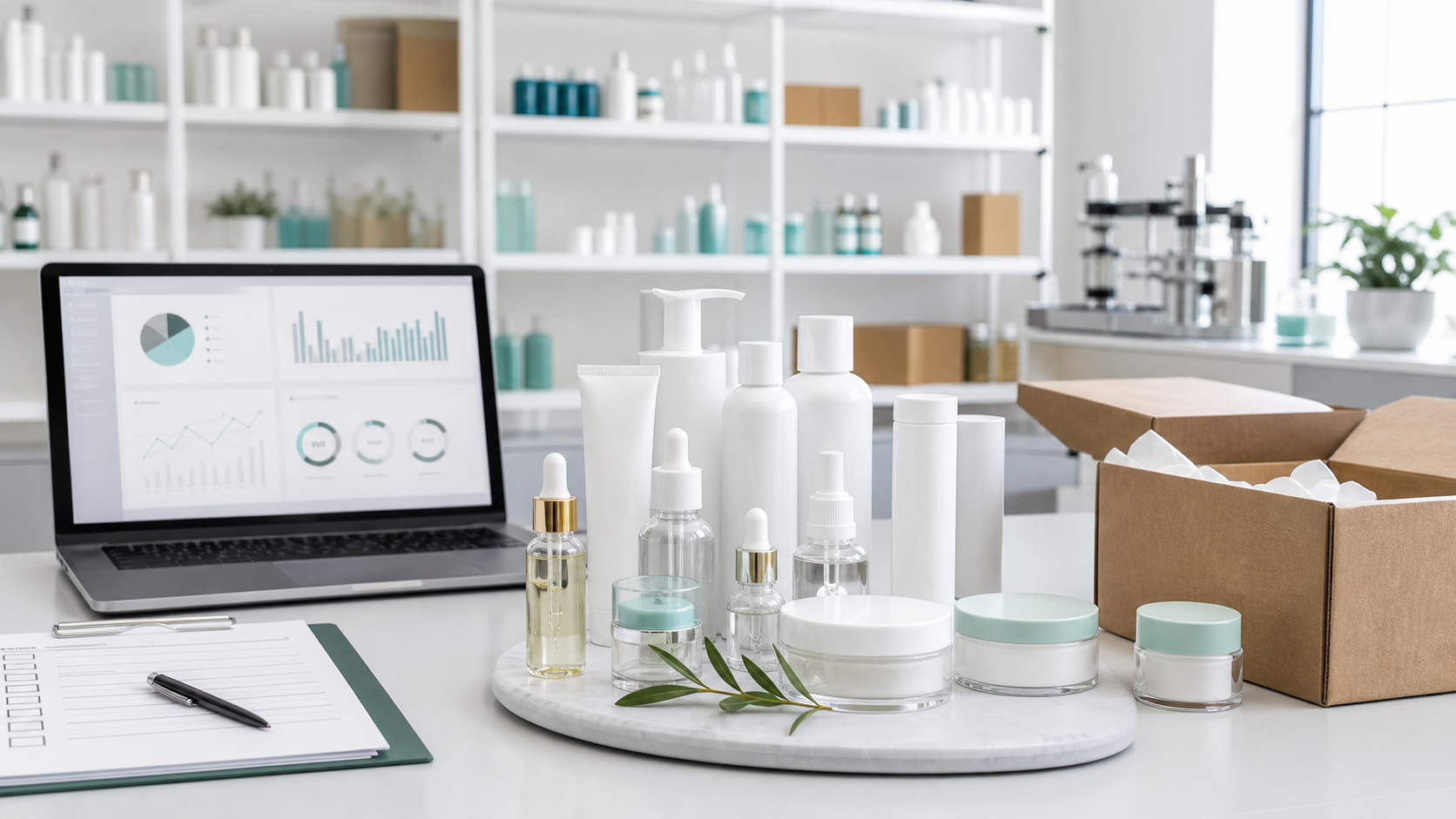
Amazon sellers often work under tighter operational pressure than traditional retail brands. They may need fast sample evaluation, clear cost control, attractive product images, barcode-ready packaging, carton protection, and predictable reorder timing. A cosmetic project that looks good in a lab sample can still create problems if the pump leaks during shipment, the label does not fit the bottle curve, or the product cannot be reordered before inventory runs out.
This is why the manufacturing conversation should start with the sales channel. A seller planning a hero moisturizer, lip care product, body care item, or small skincare set needs to explain the target customer, destination market, expected price range, launch quantity, storage conditions, and monthly reorder expectation. Mooyam’s OEM/ODM manufacturing service can then align formula route, packaging route, sample schedule, and production planning around a practical ecommerce launch.
Choosing the Right Formula Route
Amazon sellers usually compare three development routes: stock formula, modified formula, and custom formulation. The best choice depends on launch speed, differentiation, MOQ, and how much product testing the seller can manage before ordering inventory.
| Route | Best for Amazon sellers when | Main manufacturing focus |
|---|---|---|
| Stock formula | The seller wants a faster launch, lower development complexity, and a proven product base. | Choose suitable texture, fragrance, packaging, label, MOQ, and quality control standards. |
| Modified formula | The seller wants a familiar base with adjusted texture, fragrance, ingredient positioning, or sensory profile. | Control sample feedback, stability observation, packaging compatibility, and cost changes. |
| Custom formulation | The seller needs a more distinctive formula story, product format, skin feel, or brand-owned positioning. | Plan more sample development time, clearer technical feedback, and stronger pre-production approval. |
For many first launches, private label skincare development is the most practical starting point because it reduces unnecessary complexity. For sellers building a premium or differentiated product line, Mooyam’s custom formulation support can help refine texture, ingredient direction, fragrance, viscosity, and usage experience before mass production.
Product Selection for Marketplace Buyers
A good Amazon product should be easy for the buyer to understand and easy for the factory to reproduce. Skincare sets, facial cleansers, moisturizers, serums, lip care, body lotions, hand creams, and travel-size bundles can all work, but the seller should avoid launching too many SKUs before demand is proven. More SKUs mean more packaging versions, artwork files, labels, cartons, batch records, and inventory risk.
The strongest product brief is specific. Instead of asking for a “best-selling serum,” the seller should define the target customer, texture preference, hero ingredients, fragrance preference, excluded ingredients, packaging size, target unit cost, launch quantity, and whether the product will be sold as a single item or bundle. This helps the factory answer feasibility questions before sample development starts.
Packaging Decisions That Affect Amazon Operations
Packaging is not only a visual decision. For Amazon and other ecommerce channels, packaging must support product protection, listing presentation, warehouse handling, barcode placement, and customer unboxing. A beautiful glass bottle may look premium, but it can increase breakage risk and shipping weight. A soft tube may be practical, but the cap and seal need to be checked. A jar may photograph well, but carton protection and leakage control still matter.
Mooyam’s packaging sourcing service can help sellers compare bottles, jars, tubes, pumps, labels, boxes, inserts, and shipper cartons. Sellers should confirm decoration method, label material, carton size, barcode area, tamper-evident options where relevant, and packaging lead time before approving artwork.
Quality Control and Documentation
Quality control for Amazon sellers should be practical and documented. Buyers should confirm what will be checked during production and before shipment: appearance, odor, color, viscosity when relevant, fill weight, sealing, capping, pump function, label position, carton condition, batch number, and finished-goods inspection. These checks help reduce avoidable returns and support consistent reorder quality.
Mooyam’s quality control and compliance support helps buyers align approved samples, batch standards, inspection points, and document expectations. However, no manufacturer should promise universal regulatory approval. Ingredient rules, label rules, claim support, import documents, marketplace requirements, and responsible-person obligations vary by target market, so sellers should confirm local requirements before selling.
Buyer Checklist Before Ordering
- Define the product category, target customer, destination market, sales channel, and launch budget.
- Choose the route: stock formula, modified private label formula, or custom formulation.
- Prepare benchmark products and explain what should be matched, improved, or avoided.
- Confirm MOQ by formula, packaging component, label, carton, and decoration method.
- Review packaging for leakage risk, carton protection, barcode placement, listing photos, and shipping weight.
- Approve formula, fragrance, color, packaging sample, artwork, fill volume, and carton marks in writing.
- Ask for the quality control plan, batch traceability, production schedule, and export support details.
- Plan reorder timing before launch so inventory does not run out during marketplace promotion.
How to Reduce Launch Risk
Sellers can reduce risk by starting with fewer SKUs, choosing packaging that has been used successfully in production, and keeping claims simple. Avoid overstating product benefits or using medical-style claims. Cosmetic claims should be reviewed in relation to the target market, ingredient list, product category, and available support.
It is also useful to separate marketing preferences from production requirements. A seller may want a premium texture, a low unit cost, a small MOQ, a custom bottle, and a fast launch date, but these goals can compete with one another. A professional cosmetic OEM/ODM project works best when the buyer ranks priorities clearly.
Discuss an Amazon Beauty Manufacturing Project
Looking for a reliable cosmetic OEM/ODM manufacturer in China? Contact us to discuss your product idea, formula requirements, packaging options, MOQ, sample development, and production plan.
Send your brief through the Mooyam Cosmetic contact page. Our team can review formula route, packaging sourcing, sample development, mass production, quality control, and export support for your Amazon beauty project.
FAQ
Can an Amazon seller start with private label skincare?
Yes. Private label skincare can be a practical route when the seller needs a faster launch and wants to reduce development complexity. The product still needs suitable packaging, labeling, QC, and market-specific compliance review.
Is custom formulation necessary for Amazon beauty products?
Not always. Custom formulation is useful when the seller needs a distinctive texture, ingredient story, or product format. For many first launches, a stock or modified formula may be more efficient.
What information should sellers send before requesting a quote?
Send the product category, target market, order quantity, target unit size, packaging preference, benchmark products, ingredient preferences, claim direction, launch timeline, and any required documents.
How does packaging affect Amazon beauty sales?
Packaging affects listing photos, customer perception, leakage risk, shipping weight, carton strength, barcode placement, storage, and return risk. It should be reviewed before artwork and mass production.
Can a manufacturer guarantee marketplace or regulatory approval?
No. Requirements vary by target market, product category, ingredient list, claims, importer role, and marketplace rules. Sellers should confirm local regulatory and marketplace requirements before selling.
How should sellers plan reorders?
Track sales velocity, manufacturing lead time, packaging lead time, inspection time, freight time, and marketplace receiving time. Reorder planning should start before inventory becomes low.