
Cosmetic OEM manufacturing for Southeast Asian beauty brands works best when the buyer defines the target country, sales channel, formula direction, packaging requirements, sample approval process, and export documents before mass production. A China cosmetic OEM manufacturer or cosmetic ODM manufacturer can support private label skincare, custom formulation, packaging sourcing, sample development, quality control, and export support, but compliance and labeling requirements vary by target market.
In simple terms, this sourcing model helps brands in Singapore, Malaysia, Thailand, Indonesia, Vietnam, the Philippines, and nearby markets turn a product concept into a manufacturable cosmetic product. The most successful projects combine local market knowledge with a factory workflow that controls formula, packaging, artwork, testing, production, and shipment details.
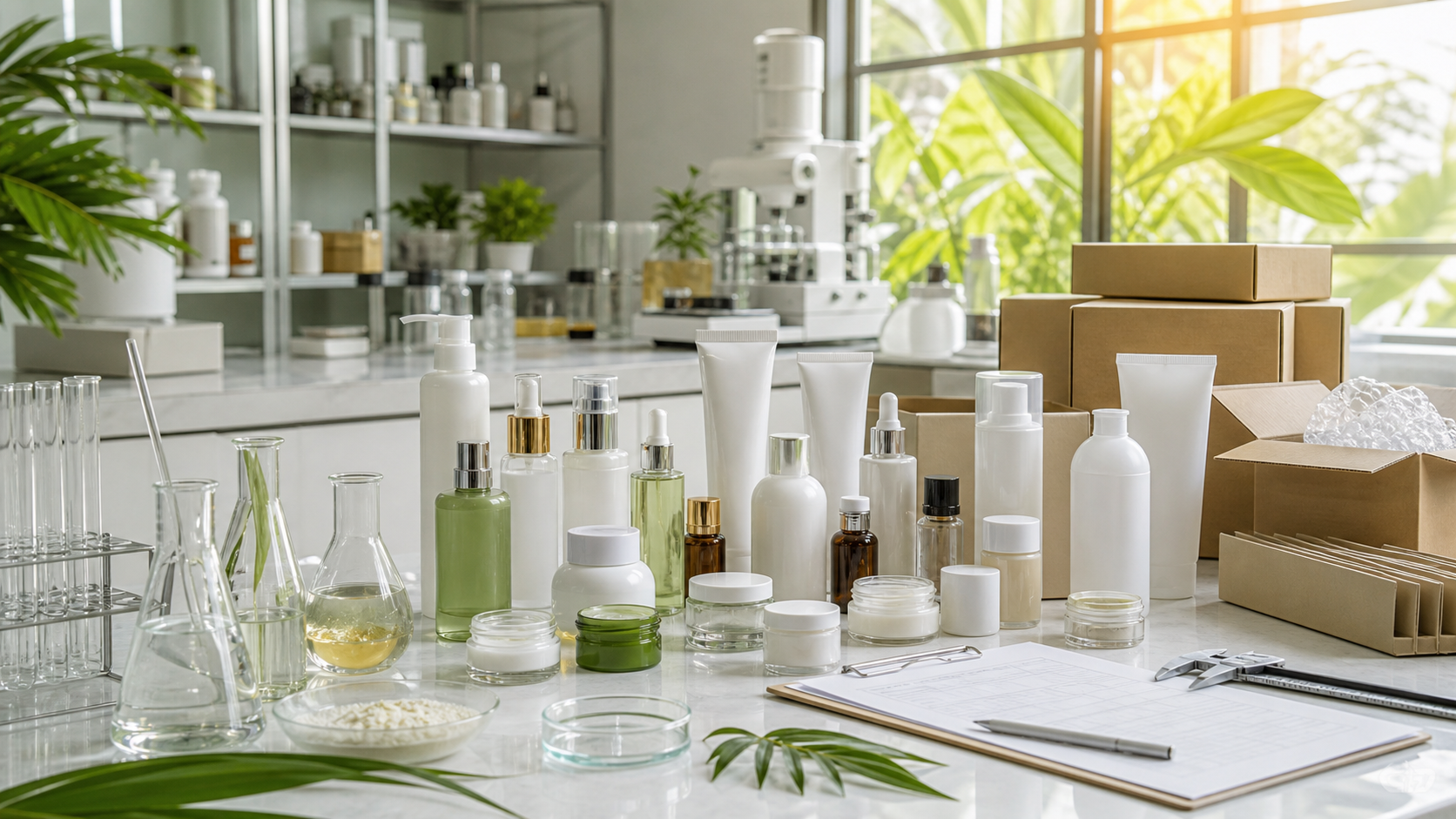
- Southeast Asian buyers should define the first selling market because claims, labels, importer duties, and documentation can differ by country.
- Hot and humid climates make texture, packaging compatibility, leakage prevention, and stability planning especially important.
- Amazon, Shopee, Lazada, TikTok Shop, salon, spa, and distributor channels may require different packaging, MOQ, and content support.
- Mooyam Cosmetic can support OEM/ODM planning from product brief and samples to packaging, quality control, mass production, and export handoff.
Why Southeast Asian Beauty Brands Work with China OEM/ODM Factories
Southeast Asia is a practical market for both new beauty launches and established brand expansion. Buyers often need fast product development, attractive packaging, competitive order planning, and export-ready communication across several countries. Working with a China cosmetic manufacturer can help these brands access broader formula options, component sourcing, filling capability, and production coordination without building their own facility.
The buyer still needs a clear project owner on the brand side. A factory can manufacture, sample, source packaging, and prepare production records, but the brand or importer must confirm local selling rules, claim wording, label language, online platform requirements, and registration steps where applicable. Requirements vary by target market, so a Singapore launch should not automatically be treated the same as an Indonesia, Thailand, Vietnam, Malaysia, or Philippines launch.
Start with Market and Channel Definition
The phrase “Southeast Asia” is useful for strategy, but it is too broad for a manufacturing brief. A brand selling through Shopee or Lazada may need different bundle logic and carton protection than a salon brand selling professional treatment products. A distributor may care more about shelf display, outer cartons, import documents, and repeat supply. A DTC skincare startup may prioritize small launch quantities, sample feedback, and packaging that looks strong in social content.
Before requesting a quote, identify the first launch country, secondary markets, sales channel, hero products, retail price target, and likely order quantity. This helps the factory recommend a realistic route through OEM/ODM service planning, stock formulas, modified formulas, or a more original custom development route.
| Buyer Scenario | Key Manufacturing Focus | Useful Factory Support |
|---|---|---|
| Marketplace seller | Fast launch, packaging durability, content-ready samples, repeat stock planning | ODM formula options, low-risk packaging, carton protection, export support |
| DTC or Shopify brand | Brand story, custom texture, premium pack feel, launch calendar | Custom formulation, sample rounds, component comparison, artwork checks |
| Distributor or wholesaler | Stable supply, broad SKU mix, margin structure, documentation | SKU planning, mass production scheduling, QC records, shipping coordination |
| Salon or spa buyer | Professional use, treatment-room formats, back-bar and retail sizes | Private label skincare sets, packaging sourcing, sample evaluation, batch consistency |
Formula Planning for Hot and Humid Markets
Many Southeast Asian markets have warm, humid conditions that influence buyer expectations. This does not mean every product must be lightweight, but it does mean texture, after-feel, fragrance level, packaging fit, and stability should be reviewed carefully. Gel creams, watery serums, light lotions, scalp care, post-sun care, body care, and gentle cleansers may all need different viscosity and preservation considerations.
For private label skincare, the brand can often begin with an existing formula base and adjust fragrance, texture, packaging, or positioning. For more differentiated products, custom formulation support can help define skin feel, ingredient preferences, avoid lists, benchmark products, and claim boundaries. Avoid medical claims or guaranteed results; cosmetic benefit language should remain appropriate for the product and target market.
Packaging Sourcing and Compatibility
Packaging is a major decision for Southeast Asian projects because climate, shipping route, marketplace handling, and retail display can all affect the finished product. Bottles, jars, tubes, pumps, droppers, refill packs, sachets, cartons, and sets should be selected with formula compatibility and logistics in mind. A beautiful component that leaks, warps, scuffs, or fails drop testing can create avoidable launch risk.
Discuss customized packaging options early. Stock packaging may help a startup control MOQ and timeline, while custom decoration can add brand differentiation through color, label, carton, sleeve, finish, or kit structure. For multi-country launches, confirm whether label language, importer details, claims, barcode placement, recycling marks, or batch coding requirements need separate artwork versions.
Sample Development and Buyer Feedback
Sample development should be structured, not casual. The buyer should evaluate texture, scent, color, viscosity, application feel, packaging fit, fill weight, leakage, pump function, and carton presentation. Feedback should be specific enough for the lab and packaging team to act on. For example, “lighter finish after 30 seconds” is more useful than “make it nicer.”
When a project includes several markets, sample review can slow down if feedback comes from too many teams without one final decision maker. Assign one person to consolidate comments from founders, distributors, marketplace managers, salon buyers, or compliance advisors. Once the final sample is approved, avoid changing fragrance, color, texture, claims, packaging, or artwork unless the project timeline and cost impact are accepted.
- Confirm the first selling country and any second-phase ASEAN markets.
- Define sales channel: Shopee, Lazada, TikTok Shop, Amazon, DTC, distributor, salon, spa, or retail chain.
- Prepare product category, benchmark samples, texture direction, ingredient preferences, and avoid list.
- Choose private label, ODM, OEM, or custom formulation based on timeline and differentiation needs.
- Review packaging compatibility, leakage risk, carton strength, label versions, and barcode placement.
- Approve formula, packaging, artwork, master sample, MOQ, lead time, and inspection standards before mass production.
- Ask for quality control and compliance support records that match the destination market and buyer channel.
Quality Control Before Mass Production
Quality control should begin before the production line starts. A serious project confirms approved sample, formula code, packaging specification, artwork file, bulk standard, fill weight, appearance, odor, color, viscosity, batch number, carton mark, and shipment plan. Stability, compatibility, microbial, packaging function, leakage, and visual checks may be relevant depending on product type and buyer expectations.
A cosmetic OEM manufacturer can help document production checkpoints, but the buyer should also clarify any platform, distributor, or importer requirements. A product sold through a regional marketplace may need strong carton protection and barcode clarity. A distributor may request COA, MSDS, packing list, invoice, or other export-related documents. Requirements vary by target market and should be checked before final shipment.
Export Support and Communication Across Time Zones
Southeast Asian buyers often work across close but still different time zones, languages, and holiday schedules. Clear communication can prevent sampling delays, artwork mistakes, and late production changes. Use one shared project brief, one confirmed packaging specification, and one written change log for each sample round. For multi-SKU launches, track each SKU separately so formula, fragrance, packaging, carton, and label details do not get mixed.
Mooyam Cosmetic can support export communication for B2B buyers by coordinating production updates, packing information, and shipment preparation. The buyer should still confirm importer responsibilities, local registration if required, payment terms, and logistics route with the correct local partners.
How Mooyam Cosmetic Supports Southeast Asian Beauty Projects
Mooyam Cosmetic works with overseas beauty brands, startups, Amazon and Shopify sellers, distributors, salons, spas, private label buyers, and sourcing managers. Our team can discuss product briefs, formula route, packaging sourcing, sample development, MOQ, mass production planning, quality control, and export support for Southeast Asian beauty projects.
Looking for a reliable cosmetic OEM/ODM manufacturer in China? Contact Mooyam Cosmetic to discuss your product idea, formula requirements, packaging options, MOQ, sample development, and production plan for Southeast Asian beauty markets.
FAQ
Can a China cosmetic manufacturer support Southeast Asian beauty brands?
Yes. A China cosmetic manufacturer can support private label skincare, custom formulation, sample development, packaging sourcing, mass production, quality control, and export support for Southeast Asian B2B buyers.
Is one cosmetic formula suitable for every Southeast Asian market?
Not automatically. Climate, consumer preference, claims, labels, ingredient limits, registration, and importer expectations can vary by target market, so buyers should confirm requirements before final formula and artwork approval.
Which products are practical for Southeast Asian skincare launches?
Lightweight serums, gel creams, cleansers, body care, post-sun products, scalp care, and travel-friendly sets can be practical, but the best choice depends on brand positioning, sales channel, MOQ, packaging, and target customer.
Should marketplace sellers choose stock formulas or custom formulation?
Stock or modified ODM formulas can support faster launches, while custom formulation is better when the brand needs stronger differentiation. The right route depends on budget, timeline, originality, and sample testing capacity.
What packaging risks should Southeast Asian buyers check?
Check leakage, pump function, cap fit, carton strength, label adhesion, scuffing, heat exposure, fill weight, and compatibility between the formula and container before production approval.
Can Mooyam help with export documents?
Mooyam can support export communication and common production or shipment documents, but exact import and compliance requirements vary by country and should be confirmed by the buyer, importer, or qualified local advisor.