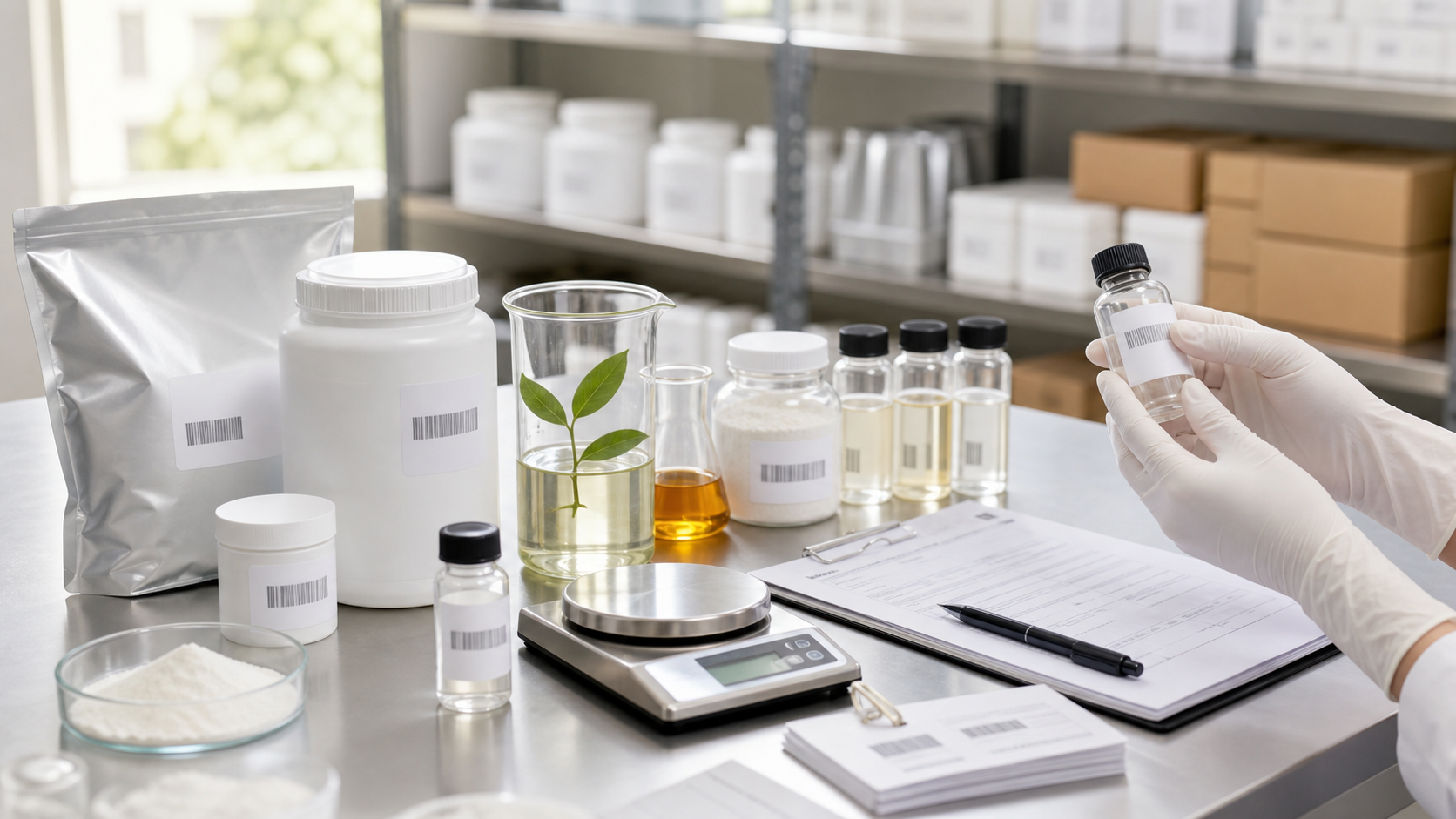
Cosmetic raw material control is one of the quiet details that separates a dependable factory from a risky supplier. Overseas beauty brands usually see the finished serum, cream, cleanser, mask or makeup item. Behind that product, however, the factory must manage ingredient suppliers, incoming batches, storage, weighing, traceability, formula matching and quality review.
This article explains what raw material control means for cosmetic OEM/ODM projects and what brand buyers should ask before production. It is written for private label skincare buyers, startups, Amazon and DTC sellers, distributors and sourcing managers comparing cosmetic manufacturing partners. Mooyam Cosmetic supports B2B OEM/ODM projects only and does not accept retail orders.
Quick Summary
- Raw material control covers supplier qualification, incoming review, batch records, storage, weighing and traceability.
- It affects formula consistency, color, odor, texture, stability, cost control and reorder reliability.
- Buyers should ask how the factory handles ingredient changes, restricted materials, claim support and target-market requirements.
- Mooyam Cosmetic can support raw material planning as part of private label skincare, custom formulation, packaging sourcing, sample development, bulk production and quality control.
What Raw Material Control Means
Raw material control is the process of selecting, receiving, checking, storing and using cosmetic ingredients in a structured way. It includes water, oils, waxes, emulsifiers, thickeners, preservatives, fragrance, pigments, extracts, powders and other materials used in skincare, body care, hair care or makeup formulas.
For a buyer, raw material control matters because the finished product can only be as consistent as the inputs and process behind it. If a material changes color, odor, supplier, grade or storage condition, the final formula may look or feel different. If records are weak, the factory may struggle to investigate a complaint or repeat a successful batch.
A professional cosmetic OEM manufacturer or cosmetic ODM manufacturer should be able to explain how ingredients are chosen for a formula route, how incoming materials are checked, how batch information is recorded and how changes are communicated when they affect cost, MOQ, claims or performance expectations.
Why Overseas Beauty Brands Should Care
Many brand owners focus on marketing ingredients: hyaluronic acid, niacinamide, peptides, botanical extracts, ceramides, oils, clays or pigments. Those stories can be useful, but they also create responsibility. The supplier must confirm whether the ingredient direction is practical for the formula, packaging and target market.
Raw material control helps reduce several common risks. A serum may turn yellow if an ingredient is sensitive to heat or light. A cleanser may smell different if fragrance or extract quality varies. A cream may separate if an emulsifier system is changed. A makeup product may face color variation if pigments are not controlled. These are manufacturing issues, not only marketing issues.
Mooyam Cosmetic works with buyers on custom formulation development and private label adjustments so ingredient choices are reviewed against texture, stability, cost, MOQ and claim discipline before bulk production.
Main Raw Material Control Checkpoints
| Checkpoint | What the factory reviews | Buyer value |
|---|---|---|
| Supplier selection | Source reliability, material suitability, documents and supply stability. | Reduces sudden substitutions, delays and inconsistent quality. |
| Incoming material review | Material name, batch, appearance, odor, packaging condition and storage status. | Helps prevent questionable materials from entering production. |
| Storage control | Clean handling, separation, temperature or light sensitivity and expiration management. | Protects ingredient quality before weighing and mixing. |
| Weighing and batch record | Formula version, material batch numbers, quantity and operator records. | Supports traceability and repeatable bulk production. |
| Change management | Supplier changes, material grade changes, price changes or discontinued ingredients. | Lets the buyer review impact before a reorder is affected. |
Raw Materials and Product Claims
Ingredient stories must be handled carefully. A cosmetic product can often communicate skin feel, hydration, bright-looking appearance, cleansing, softening or cosmetic care benefits, but it should not make medical claims or guaranteed results. Claims depend on formula composition, substantiation, label wording and the destination market.
For example, a brand may want a sensitive-skin toner, brightening serum, barrier-support cream or acne-focused cleanser. Some wording may be acceptable in one market and risky in another. Requirements vary by target market, so the buyer should confirm final labels and claims with qualified regulatory support before printing.
A good factory helps by flagging practical issues early. If an ingredient has stability concerns, supply limitations, high MOQ or claim restrictions, those should be discussed during sample development rather than after packaging artwork is finished.
How Raw Material Choices Affect MOQ and Cost
Raw materials can change the quotation significantly. Common ingredients in available formula bases may support faster low MOQ production. Specialty actives, imported ingredients, custom fragrances, natural-positioned materials, unusual pigments or exclusive ingredient stories may require higher purchase quantities, longer lead times or additional sample testing.
This is why private label skincare can be a practical route for new brands. The buyer starts from existing formula bases and focuses on product selection, packaging and brand presentation. For brands that need a stronger point of difference, custom formulation may be worth the extra time and cost.
| Development route | Raw material situation | Best buyer fit |
|---|---|---|
| Private label formula | Materials are already used in existing production routes. | Startups needing speed, lower development risk and practical low MOQ. |
| Adjusted stock formula | Some material changes may be possible, but stability and cost must be reviewed. | Brands needing modest differentiation without a fully new formula. |
| Full custom formulation | Material selection is built around a new brief, benchmark and performance target. | DTC brands, distributors or premium projects needing a unique product story. |
Storage, Traceability and Reorder Reliability
Traceability is especially important for export buyers. If a distributor reports a texture issue, color concern or packaging complaint, the factory needs records that connect finished goods to material batches and production details. Without those records, investigation becomes guesswork.
Storage also affects consistency. Some ingredients need protection from moisture, heat or light. Powders should be handled to avoid contamination or clumping. Fragrance and botanical extracts may need careful control because odor and color can influence the buyer’s perception of the finished product. A factory should not treat raw materials as anonymous bulk items.
Mooyam’s quality control and compliance support helps buyers understand common checkpoints, while the exact documentation package depends on the product, order size and target market requirements.
Packaging Also Interacts with Raw Materials
Raw material control does not stop at the formula tank. Some ingredients interact with packaging choices. Essential oils, solvents, pigments, fragrance systems, surfactants or acidic formulas may require careful compatibility review with bottles, pumps, caps, labels and cartons. A beautiful package is not useful if the formula leaks, discolors, clogs the pump or damages decoration.
For this reason, Mooyam coordinates packaging sourcing with formula planning. The goal is to match the formula viscosity, ingredient system, filling process and package format before bulk production. This reduces the chance of late changes that increase cost or delay shipment.
Buyer Checklist Before Confirming a Formula
- Ask which formula route best fits your launch speed, differentiation needs and MOQ target.
- Confirm whether hero ingredients affect cost, lead time, stability or claim review.
- Provide target markets before finalizing ingredient restrictions and label wording.
- Ask how incoming materials are checked and recorded before production.
- Confirm whether fragrance, color, extract or pigment changes require a new sample review.
- Review packaging compatibility when raw materials may affect pumps, droppers, tubes or labels.
- Keep approved samples and production standards aligned for future reorders.
How Mooyam Cosmetic Supports Raw Material Control
Mooyam Cosmetic supports beauty brands through cosmetic OEM/ODM service, formula route planning, sample development, packaging coordination, production preparation, quality control and export support. Buyers can choose existing private label options or develop a more customized formula depending on the project goal.
For brands starting with private label skincare, Mooyam helps compare available product bases, packaging options and low MOQ possibilities. For buyers needing a new product direction, custom formulation can define ingredient logic, sensory target, stability expectations and production standards from the beginning.
Discuss Raw Material Planning for Your Project
Looking for a reliable cosmetic OEM/ODM manufacturer for your skincare or cosmetic line? Mooyam Cosmetic can help with private label skincare, custom formulation, packaging sourcing, sample development, bulk production, quality control, low MOQ planning and export support. Contact us to discuss your formula requirements, packaging options, MOQ and production solution.
FAQ
What is cosmetic raw material control?
It is the process of selecting, receiving, checking, storing, weighing and recording ingredients used in cosmetic production.
Why does raw material control matter for private label skincare?
It helps keep formula appearance, odor, texture and quality more consistent across samples, bulk production and reorders.
Can I request a specific ingredient supplier?
In some projects, yes. The factory must review availability, documents, MOQ, compatibility, lead time and cost before confirming.
Do natural or botanical ingredients require extra care?
They may require careful review because odor, color, stability and supply consistency can vary. Claims also need target-market review.
Can raw material changes affect packaging?
Yes. Formula ingredients can affect viscosity, pump performance, leakage, label durability, discoloration or component compatibility.
Does raw material control guarantee regulatory approval?
No. It supports quality and documentation, but final compliance depends on the formula, claims, label and target market requirements.
What should buyers prepare for a quotation?
Prepare product type, ingredient preferences, restricted ingredients, benchmark samples, target market, packaging style, MOQ expectation and launch timeline.
Does Mooyam Cosmetic sell retail products?
No. Mooyam Cosmetic serves B2B brand, distributor, private label and OEM/ODM manufacturing projects only.