Sample development is one of the most important stages in a cosmetic OEM/ODM project. Buyers often want to know how many days it takes before they can receive a serum, cream, cleanser or mask sample, approve the texture, choose packaging and move into production. The honest answer is that timing depends on formula complexity, ingredient availability, packaging decisions, feedback speed and target market requirements.
This guide explains typical cosmetic sample development time for overseas beauty brands, startups, Amazon sellers, DTC teams, distributors and private label buyers. It also shows how Mooyam Cosmetic manages sampling for B2B OEM/ODM projects. We support brand and wholesale orders; we do not accept retail orders.
Quick Summary
- Simple private label skincare samples may be arranged faster than fully custom formulas.
- Custom formulation usually needs brief review, lab work, internal checks, buyer feedback and revision rounds.
- Packaging samples, claim direction and target market requirements can add time before bulk production.
- Fast feedback from the buyer is one of the easiest ways to shorten the development schedule.
What Counts as Cosmetic Sample Development?
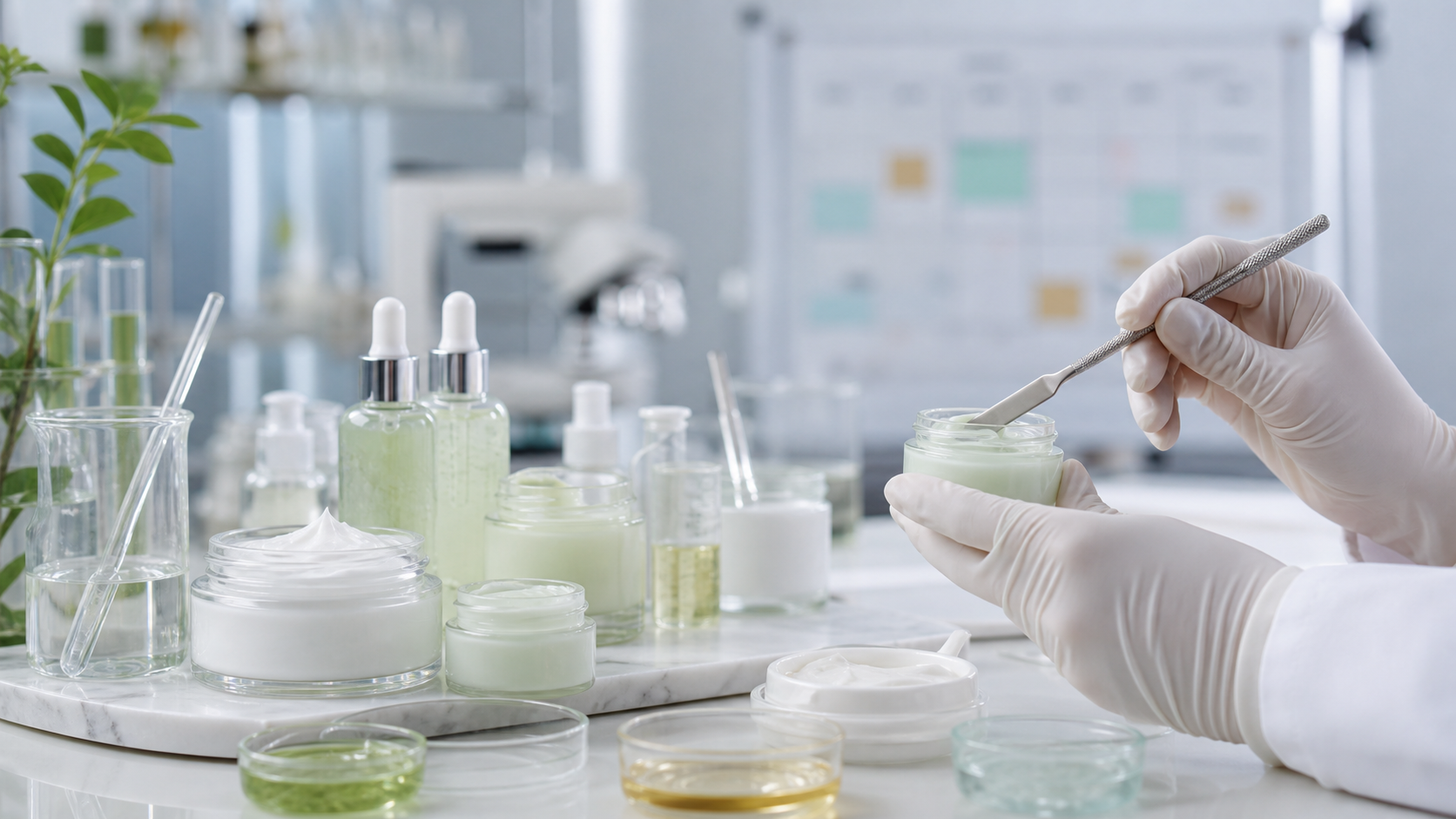
Sample development is the process of turning a product idea into a physical sample that the buyer can evaluate. It may include choosing a stock formula, adjusting fragrance or texture, creating a custom formulation, matching a benchmark, testing packaging compatibility, preparing lab samples and revising the formula based on buyer feedback.
For private label skincare, the sample may be based on an existing formula that already has a known texture and manufacturing route. For custom formulation, the factory needs more time to study the brief, select raw materials, balance the formula and check basic stability before sending a sample.
Typical Timeline by Project Type
Every factory and product category is different, but the table below gives a practical B2B reference. These are planning ranges, not guarantees. Requirements may change if the product involves special actives, difficult textures, unusual packaging, fragrance restrictions, color matching, sunscreen claims or market-specific testing.
| Project Type | Typical Sample Time | What Affects Timing |
|---|---|---|
| Stock private label formula | About 3 to 10 working days | Formula availability, requested scent, sample queue and packaging sample needs |
| Minor formula adjustment | About 7 to 15 working days | Texture, fragrance, color, viscosity, active direction and internal lab checks |
| Custom formulation | About 2 to 6 weeks for first samples | Brief clarity, raw materials, benchmark matching, stability observations and revisions |
| Complex product or special claims | Often longer than 6 weeks | Testing, claim review, packaging compatibility and target market requirements |
Why Some Samples Are Faster Than Others
A basic moisturizer based on an existing formula is usually faster than a custom serum with a specific sensory target, active system and premium packaging. A low MOQ launch using stock packaging may move quickly, while a highly customized component can delay the schedule even if the formula is ready.
Buyers should also understand the difference between a first lab sample and an approved production formula. The first sample is for direction. The approved formula is the version used for quotation confirmation, packaging compatibility checks, pre-production planning and bulk production. Rushing from first sample to mass production without clear approval can create avoidable risk.
Information Buyers Should Prepare
The better your brief, the faster the sample team can work. A useful brief includes product type, desired texture, benchmark product, target customer, hero ingredients, ingredients to avoid, fragrance preference, color direction, packaging idea, MOQ expectation, target market and launch deadline. If you need custom formulation, share what must be unique and what can be flexible.
For example, saying “lightweight gel cream for humid climates, fragrance-free, jar or airless pump, low MOQ launch” gives the factory a workable direction. Saying only “I want a good cream” creates delays because the development team has to guess your market position and texture expectations.
How Feedback Rounds Affect the Schedule
Most cosmetic samples need feedback. One buyer may approve the first version. Another may ask for less tackiness, a lighter scent, more cushion, faster absorption, different color or better pump performance. Each revision takes time because the lab must adjust the formula, prepare a new sample and check whether the change creates a new stability or compatibility concern.
Useful feedback is specific and prioritized. Instead of sending ten vague comments, rank the changes that matter most for launch. If texture is more important than fragrance, say so. If the product must fit a pump bottle, make packaging compatibility a priority from the beginning.
Packaging Can Change the Sample Plan
Packaging sourcing is closely connected to sampling. A formula may look ready in a lab jar but behave differently in an airless pump, tube, bottle or dropper. Mooyam Cosmetic can support packaging sourcing, but component availability, decoration, MOQ and compatibility testing can add time.
If the buyer wants custom color, special printing, metalized parts, unique cartons or a new mold, the sample timeline should include packaging sample approval. For low MOQ projects, standard components often help reduce timing pressure and allow the brand to test the market before committing to more complex packaging.
From Approved Sample to Bulk Production
After sample approval, the project moves into quotation confirmation, packaging confirmation, artwork review, material preparation, production scheduling and quality control planning. The approved sample becomes a reference for bulk production, but buyers should still allow time for pre-production checks and packaging confirmation.
Mooyam Cosmetic supports OEM/ODM cosmetic manufacturing with sample development, low MOQ planning, private label options, formula adjustment, packaging coordination, bulk production and export support. Our team helps buyers understand which decisions affect timing before the order is locked.
Quality Control During Sample Development
Sample development should include more than making a product look nice for a photo. The factory should observe appearance, odor, color, texture, pH where relevant, viscosity, packaging fit and basic stability direction. For some products, additional testing may be needed before launch. Requirements vary by market, claim and product type, so buyers should not rely on generic compliance promises.
For larger or more regulated projects, discuss quality control and compliance support before approving the final formula. This helps align sample approval with the later production and export plan.
Buyer Checklist for Faster Sampling
- Prepare a clear product brief before asking for samples.
- Decide whether you need stock formula, ODM development or full custom formulation.
- Share benchmark products and explain what you like or dislike about them.
- Confirm target packaging early so compatibility can be considered.
- Give written feedback with priority levels after receiving samples.
- Allow time for revisions instead of forcing bulk production too early.
- Check target market requirements before making strong claims.
- Confirm MOQ, production timeline and export support before final approval.
Common Mistakes That Delay Sample Development
One common mistake is changing the brief after the lab has already started. Another is choosing packaging after the formula has been approved, then discovering the product does not dispense well. Some buyers also delay feedback for weeks, then expect the factory to recover the lost time before launch. Clear planning prevents these problems.
Another mistake is requesting too many changes at once without priorities. If the formula must be lighter, less scented, cheaper and packaged in a different component, the lab needs to know which goal matters most. Sampling is a decision process, not just a waiting period.
Start Sample Development With Mooyam Cosmetic
Looking for a reliable cosmetic OEM/ODM manufacturer? Contact us to discuss your product idea, formula requirements, packaging options, MOQ, sample timeline and production solution. Mooyam Cosmetic supports B2B private label and wholesale OEM/ODM projects, not retail orders.
FAQ
How long does cosmetic sample development usually take?
Simple stock formula samples may take about 3 to 10 working days, while custom formulation can take several weeks depending on complexity, raw materials and feedback rounds.
Can private label samples be faster than custom formulas?
Yes. Private label samples based on existing formulas are usually faster because the texture, manufacturing route and basic performance are already known.
How many sample revisions are normal?
Many projects need one to three revision rounds. Complex textures, benchmark matching or special packaging may require more time.
What information should I send before requesting samples?
Send product type, texture target, benchmark, hero ingredients, packaging preference, MOQ expectation, target market and launch timeline.
Does packaging affect sample development time?
Yes. Packaging can affect compatibility, filling, pump output, leakage risk, MOQ and lead time. It should be discussed early.
Can a sample be used directly for bulk production approval?
Only after the buyer formally approves the formula, packaging direction and key product details. The approved sample becomes the reference for production planning.
Can Mooyam Cosmetic help with low MOQ sample projects?
Yes. Mooyam Cosmetic can discuss low MOQ routes using suitable formulas, packaging options and production planning for brand projects.
Does Mooyam Cosmetic accept retail sample orders?
No. Mooyam Cosmetic works with beauty brands, private label buyers, distributors and wholesale OEM/ODM projects, not retail orders.