
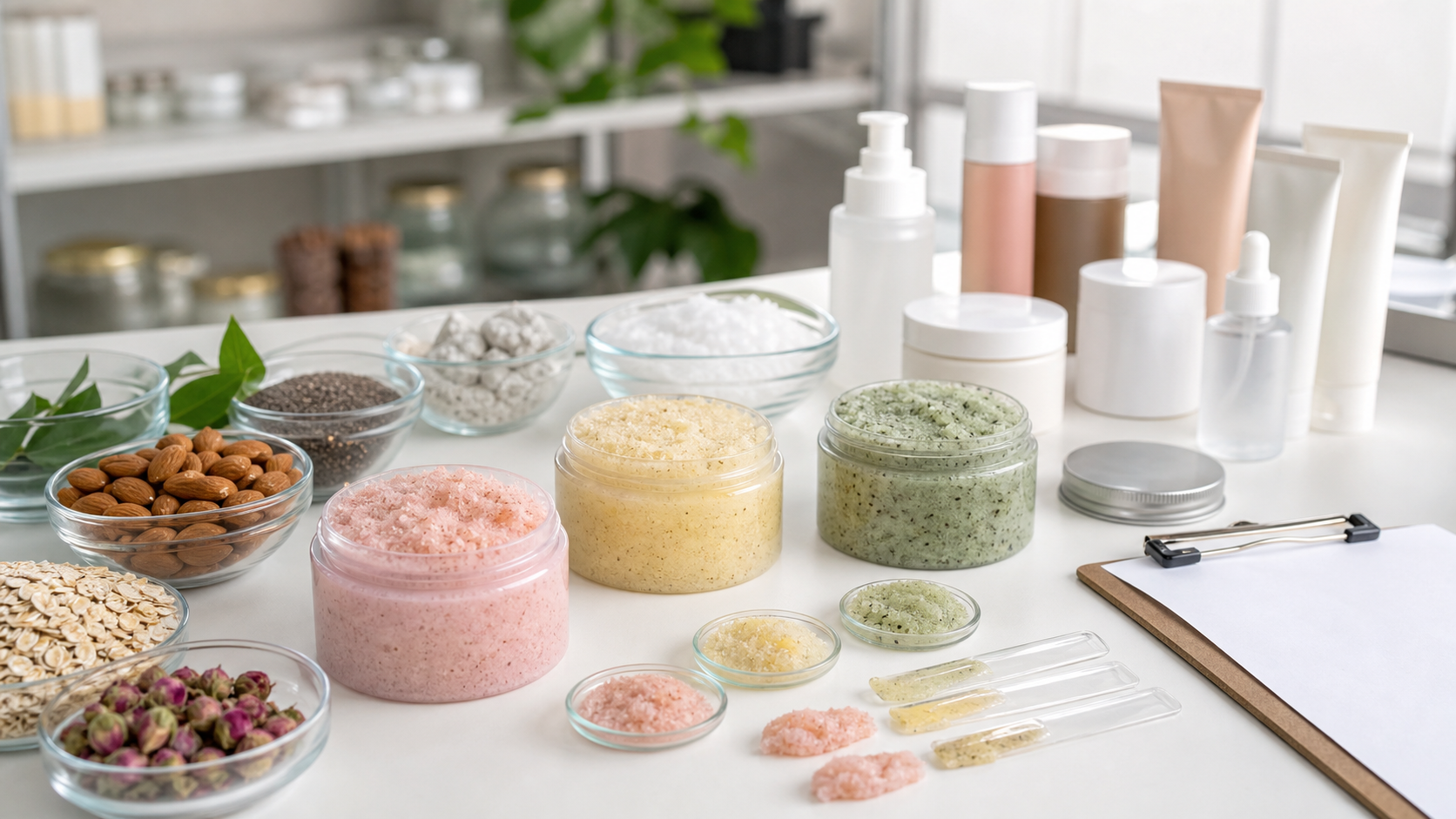
A private label body scrub can be a strong entry point for beauty brands because it is visual, tactile and easy to position in body care, spa, gift set and e-commerce programs. But a good scrub is not only about adding attractive particles to a jar. The base, exfoliant choice, fragrance, preservation, packaging and claims must be developed as one system.
This guide explains how overseas buyers can create a private label body scrub with a cosmetic OEM manufacturer or cosmetic ODM manufacturer. It is written for brand owners, Amazon sellers, DTC teams, distributors and sourcing managers planning wholesale projects. Mooyam Cosmetic supports brand and bulk OEM/ODM orders only; we do not accept retail orders.
Quick Summary
- Body scrub development should begin with exfoliation level, rinse feel, target market, claims, packaging and price target.
- Exfoliant type affects texture, cost, sensory experience, regulatory review and brand positioning.
- Oil-based, cream-based and gel-based scrubs need different preservation, filling and stability checks.
- Packaging must handle texture, leakage risk, consumer hygiene expectations and shipping conditions.
- Claims and ingredient rules vary by market, so avoid medical or guaranteed performance language.
Why Body Scrubs Work for Private Label Brands
Body scrubs are highly visual products. Texture, color, scent and packaging can create a strong first impression on a product page or retail display. They also pair naturally with body lotion, body wash, hand cream, spa kits and seasonal gift sets. For a new brand, a scrub can help build a body care story without requiring a full facial skincare line.
The buying decision, however, should be practical. A scrub that looks beautiful in a sample jar may separate, leak oil, feel too abrasive, clog packaging, or create label claim issues. A factory needs to translate the brand concept into a formula that can be produced consistently, filled cleanly and shipped to the buyer’s target market.
Choose the Right Scrub Format
The first decision is format. Oil-based scrubs often feel rich and spa-like, but they can have leakage and slipperiness considerations. Cream-based scrubs can feel softer and more body-care oriented. Gel-based scrubs may rinse cleaner and fit a fresher positioning. The right choice depends on channel, climate, usage occasion, price point and packaging.
| Scrub Format | Best For | Development Watch Points |
|---|---|---|
| Oil-based scrub | Spa, premium, dry-skin feel, gift sets. | Oil leakage, jar seal, rinse feel, shower slip warning and fragrance stability. |
| Cream-based scrub | Soft body polish, moisturizing body care, wider daily use. | Preservation, particle suspension, viscosity and microbial control. |
| Gel-based scrub | Fresh rinse, summer body care, active lifestyle positioning. | Particle compatibility, clarity, viscosity, color stability and packaging fit. |
| Whipped or balm scrub | Premium texture, social-friendly product storytelling. | Filling process, air pockets, texture collapse, heat stability and cost. |
Mooyam Cosmetic can support private label skincare and body care development using suitable base directions, or build a more differentiated product through custom formulation.
Exfoliant Selection Matters
Scrub particles define the product experience. Some buyers want a gentle polish, while others want a more intense spa texture. The factory should help compare particle size, hardness, source, color, cost, suspension behavior and target-market requirements. Buyers should also consider whether the scrub is positioned as natural-inspired, premium, fragrance-led, sensitive-use or routine body care.
| Exfoliant Type | Brand Positioning | Factory Consideration |
|---|---|---|
| Sugar or salt | Classic spa scrub, strong tactile story. | Solubility, water exposure, particle feel, oil compatibility and packaging seal. |
| Plant-derived particles | Natural-inspired or botanical body care. | Particle uniformity, odor, color migration and microbial risk. |
| Cellulose or mineral particles | Gentler polish or cleaner rinse positioning. | Supplier consistency, suspension, sensory testing and claim support. |
| Mixed particle system | Signature texture or premium sensory story. | Abrasion balance, stability, cost and repeatability in bulk production. |
Because requirements can vary by market, buyers should confirm ingredient acceptability and claim wording before artwork approval. A reliable manufacturer will not promise universal regulatory approval; it will provide product information and help the buyer review the destination-market path.
Packaging for Private Label Body Scrub
Most body scrubs use jars because the product can be thick and textured. But jar size, wall thickness, cap liner, seal quality and carton protection are important. Oil-based formulas may need stronger leakage review. Cream or gel scrubs may need compatibility checks to confirm the package does not affect odor, color, viscosity or stability.
Mooyam Cosmetic supports custom cosmetic packaging sourcing for body scrub projects, including jars, lids, liners, labels, cartons and decoration options. For low MOQ launches, available stock jars and label decoration may be more practical than fully custom molds.
Sample Development Workflow
A practical body scrub project usually starts with a short brief: target customer, scrub strength, fragrance style, base type, packaging size, benchmark product, desired MOQ and launch market. The factory then prepares samples for texture and sensory review. After feedback, sample development may adjust particle type, fragrance level, viscosity, color, rinse feel and packaging fit.
Buyers should not approve the formula based only on photos. Test the product by hand, check the rinse feel, observe particle distribution, leave the sample under warm and cool conditions, and confirm whether the jar remains clean after opening and closing. When the sample is approved, the same standard should be recorded for bulk production.
Quality Control and Production Checks
Body scrub quality control must pay attention to both formula and packaging. Checks may include appearance, odor, color, viscosity, particle distribution, pH where applicable, microbial limits, stability, leakage, fill weight, cap torque, seal performance, label accuracy and carton drop or compression needs. Oil-based products also need special attention to leakage and packaging cleanliness.
Mooyam Cosmetic provides quality control and compliance support for body care OEM/ODM projects. Export support can include product documents, ingredient information, carton details and shipment coordination for wholesale orders.
Buyer Checklist Before Ordering a Body Scrub
- Define target channel: Amazon, DTC, spa, distributor, salon, gift set or hotel amenity.
- Choose scrub format: oil-based, cream-based, gel-based or balm-style.
- Confirm exfoliation level, particle type, fragrance direction and target retail price.
- Select jar size, cap, liner, label method and carton before final approval.
- Test rinse feel, texture, leakage, particle suspension and sample stability.
- Review claims, warnings, ingredient list and labeling needs for the target market.
- Confirm MOQ, sample rounds, bulk lead time, inspection plan and export documents.
Common Mistakes to Avoid
One mistake is choosing particles only for visual appeal. Attractive botanicals or colored particles can change odor, color or microbial risk. Another mistake is using a jar that looks premium but leaks during transport. Some buyers also request too many scent variants in the first order, which can increase MOQ, testing work and inventory pressure.
A more practical launch starts with one strong hero scrub, one jar size and a clear texture standard. After the first sales cycle, the brand can expand into body lotion, body wash, hand cream or limited fragrance variants.
How Mooyam Cosmetic Supports Body Scrub Projects
Through its cosmetic OEM/ODM manufacturing service, Mooyam Cosmetic can help buyers evaluate formula direction, packaging, sample development, low MOQ feasibility, quality control and bulk production. The goal is to build a product that looks attractive, feels consistent and fits the buyer’s commercial plan.
FAQ
Can I create a private label body scrub with low MOQ?
Low MOQ may be possible when the buyer chooses a practical base, available packaging and a focused decoration method. Fully custom packaging or multiple fragrances can increase MOQ.
Which scrub base is best for a new brand?
There is no single best base. Oil-based scrubs feel rich, cream scrubs feel softer, and gel scrubs rinse cleaner. The choice should match your channel, customer and price point.
Can Mooyam develop a custom body scrub formula?
Yes. Custom formulation can adjust base type, particles, fragrance, color, viscosity and sensory feel to match your brand concept.
Do body scrubs need microbial testing?
Yes, microbial control is important, especially for water-containing formulas or products used near wet environments. The final testing plan depends on the formula and target market.
Can I use natural exfoliating particles?
Natural-inspired particles may be possible, but particle uniformity, odor, color, microbial risk and target-market rules should be reviewed before approval.
What packaging is most common for body scrub?
Jars are common because scrubs are textured and thick. The cap, liner, seal and carton should be checked for leakage and shipping protection.
Can the product claim to remove skin problems?
Claims should stay cosmetic and supportable, such as smoother-feeling or polished-looking skin. Avoid medical or guaranteed treatment language unless a qualified regulatory review supports it for the target market.
Create Your Private Label Body Scrub
Looking for a reliable cosmetic OEM/ODM manufacturer for body scrub development? Mooyam Cosmetic can help with private label skincare and body care, custom formulation, packaging sourcing, sample development, low MOQ planning, bulk production, quality control and export support. Contact us to discuss your product idea, formula requirements, packaging options, MOQ and production solution.