Custom cosmetic manufacturing gives beauty brands more control than a simple label change, but it also requires clearer decisions. A buyer may want a special texture, fragrance direction, ingredient story, packaging system, or price position, yet those ideas must be translated into a formula, sample, production standard, quality plan, and export-ready project.
This guide explains how custom cosmetic manufacturing works for overseas skincare startups, Amazon and DTC sellers, distributors, and private label buyers. Mooyam Cosmetic supports B2B cosmetic OEM and ODM projects from product concept to bulk production; we do not accept retail orders.
Quick Summary
- Custom cosmetic manufacturing is useful when a brand needs a differentiated formula, texture, fragrance, packaging, or product concept.
- It usually involves a product brief, formula direction, sample development, packaging sourcing, testing discussion, bulk production, and quality control.
- Compared with standard private label skincare, custom work often needs more time, more decisions, and a clearer budget.
- A reliable cosmetic OEM manufacturer or cosmetic ODM manufacturer should help buyers define feasibility, MOQ, cost drivers, and target-market considerations before production.
What Custom Cosmetic Manufacturing Means
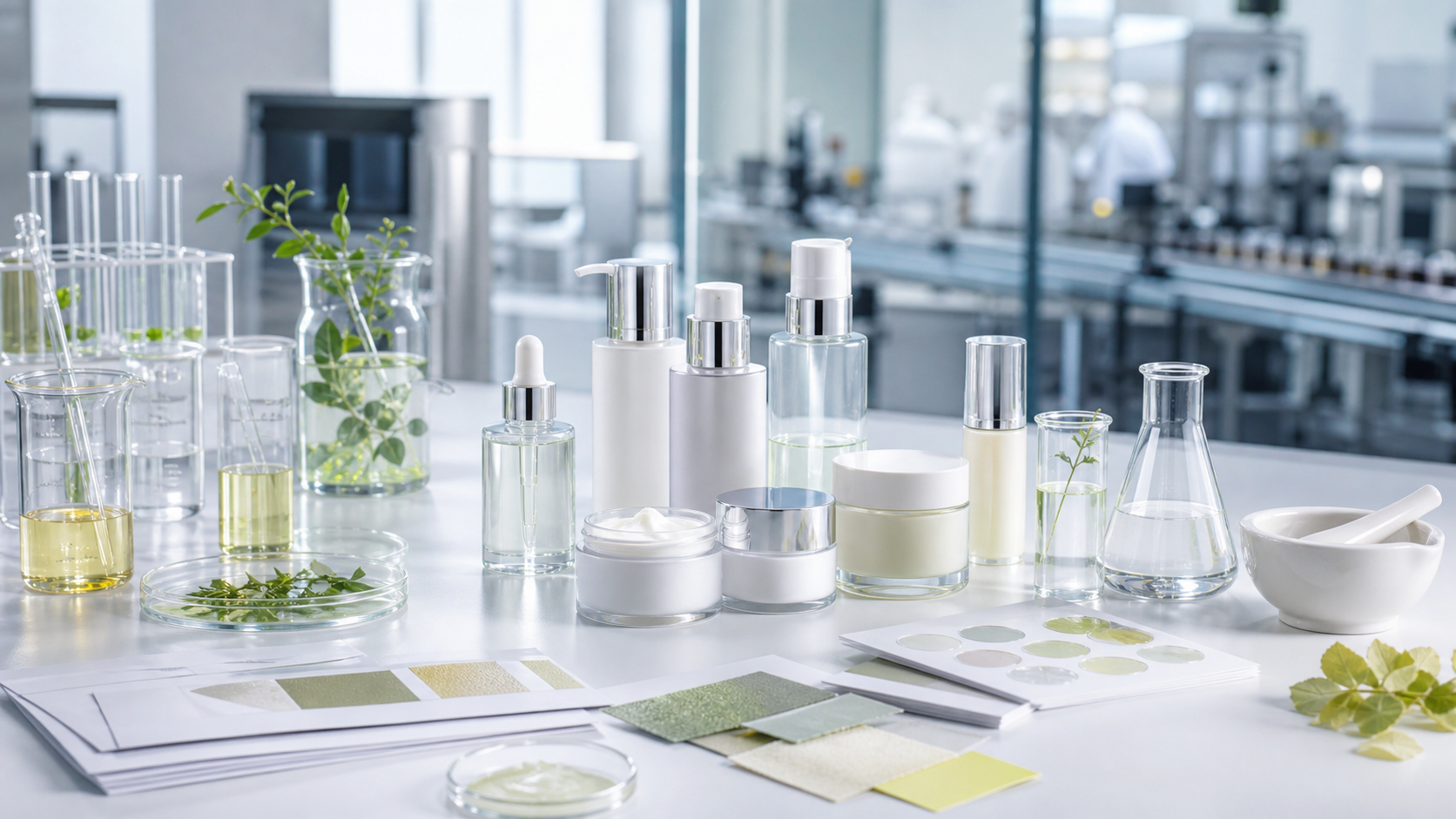
Custom cosmetic manufacturing means developing or adapting a cosmetic product around the buyer’s brand requirements. The customization may be moderate, such as changing fragrance, viscosity, color, packaging, or product size. It may also be deeper, such as building a new formula direction, developing a skincare set, matching a benchmark texture, or designing a product for a specific sales channel.
For many brands, custom manufacturing sits between standard private label and fully owned formula development. A buyer may start from an established formula platform, then request changes that fit the brand’s positioning. Another buyer may bring a detailed product idea and ask the manufacturer to develop samples from the beginning. Both routes can work, but the quotation, timeline, MOQ, and testing needs will be different.
Mooyam Cosmetic’s OEM/ODM service helps B2B buyers connect product planning, sample development, packaging sourcing, quality control, and export support into one workable manufacturing path.
Custom Manufacturing vs Private Label vs OEM vs ODM
Buyers often use several terms together, but they should understand the practical difference before asking for samples. The right model depends on how much control the brand needs, how fast it wants to launch, and how much development work is realistic for the first order.
| Manufacturing Route | Best For | Buyer Responsibility | Development Focus |
|---|---|---|---|
| Private label skincare | Faster launch with existing formulas and available packaging | Choose products, branding, packaging decoration, MOQ, and market positioning | Product selection, label design, packaging fit, and basic quality confirmation |
| OEM manufacturing | Brands with a formula, benchmark, or detailed technical direction | Provide clearer specifications and approve production standards | Formula matching, processing, filling, bulk production, and QC execution |
| ODM manufacturing | Brands needing concept, formula, and packaging development support | Define commercial goals, target market, budget, and approvals | Concept development, custom formulation, samples, packaging, and launch planning |
| Custom cosmetic manufacturing | Brands needing differentiation beyond a standard catalog item | Decide the level of customization and accept validation steps | Texture, ingredients, sensory feel, packaging, testing discussion, and cost control |
If your team wants a faster route, review Mooyam’s private label skincare options. If the product needs a unique texture, ingredient direction, or performance profile, custom formulation support can help translate the idea into lab samples and production standards.
When a Beauty Brand Should Choose Custom Development
Custom development is most useful when the product must support a clear brand promise. A spa distributor may need a gentle, elegant texture for professional use. A DTC brand may want a hero serum with a distinctive sensory profile. An Amazon seller may need a practical product structure with strong packaging, clear ingredient positioning, and reliable repeat production.
However, custom does not always mean more complicated. A focused product with two or three well-defined priorities is usually easier to manufacture than a product brief that tries to include every trend. Buyers should decide which features truly matter: skin feel, fragrance, appearance, ingredient story, packaging style, unit cost, MOQ, claims, or launch speed.
The Custom Cosmetic Manufacturing Process
A professional project starts with a brief. The manufacturer needs to understand the category, target customer, sales channel, destination market, expected order quantity, target price, packaging direction, and claims the brand wants to communicate. Requirements may vary by target market, so regulatory and labeling decisions should be checked for the countries where the product will be sold.
After the brief is reviewed, the factory can suggest a development route. For example, a low MOQ project may be better suited to an existing base formula with controlled modifications. A premium launch may justify more sample rounds, custom packaging, and additional compatibility review. Packaging can affect formula choice because pumps, tubes, jars, droppers, and airless bottles all interact with viscosity, fill volume, decoration, and shipping protection.
| Step | What the Brand Decides | What the Manufacturer Supports |
|---|---|---|
| 1. Product brief | Category, concept, target market, budget, MOQ, and launch timing | Feasibility review, formula route, and project questions |
| 2. Sample development | Texture, fragrance, color, ingredient direction, and benchmark feedback | Lab samples, revisions, sample records, and approval standards |
| 3. Packaging sourcing | Container type, decoration, carton, label area, and brand look | Packaging options, component checks, filling compatibility, and cost input |
| 4. Pre-production control | Final formula, final packaging, artwork, and order quantity | Specification, production planning, QC criteria, and bulk batch preparation |
| 5. Bulk production | Shipment plan, document needs, and reorder expectations | Manufacturing, filling, inspection, packing, and export support |
Cost and MOQ Factors Buyers Should Understand
Custom projects can be economical when the brief is realistic, but costs change quickly when the buyer requests rare ingredients, complex fragrance work, custom molds, special packaging decoration, many sample rounds, or small order quantities across too many SKUs. MOQ pressure often comes from both formula production and packaging suppliers, not only from the cosmetic factory.
To control cost, brands should start with a narrow product line, define must-have features, and separate nice-to-have ideas from launch-critical requirements. Mooyam can help discuss low MOQ options, but the final feasibility depends on formula type, packaging availability, decoration method, raw material supply, and production schedule.
Packaging, Quality Control, and Export Considerations
Packaging is part of the product, not a final decoration step. A formula may need an airless pump, a soft tube, a jar, or a dropper depending on viscosity, oxidation sensitivity, hygiene expectations, and customer use. Mooyam’s packaging sourcing service can help buyers compare containers, closures, labels, cartons, decoration methods, and shipping protection.
Quality control should be discussed before bulk production. Buyers should confirm appearance, odor, color, pH or viscosity targets when relevant, fill weight, packaging function, labeling, carton condition, and inspection standards. Mooyam’s quality control and compliance support helps brands align sample approval, production checks, and documentation expectations. Compliance requirements, ingredient restrictions, and label rules vary by destination market, so brands and importers should confirm local requirements before selling.
Buyer Checklist for Custom Cosmetic Manufacturing
- Define the product category, target customer, sales channel, and destination market.
- Choose the manufacturing route: private label, OEM, ODM, or deeper custom development.
- Prepare benchmark references for texture, fragrance, packaging, and price level.
- Decide must-have features before adding trend ingredients or complex claims.
- Confirm target MOQ, launch budget, sample deadline, and required delivery window.
- Discuss packaging early, including container type, decoration, carton, and shipping needs.
- Ask how sample approval, quality control, and bulk production standards will be documented.
- Clarify export support, product information, and market-specific responsibility.
Develop Custom Cosmetics with Mooyam Cosmetic
Looking for a reliable cosmetic OEM/ODM manufacturer for a custom skincare or beauty product? Mooyam Cosmetic can support private label skincare, custom formulation, packaging sourcing, sample development, low MOQ planning, bulk production, quality control, and export communication.
Send your product idea, formula requirements, packaging direction, MOQ, target market, and launch timeline through our contact page. Our team will help review a practical OEM/ODM solution for your brand or wholesale project.
FAQ
Is custom cosmetic manufacturing only for large brands?
No. Startup brands can also use custom development, especially when the brief is focused and the product line is not too broad. MOQ and cost depend on formula complexity, packaging, raw materials, and production planning.
How is custom formulation different from private label skincare?
Private label skincare usually starts from existing formulas and available packaging. Custom formulation involves more development work around texture, ingredients, sensory profile, product claims, or performance targets.
Can Mooyam Cosmetic help with both formula and packaging?
Yes. Mooyam can support formula direction, samples, packaging sourcing, component matching, decoration discussion, filling compatibility, and bulk production planning for B2B OEM/ODM projects.
How many sample rounds are needed?
Simple modifications may need fewer sample rounds, while new textures or complex packaging may require more review. Buyers should provide clear feedback after each sample to keep development efficient.
Can a manufacturer guarantee regulatory approval?
No manufacturer should promise universal approval without reviewing the product and target market. Requirements vary by country or region, and brands or importers may need local regulatory review before selling.
Does Mooyam Cosmetic accept retail orders?
No. Mooyam Cosmetic works with beauty brands, private label buyers, distributors, and wholesale OEM/ODM projects. We do not sell single retail units.