A hydrating serum is often one of the first products a skincare brand wants to develop because it is easy for customers to understand, flexible across product lines, and suitable for many price positions. For B2B buyers, however, a successful serum is not only about choosing popular ingredients. It depends on formula texture, packaging compatibility, sample evaluation, stability checks, MOQ planning, and a realistic path from lab sample to bulk production.
This guide explains how overseas beauty brands, Amazon sellers, DTC teams, distributors, and private label buyers can develop a hydrating serum with a cosmetic manufacturer. Mooyam Cosmetic supports brand and wholesale OEM/ODM projects; we do not accept retail orders.
Quick Summary
- A hydrating serum project should define skin feel, ingredient direction, packaging, target market, MOQ, and launch timeline before sampling begins.
- Private label skincare can support a faster launch, while custom formulation gives brands more control over texture, claims direction, and positioning.
- Packaging choices such as droppers, airless pumps, and bottles affect cost, stability, filling, decoration, and customer experience.
- Mooyam Cosmetic helps with OEM/ODM route planning, sample development, packaging sourcing, quality control, bulk production, and export support.
What a Hydrating Serum Project Really Includes
A hydrating serum may look simple from the outside: a lightweight product in a dropper bottle or airless pump. In manufacturing, it is a coordinated project that connects product positioning, formula design, component choice, artwork, testing, and production planning. A buyer who only asks for “a hyaluronic acid serum” may receive samples, but the result may not match the brand’s target price, texture, packaging, or market requirements.
Before contacting a cosmetic OEM manufacturer or ODM manufacturer, prepare a short product brief. It should include the target customer, price range, key texture words, preferred packaging, fill volume, MOQ expectation, benchmark products, fragrance direction, and any claims that require careful review. Requirements may vary by target market, especially around labels, claims, ingredient restrictions, and importer responsibilities.
Choose the Right Development Route
Mooyam Cosmetic can support different development routes depending on your timeline, budget, and level of customization. A startup may prefer a faster private label route. A growing brand may need adjusted texture, fragrance, viscosity, and packaging. An established brand may request a more specific custom formulation based on a detailed product concept.
| Route | Best For | Key Tradeoff |
|---|---|---|
| Private label skincare | Startups and distributors that need a faster launch with existing formula options | Less formula ownership, but lower development pressure and easier MOQ planning |
| ODM development | Brands that want factory-supported product concepts with some customization | Good balance of speed and differentiation when the brief is clear |
| Custom formulation | Brands with specific texture, ingredient, sensory, or positioning requirements | More sample rounds and review steps, but stronger product distinction |
If you are unsure which route fits your brand, start by reviewing Mooyam’s private label skincare options and custom formulation support. The best route should match your launch stage rather than follow a generic trend.
Define the Formula Direction Before Sampling
Hydrating serum development usually begins with texture and skin feel. Buyers may ask for watery, cushiony, gel-like, fast-absorbing, non-sticky, dewy, or layerable textures. These words help the R&D team understand viscosity, humectant level, film feel, and application experience. A sample that looks attractive in a bottle may still fail if it pills under cream, feels tacky in humid climates, or does not fit the brand’s expected price point.
Ingredient direction also matters, but it should be handled responsibly. Popular options may include humectants, botanical extracts, barrier-supporting ingredients, or soothing-positioned ingredients, but the formula should avoid unsupported medical claims. The manufacturer can help review whether the ingredient story is practical, stable, and suitable for the intended product type. Any performance or compliance claim may need additional documentation or testing depending on the target market.
Packaging Choices for Hydrating Serum
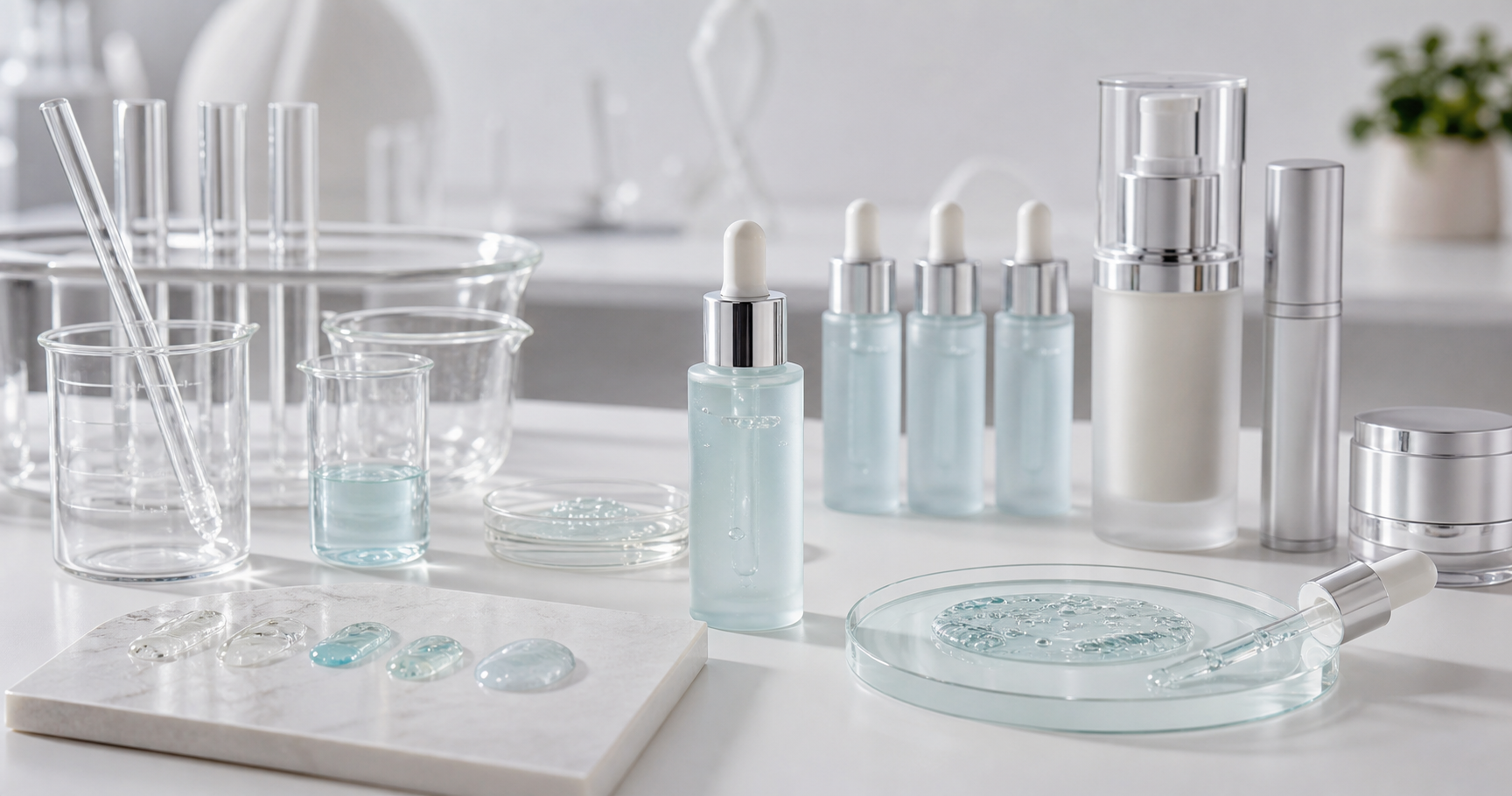
Packaging is not only a brand design decision. It affects MOQ, cost, stability, user experience, filling speed, leakage risk, shipping protection, and artwork schedule. Droppers are familiar and visually premium, but they require attention to viscosity, pickup, bottle neck, cap fit, and glass breakage. Airless pumps can feel cleaner and controlled, but they may raise component cost and require compatibility review. Plastic bottles and pump bottles may suit larger fill sizes or more accessible price points.
Mooyam Cosmetic’s packaging sourcing support can help compare bottle, dropper, airless, label, carton, and decoration options. For low MOQ launches, stock packaging with clean decoration is often more practical than a fully custom mold. For premium or retail-focused brands, custom components may support stronger positioning but require longer lead times.
From Sample Development to Bulk Production
A clear process reduces delays. After the product brief is reviewed, the factory recommends a development route and prepares initial samples. The buyer evaluates texture, odor, absorption, appearance, packaging direction, and compatibility with the target routine. Revisions should be specific: for example, less tacky, more watery, lower fragrance, higher viscosity, or better pump compatibility.
Once the formula direction is approved, packaging and artwork move forward. The factory then checks fill weight, appearance, component fit, stability direction, and production feasibility before bulk manufacturing. During bulk production, quality control and compliance support focuses on raw material control, batch records, viscosity, odor, appearance, filling weight, packaging inspection, retained samples, and shipment preparation.
| Stage | Buyer Decision | Factory Support |
|---|---|---|
| Brief review | Positioning, texture, fill size, MOQ, target market | Route selection and feasibility review |
| Lab sampling | Approve or revise skin feel, fragrance, viscosity, ingredient direction | Sample development and revision guidance |
| Packaging match | Choose bottle, dropper, pump, label, carton, decoration | Packaging sourcing, compatibility review, lead time planning |
| Bulk production | Confirm PO, artwork, approved sample, shipping needs | Manufacturing, filling, quality control, export support |
Buyer Checklist for a Hydrating Serum Project
- Define whether the launch is private label, ODM, or custom formulation.
- Prepare benchmark products and describe texture in practical words, not only ingredient names.
- Confirm target fill size, packaging type, carton needs, and decoration method early.
- Ask how MOQ is affected by formula batch size, packaging components, and carton quantities.
- Evaluate samples under realistic conditions, including layering with toner, cream, sunscreen, or makeup.
- Review quality control points such as viscosity, odor, appearance, filling weight, packaging inspection, and retained samples.
- Discuss export support and target market label or documentation needs before bulk production.
Common Mistakes to Avoid
One common mistake is choosing ingredients before defining the product experience. Buyers may request a long ingredient list, but the final serum must still feel elegant, remain stable, fit packaging, and meet cost goals. Another mistake is selecting packaging only by appearance. A beautiful dropper bottle can create problems if the serum is too viscous, if the cap does not seal well, or if the carton cannot protect the bottle during export shipping.
Buyers should also avoid approving samples too quickly. A serum should be checked for texture after storage, odor changes, color changes, packaging interaction, and usability. For international sales, the brand or importer should review local requirements before using strong claims. A reliable manufacturer can support information preparation, but requirements vary by market.
How Mooyam Cosmetic Supports Your Serum Launch
Mooyam Cosmetic helps overseas brands develop hydrating serum projects through OEM/ODM route selection, product brief review, formula sampling, low MOQ planning, packaging sourcing, sample approval, bulk production, quality control, and export support. Our team can help translate a product idea into a practical manufacturing plan for private label skincare and custom serum development.
We work with beauty brands, Amazon sellers, DTC businesses, distributors, salon brands, and sourcing managers. We support brand and wholesale manufacturing projects only and do not accept retail orders.
Develop a Hydrating Serum With Mooyam Cosmetic
Looking for a reliable cosmetic OEM/ODM manufacturer for your skincare brand? Mooyam Cosmetic can help with hydrating serum formula planning, private label options, custom formulation, packaging sourcing, sample development, low MOQ production, quality control, and export support. Contact us to discuss your product idea and manufacturing solution.
FAQ
Can I launch a hydrating serum as a private label product?
Yes. Private label skincare can be a practical route if you want a faster launch using existing formula options and standard packaging with your brand artwork.
When should I choose custom formulation?
Choose custom formulation when you need a specific texture, ingredient direction, sensory profile, price position, or product story that cannot be met by available private label formulas.
What packaging is common for hydrating serum?
Droppers, airless pumps, pump bottles, and small serum bottles are common. The right choice depends on viscosity, fill size, cost, MOQ, decoration, and export packing needs.
How many sample rounds are usually needed?
The number depends on how clear the brief is and how specific the formula target is. A simple private label project may need fewer rounds, while custom formulation may need more review.
Can a cosmetic factory help with low MOQ serum production?
Yes, but MOQ depends on formula batch size, packaging component minimums, decoration method, and carton requirements. Stock packaging often supports a more practical low MOQ route.
What quality checks matter for hydrating serum?
Common checks may include appearance, odor, viscosity, pH where relevant, filling weight, packaging fit, leakage review, stability direction, batch records, and retained samples.
Can Mooyam Cosmetic help with export documents?
Mooyam Cosmetic can support export communication and product information preparation. Exact documents and compliance responsibilities vary by product, importer, channel, and target market.