
Cosmetic product cost is rarely decided by one factor. A low unit price can become unrealistic once the brand adds premium actives, imported packaging, small order quantity, decoration, testing, shipping cartons, and quality control requirements. For overseas B2B buyers, understanding the relationship between formula, packaging, and MOQ makes quotations easier to compare and helps prevent costly changes before bulk production.
This guide explains how a cosmetic OEM manufacturer reviews cost drivers for private label skincare and custom formulation projects. It is written for beauty startups, procurement managers, Amazon sellers, DTC brands, distributors, and private label buyers that need practical budget planning before they request samples or place a production order.
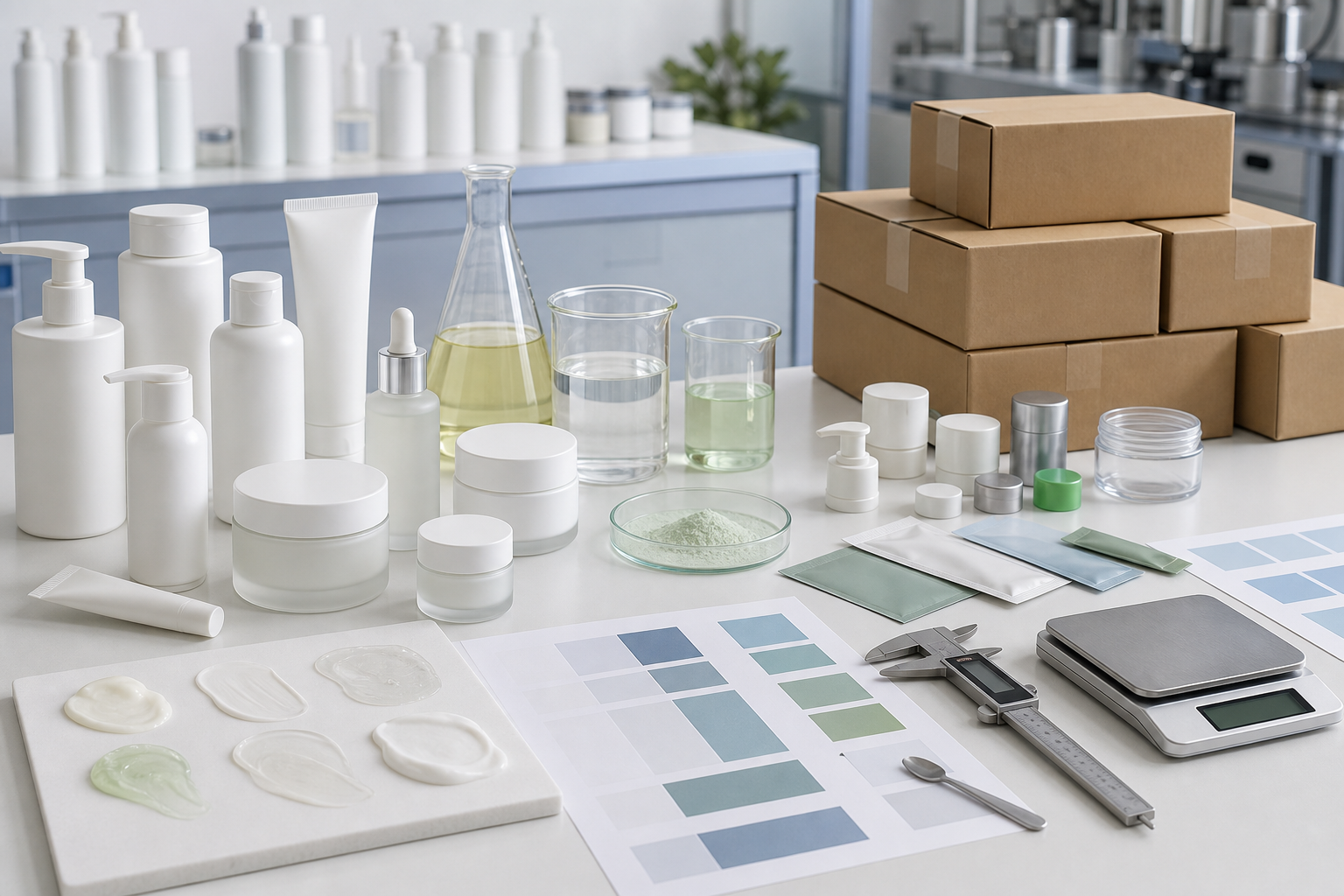
- Formula complexity, packaging choice, MOQ, decoration, testing, and production controls all affect cosmetic product cost.
- A quotation is more accurate when the buyer shares target market, formula direction, packaging style, order quantity, and price range.
- Low MOQ can support startups, but very small quantities may increase unit cost or limit packaging options.
- Mooyam Cosmetic helps buyers compare cost trade-offs through OEM/ODM cosmetic manufacturing support, sample development, packaging sourcing, and quality control.
Why Cosmetic Product Cost Varies Between Projects
Two skincare products may look similar on the shelf but have very different cost structures. One may use a simple stock formula in a standard bottle. Another may require a custom emulsion, multiple hero ingredients, special fragrance direction, airless packaging, decorated cartons, market-specific label review, and extra testing. The buyer sees two moisturizers; the factory sees two different production systems.
That is why a cosmetic ODM manufacturer needs more than a product name to quote accurately. “Face serum” or “body lotion” is a starting point, not a complete cost brief. The quotation becomes more reliable when the buyer shares product size, formula positioning, texture, active direction, packaging reference, target order quantity, artwork requirements, and shipping destination.
Formula: The First Cost Driver
The formula affects raw material cost, sample time, testing needs, filling method, and stability work. A basic private label formula usually costs less and moves faster than a highly customized formula with unusual texture, multiple active blends, restricted ingredients, or a specific sensory benchmark. This does not mean a simple formula is always better; it means the brand should match complexity to its market strategy.
For example, a startup may benefit from a proven base formula with moderate customization if it needs to launch quickly and test market demand. A more established brand may invest in deeper custom formulation development to create a stronger product story. Both routes can be valid if the buyer understands cost and timeline implications.
Common Formula Factors That Affect Cost
Raw material grade, active concentration, fragrance, color, preservative system, emulsifier system, viscosity target, ingredient restrictions, formula stability, and testing scope all influence cost. Requirements may also vary by target market, especially when claims, restricted ingredients, or documentation expectations are involved. Buyers should avoid asking for premium performance, ultra-low MOQ, custom texture, special packaging, and the lowest price at the same time without prioritizing trade-offs.
Packaging: The Visible Cost Driver Buyers Often Underestimate
Packaging sourcing can be simple or complex depending on the desired look. Standard jars, bottles, droppers, tubes, and pumps are usually easier to source. Custom molds, special decoration, metallic finishes, complex cartons, inserts, and multi-piece sets may increase MOQ, lead time, defect risk, and cost. A beautiful pack is important, but it should fit the brand’s stage and channel.
Mooyam Cosmetic helps buyers review cosmetic packaging options together with formula compatibility. This matters because some products need airless pumps, opaque bottles, compatible liners, squeeze tubes, or jars with better sealing. Packaging is not only visual branding; it is also part of product quality control.
| Cost Area | Lower-Cost Direction | Higher-Cost Direction | Buyer Decision |
|---|---|---|---|
| Formula route | Stock or lightly customized base formula. | Deep custom formulation with special sensory target or active blend. | Choose based on launch stage, claims, and differentiation needs. |
| Packaging | Available standard bottle, jar, tube, or pump. | Custom mold, special finish, multi-component set, or imported component. | Balance brand image with MOQ and lead time. |
| MOQ | Higher volume spreads setup and sourcing costs. | Low MOQ may raise unit cost or limit decoration choices. | Plan launch quantity, cash flow, and reorder timing together. |
| Testing and QC | Basic checks aligned with formula and market needs. | Additional stability, compatibility, inspection, or documentation scope. | Do not cut necessary quality control to chase a lower quote. |
MOQ: Why Small Orders Can Have a Higher Unit Cost
Low MOQ is helpful for new brands because it reduces inventory risk. However, a smaller order quantity can raise unit cost because setup, labor, sampling, packaging sourcing, artwork preparation, and QC work are spread across fewer units. Some packaging suppliers also set their own MOQ, which may be higher than the formula filling MOQ.
A low MOQ project is strongest when the buyer keeps the first launch focused. Instead of launching too many SKUs with different formulas and packaging, a startup may begin with one or two hero products, use available packaging, and reserve deeper customization for the second order. This approach can reduce cash pressure while still creating a professional private label skincare line.
How to Read a Cosmetic Manufacturing Quotation
A useful quotation should make the assumptions clear. Buyers should check whether the price includes formula development, sample fees, packaging, decoration, filling, carton, label, testing, export packing, and documentation support. If two suppliers quote very different prices, the difference may come from what is included, not only factory margin.
When comparing suppliers, ask whether the quoted packaging is the exact component you approved, whether decoration is included, whether formula revisions are limited, and whether the MOQ applies to bulk product, packaging, or finished goods. Mooyam Cosmetic encourages buyers to compare quotations by specification rather than by headline unit price alone.
| Question to Ask | Why It Matters | Risk If Ignored |
|---|---|---|
| Is this a stock formula, adjusted formula, or fully custom formula? | It affects sample time, cost, uniqueness, and testing scope. | The buyer may expect custom work while receiving a basic formula. |
| Is packaging included in the price? | Bottle, pump, carton, label, and decoration can change total cost. | The final project cost may rise after sample approval. |
| What MOQ applies to each component? | Formula, bottle, cap, pump, label, carton, and decoration may differ. | Leftover packaging inventory or delayed sourcing can occur. |
| What quality control steps are included? | Inspection, filling weight, appearance, leakage, and retained samples protect the project. | A cheap quote may omit checks that serious buyers need. |
Quality Control Should Not Be Treated as Optional
Some buyers try to reduce cost by removing testing or inspection. That can create bigger losses later if the product separates, leaks, changes odor, has inconsistent filling weight, or uses packaging that does not perform well during shipping. Quality control protects both the buyer and the factory.
For B2B projects, Mooyam Cosmetic reviews raw material control, batch records, sample approval, packaging inspection, filling standards, appearance checks, retained samples, and export packing. Buyers can review our quality and compliance FAQ for a general view of how these steps support cosmetic OEM/ODM production. Requirements still depend on the product type and target market.
Buyer Checklist Before Requesting a Quote
- Share the product type, size, target market, sales channel, and benchmark texture.
- Decide whether you need stock formula, adjusted ODM formula, or deeper custom formulation.
- Prepare packaging references, but stay open to standard components if low MOQ and cost control are priorities.
- Give your expected order quantity, launch timeline, and target cost range so the factory can recommend realistic options.
- Ask whether sample development, packaging sourcing, decoration, testing, and export packing are included.
- Confirm that the supplier supports business projects only if you need wholesale production, not retail purchasing.
How Mooyam Cosmetic Helps Buyers Control Cost
Mooyam Cosmetic supports private label skincare, cosmetic OEM manufacturing, cosmetic ODM manufacturing, sample development, packaging sourcing, low MOQ planning, bulk production, quality control, and export support. Our role is to help brands understand the cost impact of each decision before the project reaches production.
We do not recommend choosing the cheapest path blindly. A strong production plan should fit the brand’s stage, target market, product claims, packaging expectations, and reorder strategy. Sometimes the best cost decision is to simplify the first launch. Sometimes it is to invest more in the formula or packaging because the product is central to the brand’s positioning.
Request a Practical OEM/ODM Quote
Looking for a reliable cosmetic OEM/ODM manufacturer to estimate your cosmetic product cost? Contact Mooyam Cosmetic with your formula direction, packaging preference, MOQ target, launch market, and production timeline. We can help you compare practical options for sample development, packaging, quality control, and bulk production.
FAQ
Why does cosmetic product cost vary so much?
Cost varies because formula complexity, raw materials, packaging, MOQ, decoration, testing, labor, and export packing differ from project to project.
Is a stock formula always cheaper?
Usually it is more cost-efficient than full custom formulation, but the best choice depends on brand positioning, launch timeline, differentiation needs, and target market.
Does low MOQ always mean lower total risk?
Low MOQ can reduce inventory risk, but it may increase unit cost or limit packaging choices. Buyers should compare cash flow, launch plan, and reorder strategy together.
Can packaging be changed after formula approval?
It can be changed, but late changes may require compatibility checks, new samples, artwork changes, and schedule updates. Packaging should be discussed early.
What information should I send for a quote?
Send product type, target market, formula direction, benchmark texture, packaging reference, order quantity, target cost range, claim direction, and launch timeline.
Should I choose the lowest cosmetic manufacturer quote?
Not automatically. Check whether the quote includes the same formula route, packaging, decoration, testing, QC, and export support before comparing unit price.
Does Mooyam Cosmetic accept retail orders?
No. Mooyam Cosmetic works with brand owners, distributors, Amazon and DTC sellers, and business buyers for wholesale OEM/ODM cosmetic manufacturing projects.