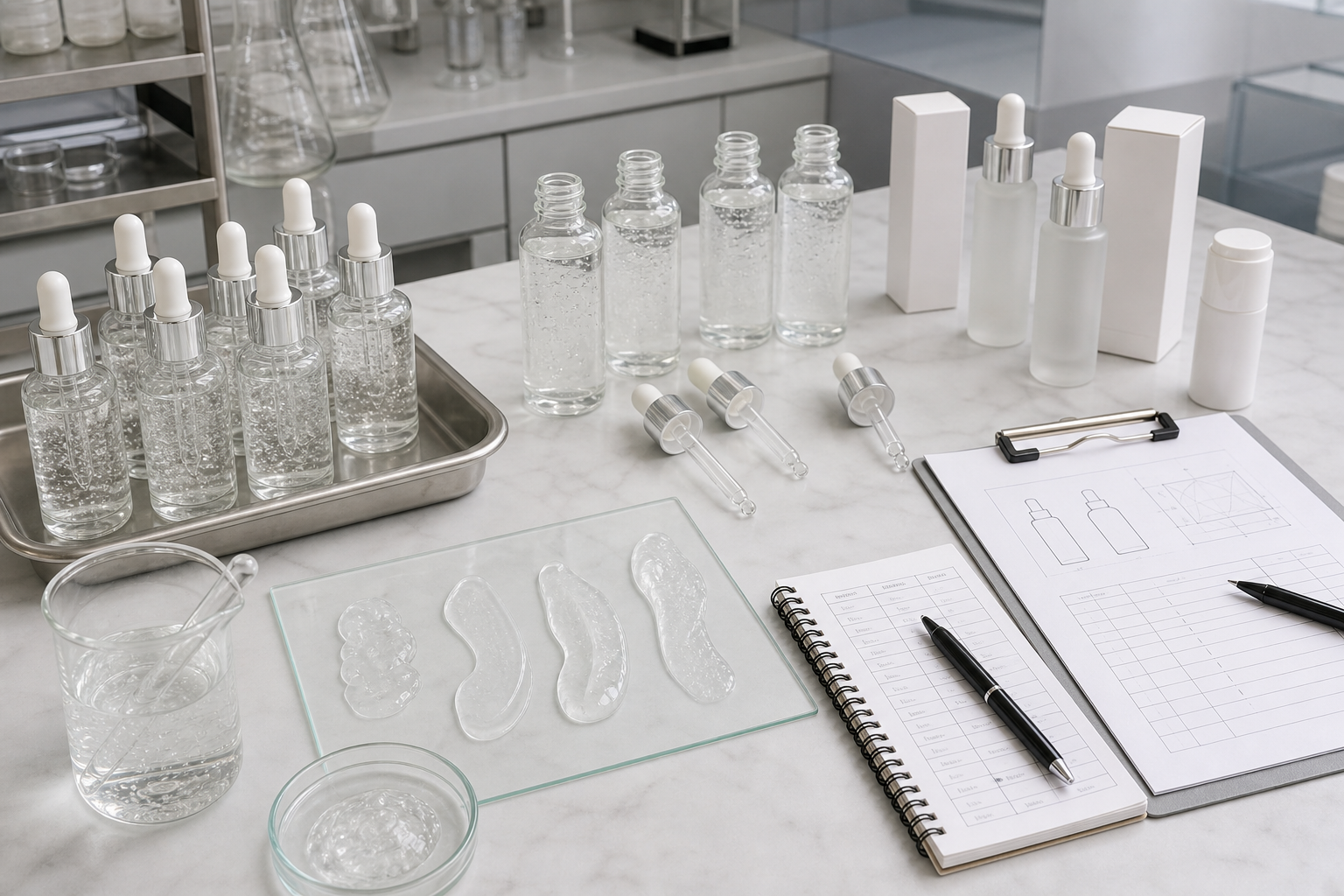
A hyaluronic acid serum looks simple on the shelf, but it requires careful development if you want a stable texture, a pleasant skin feel, clear packaging direction and a realistic production plan. For overseas beauty brands, Amazon sellers, DTC teams and distributors, the question is not only which ingredient to use. The real question is how to turn a serum concept into a private label skincare product that can be sampled, approved, manufactured and reordered with fewer surprises.
This guide explains how to develop a hyaluronic acid serum with a cosmetic OEM manufacturer or cosmetic ODM manufacturer, including formula brief, packaging sourcing, sample development, low MOQ planning, quality control and export support. Mooyam Cosmetic supports brand and wholesale OEM/ODM projects only and does not accept retail orders.
Quick Summary
- Hyaluronic acid serum projects should begin with texture, target market, packaging and claim boundaries, not only an ingredient percentage.
- Brands can choose private label skincare, stock base adjustment or custom formulation depending on launch speed, budget and differentiation needs.
- Packaging compatibility matters because water-rich serums can be affected by pump performance, dropper usability, fill weight and leakage risk.
- Quality control should cover appearance, viscosity, pH, odor, fill volume, packaging fit, stability and batch traceability.
What a Hyaluronic Acid Serum Project Really Includes
Many buyers ask a factory for a hyaluronic acid serum as if it were a single standard formula. In reality, the category can include lightweight watery serums, gel serums, sticky high-cushion textures, fast-absorbing formulas, fragrance-free sensitive-skin directions, or layered formulas with humectants and barrier-support ingredients. Each route affects sampling time, packaging choice, MOQ and final cost.
A practical project brief should describe the desired texture, target user, sales channel, target market, packaging style, ingredient preferences, restricted ingredients, budget range and expected order quantity. If you are not ready for a full custom formula, a private label skincare route can help you launch faster while still customizing packaging and brand presentation.
Choose the Right Development Route
The best route depends on how much uniqueness the brand needs and how quickly it wants to launch. A startup may prefer an existing base formula with small adjustments. A mature DTC brand may want custom texture, a defined hero ingredient story and a packaging system that supports repeat purchase. A distributor may prioritize stable supply, export documents and carton-level consistency.
| Route | Best For | Buyer Considerations |
|---|---|---|
| Private label stock serum | Fast launch, lower development risk and low MOQ planning. | Check available textures, packaging fit, artwork options and target market label needs. |
| Stock base adjustment | Brands that want a familiar base with minor sensory or ingredient changes. | Confirm whether changes affect stability, MOQ, sample timing and cost. |
| Custom formulation | Brands needing a more differentiated texture, ingredient story or channel position. | Plan more sample rounds, compatibility checks and a longer development timeline. |
If your product needs a unique ingredient system, texture or benchmark feel, Mooyam can support custom formulation from brief review to sample revision. If your priority is speed and launch control, the OEM/ODM team can help compare ready formulas and packaging options first.
Formula Factors Buyers Should Decide Early
Hyaluronic acid serums are often built around water, humectants, thickeners, preservative systems and supporting ingredients. The exact formula should be developed by the factory R&D team, but the buyer should still define the commercial direction. Do you want a clear gel, a fluid watery serum, or a more cushiony texture? Should it be fragrance-free? Is the product for humid climates, dry climates, spa retail, Amazon bundles, or a DTC routine?
Brands should avoid promising medical results or guaranteed performance. Hyaluronic acid is widely understood as a cosmetic hydration-related ingredient, but packaging and advertising wording must match the target market. Requirements vary by country, and final claims should be reviewed before printing labels.
Packaging Sourcing and Compatibility
Packaging is not a decoration decision. For serum, the dispenser controls user experience, perceived value and production risk. Droppers look premium but need good pipette performance. Pumps reduce direct contact but must handle viscosity. Airless bottles can support a cleaner user experience but may require higher MOQ or more component testing.
Mooyam Cosmetic supports packaging sourcing and customized packaging for private label and OEM/ODM projects. The team can compare bottle size, closure type, carton structure, label material, print method and shipping carton requirements before bulk production. Good packaging planning also helps prevent leakage, poor dispensing, label lifting and carton damage.
| Packaging Option | Advantages | Checks Before Approval |
|---|---|---|
| Glass dropper bottle | Premium look, clear formula visibility and familiar serum format. | Dropper suction, cap torque, leakage, breakage risk and export packing. |
| Plastic pump bottle | Lighter weight and easier handling for ecommerce or travel sets. | Pump output, formula viscosity, decoration durability and component MOQ. |
| Airless bottle | Clean dispensing and stronger premium position. | Compatibility, fill process, actuator performance and cost impact. |
Sample Development and Approval Workflow
A disciplined sample process saves time. Start with a clear benchmark and brief. Review the first sample for texture, absorption, odor, appearance and packaging direction. Give specific feedback instead of broad comments such as “make it better.” If the formula changes, ask whether stability, preservative system or packaging compatibility must be checked again.
For a new brand, two or three serious sample rounds are more useful than endless minor revisions. Once the serum and packaging are approved, the factory can prepare the production specification, artwork check, batch code position, filling requirements and inspection plan.
Buyer Checklist Before Ordering
- Define whether you need private label skincare, adjusted stock formula or full custom formulation.
- Prepare benchmark samples, target texture, target price range and expected order quantity.
- Confirm target market requirements for ingredient list, label language and cosmetic claims.
- Choose bottle type, capacity, decoration method, carton style and shipping carton needs.
- Approve serum texture, odor, appearance, pH, viscosity range and packaging compatibility.
- Align sample timing, low MOQ options, bulk production lead time and export support needs.
Quality Control for Serum Production
Quality control should be planned before bulk production, not added at the end. For a serum, typical checks include raw material control, batch mixing records, appearance, odor, pH, viscosity, microbial quality where applicable, fill volume, packaging cleanliness, label position, carton printing and final packing. Stability and compatibility expectations should match the formula, packaging and market route.
Mooyam Cosmetic explains quality checkpoints through its quality control and compliance support. The factory can help buyers understand what should be checked, while final regulatory decisions depend on the destination market and the brand’s sales claims.
FAQ
Can I launch a hyaluronic acid serum with low MOQ?
Low MOQ may be possible when using existing formula and available packaging. Custom formula, special bottles or decorated components can increase MOQ.
Is a custom formula always better than private label?
No. Private label can be the better first launch route when speed, budget and lower development risk matter more than formula uniqueness.
Can I choose my own serum bottle?
Yes, but the factory should check compatibility, filling requirements, leakage risk, decoration method and component MOQ before approval.
How many samples should my team test?
Test enough samples to confirm texture, packaging fit, user experience and label direction. Two or three focused rounds are common for many projects.
Can Mooyam help with export documents?
Mooyam can support export coordination and project documents related to production, but requirements vary by target country and buyer route.
Does Mooyam accept retail serum orders?
No. Mooyam Cosmetic supports brand, wholesale and OEM/ODM manufacturing projects, not retail purchases.
Build Your Hyaluronic Acid Serum with Mooyam
Looking for a reliable cosmetic OEM/ODM manufacturer for a hyaluronic acid serum project? Mooyam Cosmetic can help with private label skincare, custom formulation, packaging sourcing, sample development, low MOQ planning, bulk production, quality control and export support. Contact us to discuss your formula direction, packaging options, MOQ and production solution.