
Hydrocolloid acne patches remain attractive for beauty brands because they are visual, compact, easy to explain and useful for customers who want a less messy spot-care format. For OEM/ODM buyers, the real work is selecting the right patch structure, shape, adhesive feel, pouch packaging and claim position before placing a bulk order.
This guide explains how Mooyam Cosmetic can support beauty brands with hydrocolloid acne patch development, material selection, packaging sourcing, quality control and mass production. Mooyam Cosmetic is a cosmetics and makeup OEM/ODM factory for brand orders and does not accept retail orders.
Quick Summary
- Hydrocolloid acne patches fit brands looking for a practical spot-care SKU with strong social-media visibility and small-package logistics.
- Buyers should define whether the project is a cosmetic cover patch, a hydrocolloid blemish-care patch or an OTC acne treatment product.
- Material thickness, adhesive strength, edge taper, shape, patch transparency and sachet seal quality strongly affect repeat purchase.
- Claims around treating acne, reducing pimples or active ingredients may trigger OTC drug requirements in markets such as the United States.
Why Acne Patches Are Still a Strong OEM/ODM Category
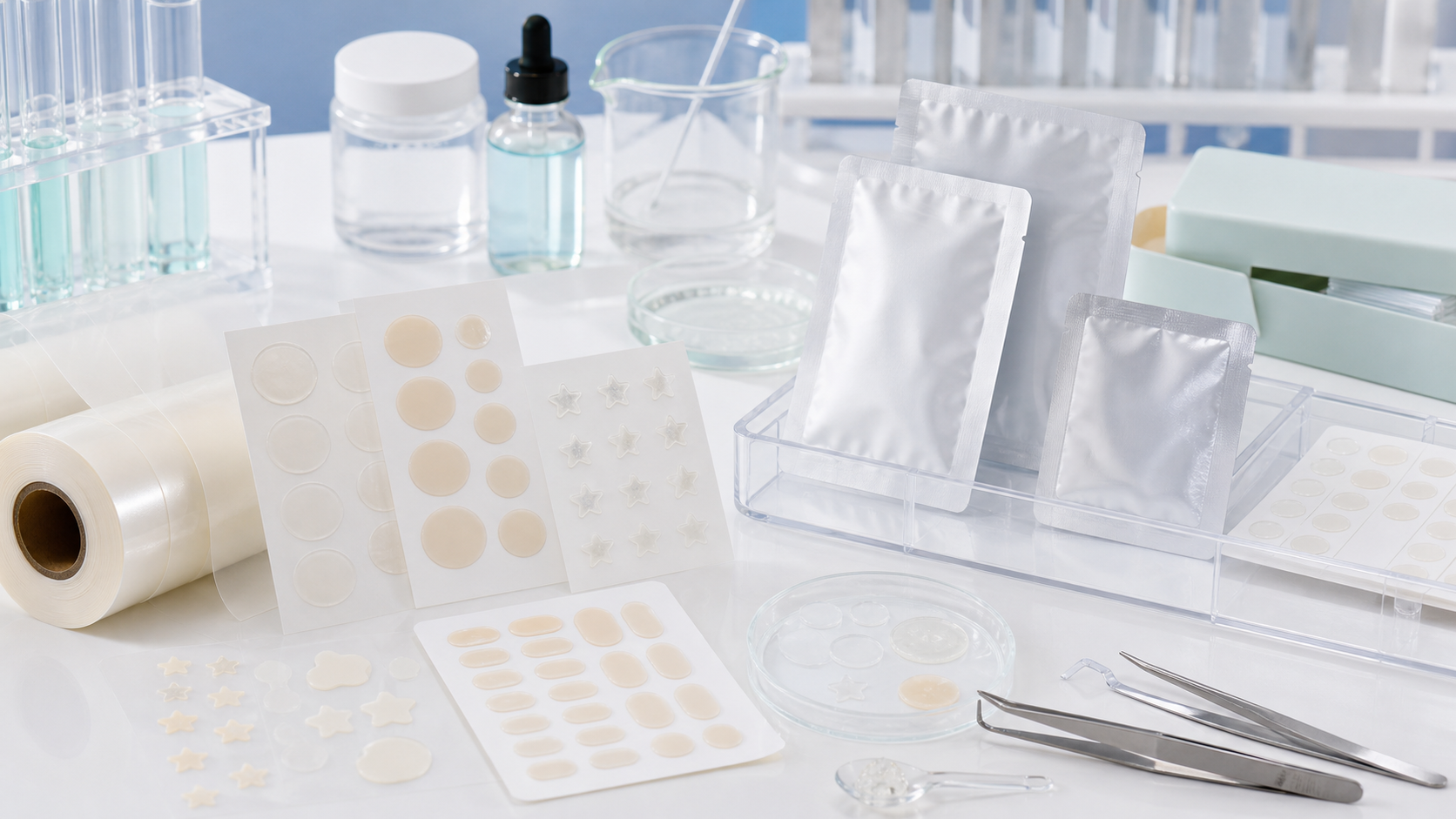
Acne patches are no longer only functional white circles sold in clinical packs. The category now includes transparent day patches, overnight hydrocolloid patches, colorful shapes, invisible edge designs, body patches and sachet systems made for kits or subscription boxes. This variety gives brands room to create a clear product story without needing a very large formula portfolio.
For purchasing teams, the attraction is also operational. Patches are lightweight, easy to ship and suitable for trial sizes, multi-packs, retail boxes and promotional kits. However, the development is not as simple as choosing a sticker shape. A patch that lifts at the edge, feels too thick, leaves residue or has weak sachet sealing can damage the brand experience quickly.
Start With the Claim Position
The first decision is not shape or color. It is the claim position. If the brand wants a simple hydrocolloid spot cover, the project can be managed differently from a patch that claims to treat acne, reduce pimples or deliver active acne ingredients. In the U.S., acne treatment claims can fall under OTC drug rules, so the ingredient system and label language require careful review.
Mooyam Cosmetic can help buyers prepare a practical brief, but the final compliance direction should match the selling country and the brand’s legal review. A conservative cosmetic route may focus on covering blemishes, protecting the spot from picking and supporting a cleaner-looking routine. A treatment route needs more regulatory planning.
Common Product Directions
- Basic hydrocolloid patch: Usually positioned for spot coverage and absorbing visible fluid from blemish-prone areas.
- Invisible day patch: Uses thinner material and softer edges so it can sit under light makeup.
- Decorative patch: Uses stars, hearts or playful shapes for social visibility, teen lines or limited editions.
- Active patch: May include salicylic acid or other actives, which requires stronger claim and market review.
Material, Shape and Packaging Choices
| Decision Area | Buyer Options | Factory Checkpoint |
|---|---|---|
| Patch Type | Standard hydrocolloid, ultra-thin day patch, thicker overnight patch or decorative shape. | Check thickness, absorbency, edge taper, transparency and skin comfort. |
| Shape and Size | Round, oval, mini, large spot, star, heart or mixed-size sheet. | Confirm die-cut accuracy, easy peeling and no tearing when removed from release liner. |
| Packaging | Single sachet, sheet pouch, carton set, jar-style refill pack or travel case. | Test seal strength, moisture protection, print durability and batch coding. |
| Claim Route | Cosmetic cover claim, blemish-care support claim or OTC acne treatment claim. | Review destination market rules, active ingredients, warnings and label language. |
Sampling and MOQ Planning
A clean acne patch project begins with a defined count per sheet, shape direction, patch thickness, packaging format and claim level. If the buyer wants a fast private label route, a stock hydrocolloid sheet with custom carton and pouch artwork may be the most efficient path. If the buyer wants a unique brand signal, custom shapes or mixed-size layouts should be discussed early because tooling and MOQ can change.
Mooyam Cosmetic can support both stock and customized OEM/ODM approaches. For a new brand, it is usually better to start with a focused patch set rather than too many variants. One reliable invisible day patch or one strong overnight patch can be easier to launch, educate and reorder than a large range with unclear differences.
| Development Stage | What Mooyam Cosmetic Checks | Buyer Output |
|---|---|---|
| Brief | Patch use case, target market, claim level, sheet count, shape and packaging budget. | Clear product specification and benchmark samples. |
| Sample | Material feel, adhesion, peelability, patch visibility and sachet format. | Approved patch sheet and packaging direction. |
| Pre-production | Artwork, seal area, batch code, carton fit, labeling and claim wording. | Final component and artwork approval. |
| Bulk QC | Die-cut quality, missing pieces, seal integrity, count accuracy, appearance and packaging inspection. | Finished private label or custom acne patch order. |
Buyer Checklist Before Ordering
- Decide whether the product is cosmetic blemish cover, hydrocolloid care patch or OTC acne treatment before naming claims.
- Confirm target market requirements for acne wording, active ingredients, warnings and ingredient listing.
- Approve patch thickness, transparency, adhesive feel and edge lift after real wear testing.
- Check whether the patch can be peeled from the release liner without folding, tearing or leaving residue.
- Test pouch sealing, moisture protection, carton fit, batch code position and retail display requirements.
- Align MOQ, tooling needs, sample rounds, artwork deadline and lead time before launch planning.
Quality Control and User Experience
Good acne patches are judged by small details. The patch should lift cleanly from the liner, sit flat on skin, stay in place for the intended wear time and remove without uncomfortable pulling. The material should not feel too stiff, and the edge should not create an obvious ring unless the product is intentionally decorative.
For bulk production, QC should include sheet count, die-cut position, missing patch inspection, patch surface appearance, pouch seal testing, label accuracy, packaging cleanliness and lot traceability. If the product uses any active ingredient or stronger acne treatment wording, documentation and testing expectations can become more complex.
OEM/ODM Support from Mooyam Cosmetic
Mooyam Cosmetic supports beauty brands with hydrocolloid acne patch material selection, sample comparison, custom shape planning, sachet and carton packaging, MOQ planning, quality control and mass production. Share your target market, claim direction, patch count, shape idea, packaging reference and expected order quantity with our team. We support brand and wholesale OEM/ODM orders only and do not accept retail purchases.
FAQ
Can Mooyam Cosmetic make custom patch shapes?
Yes. Custom shapes such as stars, hearts or mixed-size sheets can be developed, but tooling, die-cut accuracy, MOQ and lead time should be confirmed before launch planning.
Can acne patches include salicylic acid?
It may be possible, but salicylic acid and acne treatment claims can change the regulatory route in some markets. Buyers should confirm destination markets before approving active ingredients and label wording.
What packaging is best for acne patches?
Single sachets and sheet pouches are common because they protect the patch and support clean retail presentation. Cartons, travel cases and refill formats can be considered based on price point and channel.
What QC issues matter most?
Key checks include adhesion, edge lift, die-cut accuracy, missing patches, liner release, pouch seal strength, count accuracy and packaging appearance.
Trend Reference / Sources
These links are used only as trend, SEO direction, regulatory or industry background references. This article is original B2B OEM/ODM purchasing content and does not copy, translate or reuse the structure of the referenced pages. Google Trends comparisons for pimple patch, hydrocolloid patch and acne patch were reviewed as directional search-interest checks, but no direct live query link is added because dynamic Trends URLs can rate-limit automated validation.
- Google Search Central helpful content guidance for people-first SEO direction.
- Global Market Insights anti-acne dermal patch market report for category growth context.
- Market Research Future anti-acne dermal patch market report for category demand context.
- American Academy of Dermatology acne resource for skin concern background.
- FDA OTC acne drug products rulemaking history for acne claim and regulatory background.