
Jelly blush is moving from a social-media texture trend into a serious OEM/ODM brief for beauty brands that want playful color, sensorial payoff and repeatable manufacturing. For buyers, the real question is not only whether the format looks fresh, but whether the formula can stay stable, apply evenly and fit the right packaging.
This guide explains how Mooyam Cosmetic can help brand teams develop jelly blush and gel blush products for private label or custom OEM/ODM projects. Mooyam Cosmetic is a cosmetics and color makeup factory for brand orders only; we do not accept retail orders.
Quick Summary
- Jelly blush works best when texture, pigment load and package compatibility are developed together.
- Brands should decide early whether they need a translucent gel tint, bouncy cream-gel, water blush or hybrid cheek-and-lip concept.
- Color additive compliance, shade stability and microbial control matter more than trend language.
- Mooyam Cosmetic can support formula samples, shade matching, packaging coordination, QC and OEM/ODM production planning.
Why Jelly Blush Fits 2026 Beauty Development
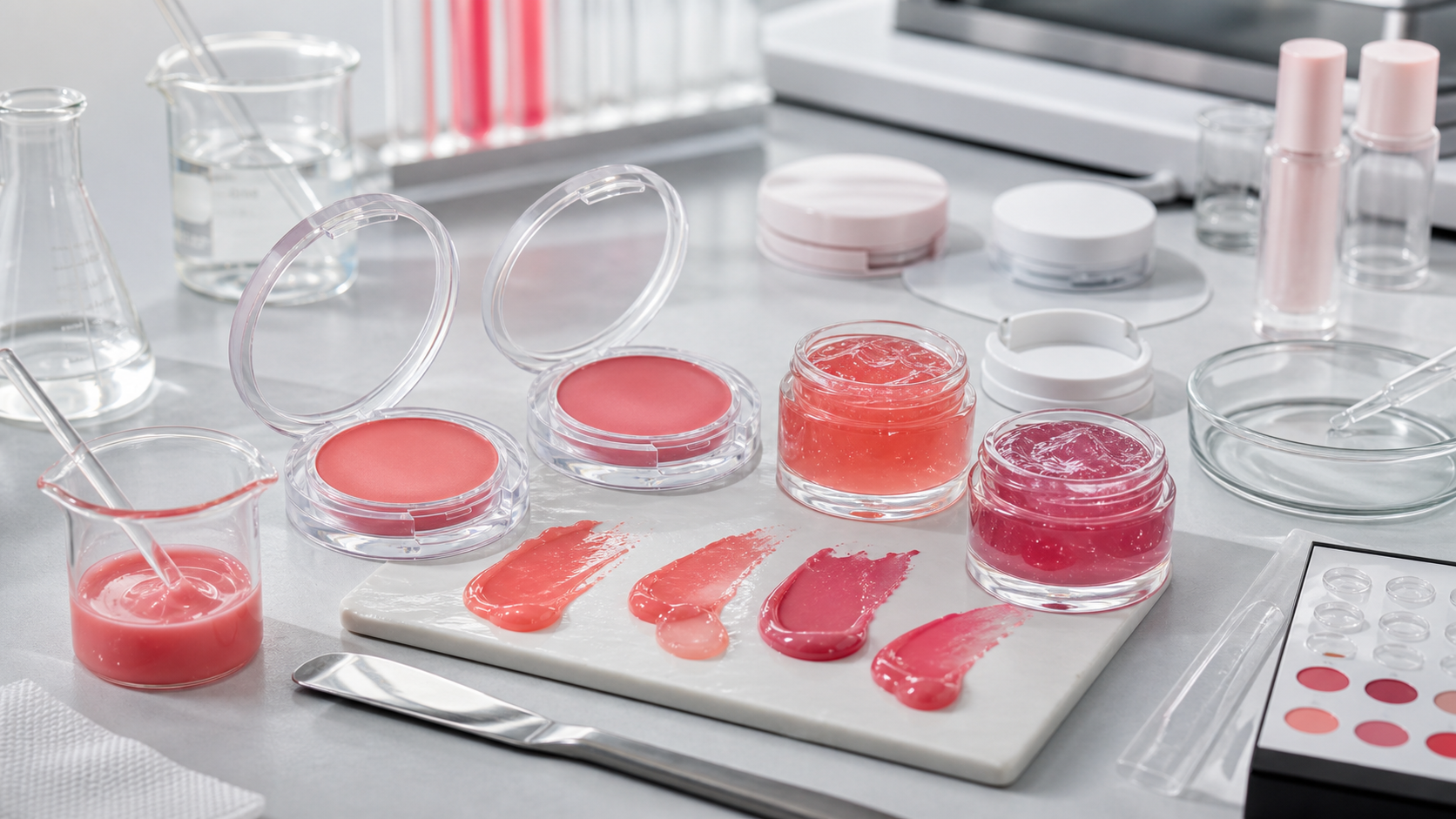
Jelly and gel blush formats give brands a clear product story: visible texture, dewy color and an easy application moment. Compared with traditional powder blush, the formula can feel fresher and more skincare-adjacent. Compared with highly pigmented liquid blush, jelly blush can be positioned as buildable, soft-focus and beginner friendly.
For OEM/ODM buyers, the opportunity is strongest when the product has a specific role in the range. A jelly blush can become a hero shade story, a summer launch, a Gen Z color item, a travel-friendly cheek tint or a soft makeup extension for a skincare-focused brand. The brief should define the desired skin finish, pigment strength, play time, dry-down and target market before lab development begins.
Choose the Right Jelly Blush Format
The word “jelly” can describe several formula directions. A good OEM/ODM project starts by separating the sensory idea from the actual manufacturing system.
| Format | Best For | Development Focus |
|---|---|---|
| Translucent gel tint | Sheer, juicy cheek color | Color clarity, water phase stability, preservative system |
| Bouncy cream-gel | Cream blush users who want a softer touch | Emulsion feel, payoff, pan or jar compatibility |
| Stick or dome jelly | Portable, mess-controlled application | Hardness, sweating, twist-up performance, cap seal |
| Cheek-and-lip gel | Multifunctional minimalist routines | Approved color use, taste profile, lip feel and claim control |
Formula Priorities for OEM/ODM Buyers
Texture and Payoff
A successful jelly blush should look interesting in the component and still perform after the first application. Buyers should decide if the formula needs a watery glide, a cushion feel, a cooling sensation or a creamier gel payoff. Each choice affects thickener selection, pigment dispersion, preservative strategy and filling conditions.
Mooyam Cosmetic can prepare pilot samples with different viscosity levels and shade strengths so your team can compare fingertip pickup, sponge application, brush pickup and wear behavior. This helps avoid a common problem: a formula that looks beautiful in the jar but applies patchy on skin.
Shade Logic
Jelly blush often works best with a concise shade range. Four to six shades can be enough for an initial launch if the tones are clearly separated: soft pink, peach coral, rose, berry, warm red and deeper plum. For global buyers, undertone testing on multiple skin tones should happen before packaging is confirmed.
Because color makeup depends on approved pigments and color additives, compliance checks should begin during formula development. If the product is intended for cheek only, lip-and-cheek, or near-eye use, the allowed colorants and claims may differ by target market.
Packaging Decisions That Affect Stability
Jelly blush packaging is not only a design decision. Gel formulas can be sensitive to evaporation, leakage, microbial risk and texture change. A jar may showcase the jelly look, but it also increases finger contact. A compact can improve presentation, but filling and pan adhesion must be tested. A stick format can be convenient, but it needs heat stability and clean retraction.
| Packaging Choice | Buyer Advantage | Risk to Test |
|---|---|---|
| Clear jar | Shows jelly texture immediately | Water loss, contamination, seal tightness |
| Compact pan | Easy to merchandise with shade range | Pan shrinkage, cracking, pickup consistency |
| Stick component | Portable and clean application | Heat deformation, sweating, breakage |
OEM/ODM Development Flow with Mooyam Cosmetic
Mooyam Cosmetic supports brand-side buyers from concept alignment to production planning. The process is practical and buyer focused: define the product positioning, confirm benchmark texture, develop base formula, adjust shades, test packaging compatibility, review stability, then move into pre-production and mass production.
Typical development details include formula direction, target market, shade count, packaging preference, MOQ expectations, claim language, carton requirements and timeline. For new brands, Mooyam can also recommend a more controlled launch structure, such as one core texture with a tight shade range, instead of attempting too many variants at once.
Buyer Checklist Before Sampling
- Define whether the product is cheek only or cheek-and-lip.
- Confirm desired finish: dewy, satin, natural, glassy or soft matte.
- Prepare benchmark texture references, not only competitor names.
- Decide the first shade range and target skin tones.
- Choose packaging direction early so compatibility testing is realistic.
- Clarify target market requirements for color additives, labeling and claims.
- Plan stability, heat, leakage and transport tests before launch timing is fixed.
Quality Control Points for Jelly Blush
Quality control should cover more than color approval. For jelly blush, the team should check viscosity drift, water separation, pigment settling, odor change, microbial control, fill weight, cap seal, leakage under transport simulation and shade consistency between lab batch and pilot batch. If a product is sold in warm climates, heat exposure and freeze-thaw cycling are especially important.
Mooyam Cosmetic can help align the development sample with realistic manufacturing controls. This matters because a formula that is too delicate may look impressive in a single lab cup but become difficult to fill, ship or reproduce at scale.
Develop Jelly Blush with Mooyam Cosmetic
If your brand is planning a jelly blush, gel blush or hybrid cheek color project, Mooyam Cosmetic can support OEM/ODM formula development, shade matching, packaging coordination, sampling and mass production. We work with beauty brands, importers and private label buyers; we do not sell retail single units.
FAQ
Can Mooyam Cosmetic make both jelly blush and liquid blush?
Yes. Mooyam can develop different cheek color formats, including gel blush, cream blush, liquid blush, stick blush and private label shade ranges. The best format depends on your desired texture, application method, packaging and target price.
Is jelly blush suitable for a lip-and-cheek product?
It can be, but the formula and color additives must be reviewed for the intended use and target market. A cheek-only formula should not automatically be marketed for lips unless the formula, pigments and claims support that use.
What should brands test before approving packaging?
Brands should test leakage, evaporation, formula compatibility, cap seal, heat exposure, filling behavior and user pickup. Packaging should be approved together with the final formula, not separately.
Can Mooyam help with custom shades?
Yes. Buyers can provide shade references, Pantone direction or target skin tone needs. Mooyam can prepare lab samples and refine the shade range before pilot production.
Trend Reference / Sources
- Google Trends comparison was used to review search interest around jelly blush, liquid blush, cream blush and blush stick as product-format signals.
- Google Search Central helpful content guidance was used as the SEO direction for creating useful, people-first content for buyers.
- FDA color additives permitted for use in cosmetics was referenced for compliance awareness when planning cheek and lip color products.
- FDA summary of color additives for use in the United States was referenced for market-access background. These links support trend, SEO and regulatory context; this article is original B2B OEM/ODM purchasing guidance for Mooyam Cosmetic buyers.