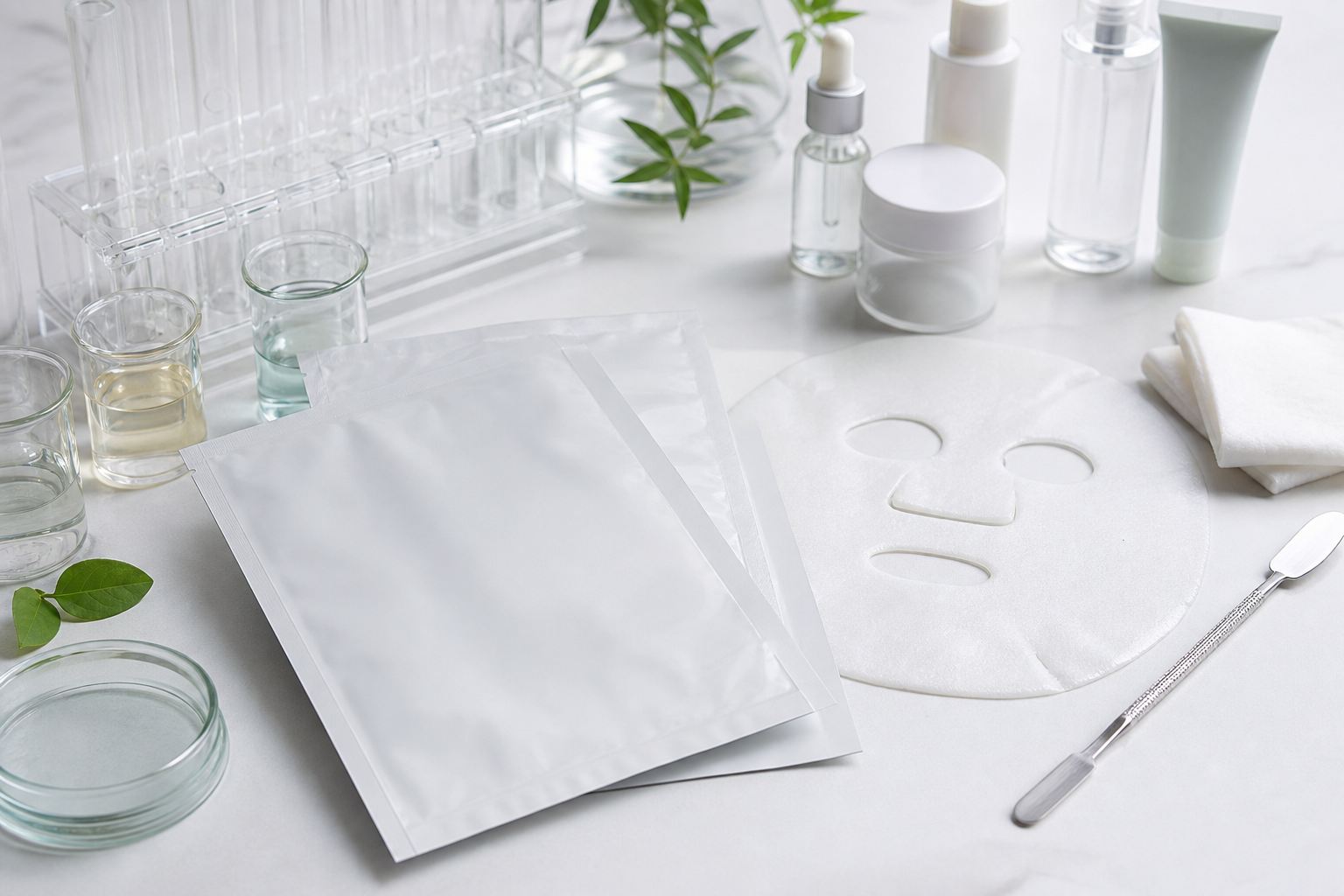
Launching a private label face mask looks simple from the outside: choose a mask type, approve a pouch design and place an order. In real OEM/ODM production, however, a successful mask product depends on fabric selection, essence viscosity, pouch sealing, stability, claim control and a launch plan that matches your brand channel.
This guide explains how overseas beauty brands, Amazon sellers, DTC founders and distributors can develop a private label face mask with Mooyam Cosmetic. We support B2B cosmetic OEM/ODM projects and wholesale manufacturing; we do not accept retail orders.
Quick Summary
- A private label face mask project should define the mask format, essence direction, target market, pouch style, MOQ and launch timeline before sampling.
- The most common options include sheet masks, hydrogel masks, eye patches, wash-off masks and sleeping masks.
- Quality control should cover mask fabric, essence loading, microbial checks, pouch sealing, leakage, stability and finished-pack inspection.
- Mooyam Cosmetic can support custom formulation, packaging sourcing, sample development, bulk production, quality control and export support for brand projects.
What Private Label Face Mask Manufacturing Means
Private label face mask manufacturing allows a brand to launch a mask product under its own brand name while working with a cosmetic OEM manufacturer or cosmetic ODM manufacturer for formula, materials, packaging and production. The buyer may start from an existing base formula, adjust a stock direction, or request a more customized concept.
For a first launch, many brands choose private label skincare because it reduces the time needed to develop every detail from zero. That does not mean the product should be generic. A strong mask project still needs a clear user story, texture preference, ingredient direction, packaging design and testing plan.
Choose the Right Face Mask Format
The product format should match your sales channel and customer expectation. A single-use sheet mask can work well for trial sets, subscription boxes and promotional bundles. A wash-off mask may support a premium routine story. Eye patches can fit quick-use social commerce, while sleeping masks are better for daily routine positioning.
| Mask format | Best brand use case | OEM/ODM development focus |
|---|---|---|
| Sheet mask | Low-friction trial product, skincare set, Amazon bundle or spa channel item | Fabric feel, essence loading, pouch sealing, leakage and skin-feel balance |
| Hydrogel mask or eye patch | Premium cooling story, under-eye care, giftable or K-beauty-inspired line | Gel strength, shape accuracy, jar or pouch compatibility and stability |
| Wash-off mask | Clay, cream, gel or exfoliating routine product for DTC and salon brands | Texture, spreadability, rinse-off feel, jar/tube compatibility and claim control |
| Sleeping mask | Leave-on moisturizer-style product for overnight routine positioning | Emulsion stability, skin feel, fragrance level, packaging and target-market claims |
Formula and Essence Decisions Before Sampling
Before requesting samples, define the main product promise in cosmetic language. Examples include hydration, soothing feel, barrier-supporting care, bright-looking skin, refreshing after-sun routine or oil-control appearance. Avoid medical claims, guaranteed results or language that suggests treatment of skin conditions. Requirements and claim rules can vary by target market, so label and marketing copy should be reviewed before launch.
For sheet masks, the essence is the product experience. Buyers should decide whether they want a watery, gel-like, milky or serum-rich texture. Too thin an essence can drip during use; too thick a texture may not absorb well into the fabric. Ingredient compatibility, fragrance level, preservative system and packaging interaction all matter before bulk production.
Packaging and MOQ Planning
Mask packaging is not only a visual decision. Pouch material, seal width, notch design, ink coverage, box structure and carton strength can affect both user experience and shipping performance. A private label skincare buyer should confirm whether the project uses ready-made pouches, custom printed pouches, retail boxes, display cartons or kit packaging.
Low MOQ can be possible for some stock formula and standard packaging routes, but custom formulation, custom pouch printing and special mask materials usually require higher planning commitment. Mooyam Cosmetic helps buyers compare practical options through OEM/ODM service planning, private label skincare options and custom cosmetic packaging sourcing.
Development Workflow from Brief to Bulk Production
A clear workflow helps prevent delays. Start with a product brief that includes target market, sales channel, mask format, ingredient direction, benchmark products, packaging preference, expected MOQ and target launch date. The factory can then recommend a formula route and prepare samples.
After sample approval, the project moves into packaging confirmation, artwork review, production planning and quality checks. If the buyer wants custom formulation, extra sample rounds may be needed to adjust skin feel, viscosity, fragrance, fabric adhesion or claim direction. For export support, share the destination market early so documents and label review can be planned appropriately.
Buyer Checklist Before Ordering Samples
- Choose the mask format and target user: hydration, soothing feel, bright-looking skin, oil-control appearance or premium routine care.
- Prepare 2-3 benchmark products for fabric, texture, pouch style and price positioning.
- Confirm whether you prefer stock formula, adjusted base formula or full custom formulation.
- Share target market and avoid claims that may create regulatory risk.
- Decide on pouch, box, kit or retail display packaging before final quotation.
- Ask about MOQ, sample timing, artwork deadline, bulk production lead time and shipping documents.
- Review quality control and compliance support before approving production.
Common Mistakes to Avoid
The first mistake is selecting a face mask only because an ingredient is trending. A trend can attract attention, but the product still needs a coherent brand story and stable formulation. The second mistake is approving a sample without testing the actual pouch, fabric and essence together. The third is treating packaging artwork as the last step; for custom pouch printing, artwork can become a schedule blocker.
Another common issue is underestimating freight and storage. Single-use masks can be heavy because of essence content. Export cartons, shelf life, storage conditions and leakage prevention should be considered early for distributors and Amazon sellers.
How Mooyam Cosmetic Supports Face Mask Projects
Mooyam Cosmetic supports overseas beauty brands with product concept review, custom formulation, sample development, packaging sourcing, low MOQ discussion, bulk production and export support. We can help you compare sheet mask, wash-off mask, sleeping mask and eye patch routes based on your brand positioning and channel needs.
Launch Your Private Label Face Mask
Looking for a reliable cosmetic OEM/ODM manufacturer for a private label face mask project? Contact Mooyam Cosmetic with your product idea, formula requirements, packaging direction, MOQ expectation and target market. Our team will review the feasible OEM/ODM path for your brand project.
FAQ
Can Mooyam Cosmetic develop private label face masks?
Yes. Mooyam Cosmetic can support private label face mask projects including sheet masks, wash-off masks, sleeping masks and related skincare formats for brand manufacturing orders.
What is the best face mask format for a new brand?
Sheet masks are often practical for trial sets and bundles, while wash-off or sleeping masks can support a more routine-based product line. The best option depends on your target customer, price point and sales channel.
Can I request a custom formula?
Yes. You can request custom formulation, but it usually requires a clearer brief, extra sample adjustment and more time than using an existing formula direction.
What affects MOQ for face mask manufacturing?
MOQ depends on formula route, mask fabric, pouch printing, box packaging, ingredient choice and filling requirements. Standard options usually provide more flexibility than fully custom components.
How should brands handle claims?
Use cosmetic-focused claims such as hydration, refreshing feel, smoother-looking skin or barrier-supporting care when appropriate. Avoid medical or guaranteed-result claims unless properly reviewed for the target market.
Can Mooyam help with packaging?
Yes. Packaging sourcing can include pouches, jars, tubes, boxes, kits and shipping cartons depending on the mask format and launch plan.
Does Mooyam accept retail orders?
No. Mooyam Cosmetic works with B2B brand projects, private label buyers, distributors and wholesale OEM/ODM production orders, not retail single-piece purchases.