
Lip stain and lip tint products are staying visible because consumers want color that feels light, looks fresh, and lasts longer than a traditional gloss. For OEM/ODM buyers, the real opportunity is to translate this demand into a stable formula, a useful shade range, and packaging that supports the product experience.
This guide is written for beauty brands planning a lip stain, lip tint, peel-off stain, or serum tint project with a cosmetics factory. Mooyam Cosmetic supports color cosmetics OEM/ODM development for brand orders; we do not accept retail orders.
Quick Summary
- Google Trends shows strong search demand for lip stain and lip tint compared with narrower stain formats.
- The best product direction depends on texture, staining level, comfort, shade payoff, and target market regulations.
- Packaging should be selected after formula viscosity and applicator needs are clear, not before.
- Mooyam Cosmetic can support OEM/ODM sampling, shade matching, packaging advice, stability review, QC and mass production.
Why Lip Stain and Lip Tint Are Strong OEM/ODM Topics
Google Trends data reviewed for the past 12 months showed lip stain with an average relative interest of 58 and lip tint with an average of 46, both much higher than narrower searches such as peel off lip stain and lip liner stain. The search pattern suggests that buyers and consumers are still looking for lightweight lip color, but the winning product may not be the most extreme or complicated version.
For a beauty brand, this means the product brief should begin with use case rather than only a viral name. A daily tint should feel comfortable and easy to reapply. A long-wear stain needs controlled dye performance and clear usage instructions. A serum tint may need skincare-like sensorial claims, while a peel-off stain needs stronger film behavior and very careful comfort testing.
Mooyam Cosmetic treats lip stain development as a balance of color, texture, packaging, production control and compliance. The goal is not simply to make a red liquid. The formula must apply evenly, leave an attractive stain, avoid unpleasant tackiness, remain stable in the selected component, and perform consistently across bulk batches.
Choose the Right Lip Stain Format
The phrase lip stain can include multiple product structures. Each one has different formulation and manufacturing challenges, so brands should decide the format before asking for pricing or MOQ.
| Product Type | Best Brand Use | Key Development Risk |
|---|---|---|
| Water lip stain | Fresh color, lightweight daily wear | Patchiness, dry feel, uneven shade depth |
| Serum lip tint | Comfort-focused, skincare-inspired color | Stability, viscosity, claim support |
| Gloss tint | Juicy finish with light staining effect | Transfer, tackiness, packaging leakage |
| Peel-off lip stain | Trend-led launches and social content | Film comfort, removal feel, usage clarity |
Formula Decisions That Matter Before Sampling
A lip stain formula must answer several technical questions early. Should the product stain immediately or develop after a short wait? Should the finish dry down matte, stay dewy, or sit under balm? Should the color be translucent and buildable, or strong in one swipe? These choices affect dye selection, solvent system, humectants, thickeners, film formers and flavor direction.
For OEM/ODM projects, Mooyam Cosmetic can prepare sample routes with different sensory directions. A water stain may use a thin, fast-setting base. A serum tint may need a more cushioned texture and moisturizing feel. A gloss tint should maintain shine without making the stain look muddy. A peel-off concept requires controlled film formation and clear consumer instructions.
Shade Range Planning
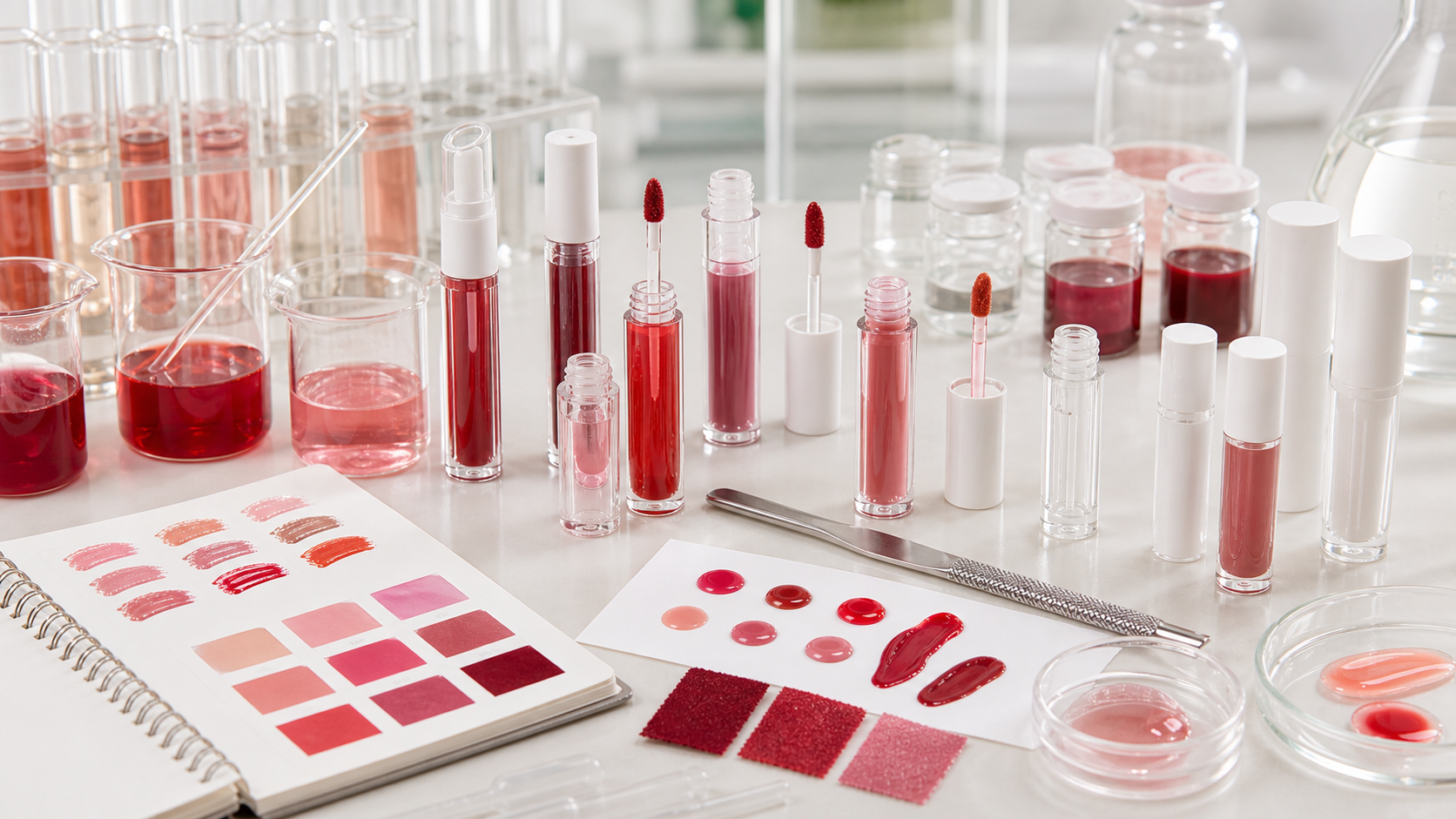
Lip stain shades often dry deeper than they look in the tube, so brands should not approve colors by packaging appearance alone. A practical development process tests wet shade, fresh swatch, dry-down stain, and stain after removal. Brands should also review colors across different skin tones because berry, coral, rose and red stains can shift significantly after the water or volatile phase evaporates.
For an initial launch, many brands perform better with a focused 4-6 shade range instead of too many similar reds. A balanced set may include rose nude, soft coral, cherry red, berry, warm brick and a deeper wine shade. The best choices depend on region, audience, season and whether the brand wants daily wear or statement color.
Packaging and Applicator Choices
Packaging is not only a visual decision. Lip stains can be thin, watery, gel-like or glossy, and each viscosity needs a suitable wiper, applicator and bottle tolerance. A watery stain may leak from a component designed for thicker gloss. A serum tint may need a doe-foot applicator that picks up enough product without overloading the lips. A peel-off stain may need a precise applicator to control the film layer.
Mooyam Cosmetic can help match formula and component before bulk production. This includes checking filling behavior, cap closure, wiper fit, leakage risk, product pickup, label area, carton protection and shipping stability. Brands planning custom tubes or caps should allow extra time for mold, decoration and pre-production approval.
OEM/ODM Development Workflow
| Stage | Brand Input | Factory Output |
|---|---|---|
| 1. Product brief | Format, target user, market, price range | Formula route and project feasibility advice |
| 2. Lab sampling | Shade references, texture target, packaging idea | Sample formulas, shade matching, sensory comparison |
| 3. Compatibility check | Selected tube, cap, applicator and artwork direction | Fill test, wiper check, leakage and stability review |
| 4. Bulk production | Final approval, PO, packaging files | Manufacturing, filling, QC and shipment preparation |
Buyer Checklist for a Lip Stain Project
- Define the exact format: water stain, serum tint, gloss tint, peel-off stain or hybrid product.
- Confirm target markets and required ingredient restrictions before shade approval.
- Prepare benchmark products for stain level, dry-down, comfort and applicator feel.
- Decide whether the product should be matte, dewy, glossy or balm-compatible.
- Review swatches after application, after dry-down and after wiping.
- Test packaging with the real formula viscosity before ordering custom components.
- Confirm MOQ, sample timing, artwork deadline and launch calendar before bulk planning.
Quality Control and Compliance Notes
Lip products need careful review because they are applied around the mouth and can involve colorants, flavor direction, solvents, humectants and film formers. Brands should avoid unsupported claims such as transfer-proof, food-proof, 24-hour wear, clean, vegan or safe for all skin unless documentation and testing support the statement in the target market.
Mooyam Cosmetic can support stability checks, sensory review, shade consistency, filling trials and packaging compatibility. For lip stains, QC should include color uniformity, odor, viscosity, applicator pickup, leakage, dry-down behavior, staining effect, microbiological review when applicable, and batch-to-batch color control.
Develop Lip Stain Products with Mooyam Cosmetic
If your brand is planning a lip stain, lip tint, serum tint or peel-off stain project, Mooyam Cosmetic can help turn your product brief into a manufacturable OEM/ODM plan. Send your target formula type, shade references, packaging direction, MOQ expectation and market requirements. We support beauty brand manufacturing projects and do not accept retail orders.
FAQ
Can Mooyam Cosmetic make private label lip stains?
Yes. Mooyam Cosmetic can support private label and OEM/ODM lip stain projects, including formula sampling, shade matching, packaging selection, filling and bulk production.
What is the difference between lip stain and lip tint?
Lip stain usually emphasizes longer-lasting color left on the lips, while lip tint can describe a lighter, more buildable color product. In manufacturing, the difference depends on formula structure, dye level, finish and wear target.
Is peel-off lip stain suitable for every brand?
Not always. Peel-off formats can be visually interesting, but they require careful film comfort, removal feel, usage instruction and compliance review. Many brands may be better served by a comfortable water stain or serum tint.
Does Mooyam Cosmetic accept retail orders?
No. Mooyam Cosmetic is a cosmetics and color makeup OEM/ODM factory for beauty brand projects, private label orders and manufacturing cooperation. We do not accept retail orders.
Trend Reference / Sources
- Google Trends comparison reviewed June 26, 2026: lip stain average interest 58 and lip tint 46 over the past 12 months worldwide.
- Rising Google Trends related queries included hyaluron tint lip stain serum and lip liner stain searches, showing interest in hybrid lip color formats.
- Google Search Central guidance on helpful, reliable, people-first content was used as writing direction.
- Beauty trend references reviewed for long-wear, lightweight lip color and tint formats; this article is rewritten as original B2B OEM/ODM manufacturing guidance.