
Liquid foundation is a high-value makeup product, but it is also more complex than many first-time buyers expect. A successful launch depends on shade planning, texture, coverage level, skin feel, packaging compatibility, filling behavior, artwork, quality control, and a realistic bulk production plan.
This guide explains how overseas beauty brands, Amazon sellers, DTC makeup startups, distributors, and private label buyers can create a liquid foundation with a cosmetic OEM manufacturer or cosmetic ODM manufacturer. Mooyam Cosmetic supports brand and wholesale OEM/ODM projects only; we do not accept retail orders.
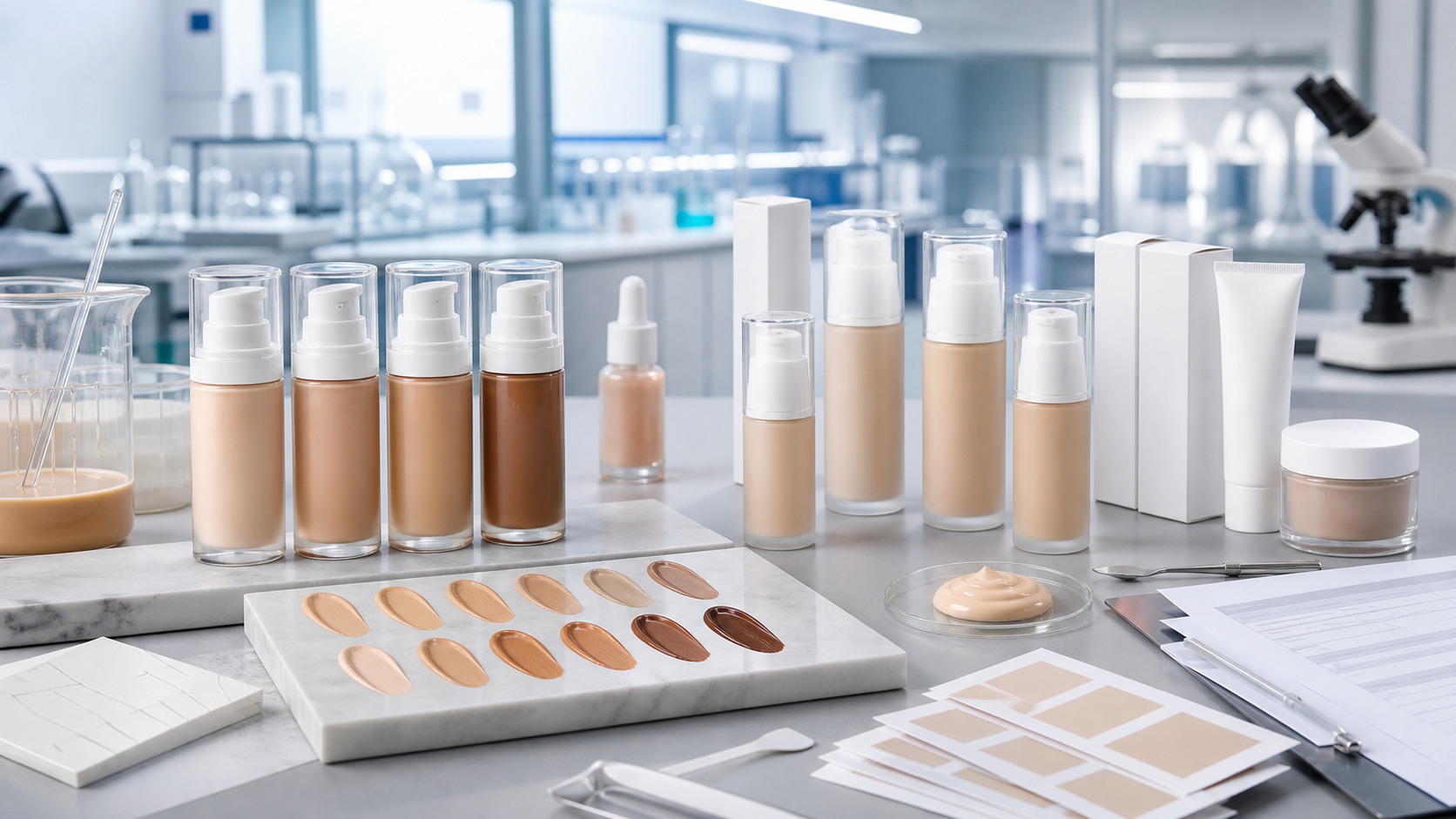
- Liquid foundation development requires clear decisions on shade range, coverage, finish, texture, packaging, MOQ, and target market.
- A foundation manufacturer should help evaluate formula stability, pigment dispersion, viscosity, filling, packaging compatibility, and production consistency.
- Sample development works best when the buyer provides benchmark texture, shade references, claim boundaries, packaging expectations, and channel needs.
- Compliance and labeling requirements vary by destination market, so claims and product information should be reviewed before printing.
Why Liquid Foundation Needs a Focused Development Brief
Many makeup projects start with a broad request such as “we want a natural liquid foundation.” For a factory, that is not enough. Natural can mean light coverage, satin finish, skin-like glow, minimal ingredient story, or everyday wearable shades. Before sample development begins, the buyer should define the exact product role and the customer experience.
A clear brief should include target market, skin tone range, sales channel, desired finish, coverage level, texture preference, fragrance direction, packaging format, retail price tier, and any ingredient restrictions. If the product will be sold in markets with specific cosmetic labeling or color additive rules, the buyer should flag that early. Requirements can vary by country and sales channel.
Mooyam Cosmetic can support OEM/ODM cosmetic manufacturing for makeup and skincare brands, including sample development, packaging sourcing, bulk production planning, and quality control for B2B buyers.
Key Formula Decisions for Liquid Foundation
Coverage and Finish
Coverage defines how much the formula visually evens the skin tone. A sheer skin tint, medium everyday foundation, and fuller coverage product all require different pigment loading, emulsion design, viscosity, and sensory balance. Finish is equally important. Matte, satin, soft glow, and natural finish products behave differently during wear, packaging filling, and consumer application.
Buyers should avoid asking the factory to copy a specific retail product. Instead, use references to describe texture direction, drying speed, spreadability, shine level, and shade undertone. This gives the R&D team a practical target without creating imitation risk.
Shade Range and Undertone Planning
Shade planning is one of the biggest differences between foundation and many skincare products. A small launch may begin with a focused shade range for a specific region, while a distributor or DTC brand may need a broader range across warm, neutral, and cool undertones. Each additional shade affects lab work, sample approval, pigment control, filling setup, and inventory planning.
For low MOQ launches, buyers can start with a tight shade strategy and expand after sales data confirms demand. A factory can help prepare shade samples, but the brand should test shades with its target customers and market before final approval.
Packaging and Filling Behavior
Liquid foundation can be packed in airless pumps, glass bottles with pumps, tubes, squeeze bottles, droppers, cushion formats, or sample sachets depending on texture and brand position. Packaging must match viscosity, pigment load, oxygen exposure, leakage control, user dosing, decoration needs, and shipping conditions. A beautiful bottle is not useful if the formula clogs the pump or leaks in transit.
Early packaging sourcing helps the factory check compatibility before final production. Buyers should confirm fill volume, pump output, label area, carton structure, artwork timeline, and outer carton requirements before approving final samples.
Development Workflow With a Foundation Manufacturer
| Stage | Buyer Decision | Factory Control Point |
|---|---|---|
| 1. Product Brief | Target customer, market, coverage, finish, shade plan, packaging, MOQ, and price tier. | Feasibility review, formula route, ingredient restrictions, sample plan, and development timeline. |
| 2. Lab Samples | Approve or adjust texture, spread, drying speed, coverage, finish, scent, and first shade direction. | Pigment dispersion, emulsion stability, viscosity, pH where applicable, and preservative approach. |
| 3. Shade Matching | Select launch shades, undertones, naming system, and regional priorities. | Color consistency, batch records, shade standards, and retained sample comparison. |
| 4. Packaging Match | Choose pump, bottle, tube, carton, label, decoration, and export carton plan. | Filling behavior, pump compatibility, leakage, label adhesion, and packaging inspection. |
| 5. Bulk Production | Approve final sample, artwork, order quantity, shipment plan, and reorder forecast. | Raw material checks, color control, filling weight, appearance inspection, packing, and documentation. |
Common Mistakes to Avoid
The first mistake is planning too many shades without enough budget or market data. A large shade range may look professional, but it increases sampling work, component inventory, filling setup, and slow-moving stock risk. The second mistake is choosing packaging before checking formula viscosity and pump compatibility. The third is approving a shade under only one lighting condition. Foundation should be reviewed in several lighting environments that reflect the target customer’s real use.
Another common issue is overloading claims. Cosmetic foundation can support appearance-focused claims such as smoother-looking finish, natural coverage, soft-focus look, or comfortable wear when supported by the formula and market rules. It should not be positioned with medical or drug-like claims. Claims, ingredient lists, warning statements, and labels should be checked for the intended destination market before printing.
What to Ask Before Requesting Samples
When talking with a foundation manufacturer, ask how the factory manages pigment control, shade records, packaging compatibility, filling weight, retained samples, and batch-to-batch consistency. These points matter because makeup products are judged visually. A small shade drift, pump issue, separation problem, or packaging mismatch can create customer complaints even if the formula concept is strong.
If your brand wants a distinctive texture, Mooyam Cosmetic can discuss custom formulation instead of only using a standard base. If you need a faster launch, our private label skincare and cosmetics support can help you compare ready formulas, packaging options, sample timing, and low MOQ possibilities.
- Define whether the product is sheer, medium coverage, fuller coverage, matte, satin, natural, or glow finish.
- Prepare target market, customer profile, sales channel, expected price tier, and launch timeline.
- Plan a realistic first shade range with undertone logic and expansion room for future reorders.
- Choose packaging only after checking formula viscosity, pump output, leakage risk, and filling behavior.
- Test samples under different lighting and with realistic application methods before approval.
- Ask about pigment dispersion, color standards, batch records, retained samples, and quality control steps.
- Review ingredient list, claims, artwork, label language, and import needs for the target market before printing.
Quality Control for Liquid Foundation Production
Foundation quality control should include raw material confirmation, pigment and base checks, mixing process control, viscosity review, appearance inspection, filling weight monitoring, packaging compatibility, leakage checks, carton inspection, and retained sample comparison. For shade products, color standards and approved samples are especially important. The production team should know exactly which sample is the final approval reference.
Mooyam Cosmetic’s quality control and compliance support helps buyers manage practical production risks, but destination-market requirements still depend on local rules, importer responsibilities, claims, and sales channel expectations.
Work With Mooyam Cosmetic
Looking for a foundation manufacturer to help create a liquid foundation for your makeup brand? Mooyam Cosmetic can support formula development, shade sampling, low MOQ planning, packaging sourcing, sample development, bulk production, quality control, and export support for OEM/ODM buyers. Contact us with your target market, coverage, finish, shade range, packaging idea, and expected order quantity so we can recommend a practical manufacturing solution.
FAQ
Can Mooyam Cosmetic develop liquid foundation for private label brands?
Yes. Mooyam Cosmetic can support liquid foundation development for brand and wholesale OEM/ODM buyers, including samples, packaging coordination, quality control, and production planning.
How many shades should a new brand launch first?
It depends on target market, budget, sales channel, and customer profile. Many startup brands begin with a focused shade range, then expand after sell-through data and customer feedback.
What packaging works best for liquid foundation?
Airless pumps, pump bottles, tubes, and other formats can work. The best choice depends on viscosity, fill volume, dosing, leakage control, decoration needs, MOQ, and brand position.
Is custom formulation necessary for foundation?
Not always. Some brands can start from an existing base, while others need custom formulation for texture, finish, shade behavior, ingredient preferences, or market differentiation.
How can buyers reduce MOQ pressure?
Use standard packaging where possible, limit the first shade range, keep decoration practical, and ask the factory which components drive MOQ. Low MOQ depends on formula, packaging, and production setup.
What quality checks matter most for liquid foundation?
Important checks include color consistency, viscosity, appearance, odor, filling weight, packaging compatibility, leakage, batch records, and retained sample comparison.
Can a factory guarantee cosmetic compliance?
No factory should guarantee every market automatically. Requirements vary by destination, claims, importer role, and channel, so product information and labels should be reviewed for the target market.