Niacinamide serum is a popular product idea for private label skincare because it is easy for customers to understand and flexible for different brand positions. It can fit hydrating, oil-control, pore-look, barrier-support or radiance routines when the formula and claims are planned responsibly.
For B2B buyers, the key question is not simply whether niacinamide is trending. The real decision is how to create a serum that matches your target market, texture expectation, packaging, MOQ, quality control needs and private label launch plan. Mooyam Cosmetic supports cosmetic OEM/ODM projects for brands and wholesale buyers only; we do not accept retail orders.
Quick Summary
- Niacinamide serum can be positioned for hydration, smoother-looking texture, shine balance, glow or barrier-friendly routines.
- Formula strength, support ingredients, texture, pH, packaging and claims should be defined before sampling.
- Private label skincare can speed up launch, while custom formulation gives more control over feel, ingredient story and differentiation.
- Packaging sourcing and low MOQ planning affect unit cost, lead time and production feasibility.
- Sample approval should include skin feel, stability, packaging compatibility, QC standards and target-market claim review.
Why Niacinamide Serum Appeals to Private Label Brands
Niacinamide is widely recognized by skincare consumers, which makes it useful for brands that want a clear hero ingredient. It can be developed into lightweight daily serums, hydrating glow serums, oil-balance routines, sensitive-skin-positioned products or starter skincare sets. For Amazon sellers and DTC brands, the ingredient also works well in product education and comparison pages.
However, recognition also means competition. A private label niacinamide serum needs a defined audience and product experience. Is it a simple entry serum for new skincare users? A lightweight oily-skin product? A barrier-supporting serum with panthenol and beta-glucan? A glow serum paired with a brightening routine? A precise brief helps the cosmetic ODM manufacturer avoid a generic sample.
Choose the Right Formula Route
There are three common routes. A stock private label formula can reduce development time and is often suitable for low MOQ testing. A modified ODM formula allows some adjustment to texture, fragrance, support ingredients or positioning. A custom formulation route gives the most control, but it usually requires more sample rounds, testing time and budget.
| Route | Best For | Buyer Tradeoff |
|---|---|---|
| Private label base | Fast launch, low MOQ, early market testing | Less formula exclusivity and fewer custom ingredient choices |
| ODM adjustment | Brands that need a balanced mix of speed and differentiation | Moderate sample work and clearer brief needed |
| Custom formulation | Premium positioning, unique texture or specific ingredient system | Longer development, more testing and potentially higher MOQ |
Mooyam Cosmetic can help brands compare private label skincare manufacturing, ODM adjustment and custom formulation support based on launch goal, target cost, formula complexity and timeline.
Formula Planning: Strength, Texture and Support Ingredients
Niacinamide percentage should be chosen with the full formula and claim strategy in mind. A higher-looking percentage may be attractive for marketing, but it is not automatically the best route for every brand. Texture, skin feel, pH range, support ingredients, preservation and market requirements all matter. Brands should avoid unsupported performance claims and should not promise medical results.
Common support directions include humectants such as glycerin and hyaluronic acid, soothing-positioned materials such as panthenol, beta-glucan or allantoin, lightweight emollients for slip, and antioxidant-style or radiance-positioned ingredients where appropriate. If the serum is for sensitive-skin-positioned routines, fragrance and botanical extracts should be handled carefully.
The sample should match the sales channel. A serum for Amazon may need a clear ingredient story, stable packaging and strong review potential. A salon or distributor product may need a more premium skin feel and matching carton. A DTC hero serum may need stronger brand differentiation, texture identity and bundle logic.
Packaging Sourcing for Niacinamide Serum
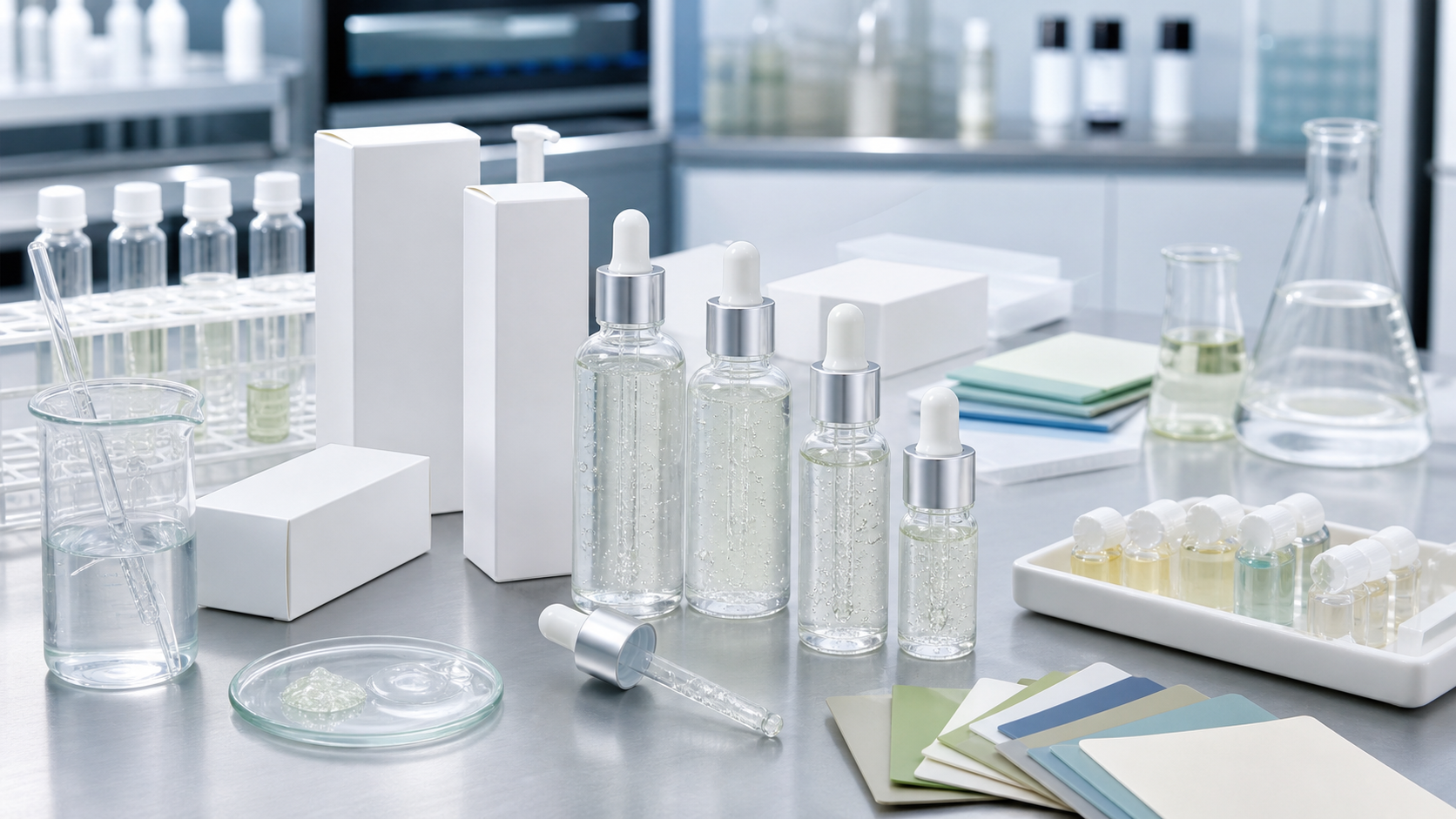
Niacinamide serum is commonly packed in dropper bottles, airless pumps or small pump bottles. Droppers have a familiar serum look and are easy for customers to understand. Airless pumps can feel more premium and reduce direct contact with the formula. Pump bottles can work for lightweight gel serums or larger sizes.
Packaging should be tested with the actual formula, not only selected from a catalog. The factory should check viscosity, dispensing, cap fit, leakage, label area, carton size and transport protection. Decoration method also affects MOQ. A standard bottle with label decoration may support a startup launch more easily than a custom mold or special coating.
Mooyam supports serum packaging sourcing and customization so buyers can compare component availability, appearance, cost and production feasibility before approving bulk packaging.
Sample Development and Approval Process
A strong sample process starts with a clear product brief. Include target audience, benchmark products, preferred texture, niacinamide direction, ingredient avoidance list, fragrance preference, packaging idea, target unit cost, order quantity and destination market. If you have a preferred label claim, share it early so the manufacturer can comment on feasibility.
During sample review, buyers should record feedback in practical language: too sticky, too watery, absorbs too slowly, scent too strong, cloudy appearance preferred, gel texture preferred, or dropper dosage too large. This is more useful than vague comments such as “make it better.” Sample development should also include packaging fit and stability observation before bulk production.
| Approval Item | What to Check | Why It Matters |
|---|---|---|
| Texture and finish | Absorption, residue, tack, layering with cream | Controls customer experience and repeat purchase potential |
| Packaging fit | Dropper pickup, pump output, leakage, label space | Prevents complaints and shipping losses |
| Quality checks | Appearance, odor, pH where relevant, viscosity, fill weight | Supports consistent bulk production |
| Claim review | Cosmetic scope, target market, support documents | Reduces compliance and platform listing risk |
MOQ, Cost and Production Planning
Low MOQ can be realistic for niacinamide serum when the formula route and packaging are practical. Stock or existing formula bases often reduce early risk. Highly customized ingredient systems, special packaging colors, printed cartons or exclusive components can increase minimums and lead time.
Cost is shaped by formula complexity, raw material minimums, bottle and carton MOQ, decoration method, sample rounds, testing scope, fill volume and order quantity. A cosmetic OEM manufacturer should explain where the main cost pressure comes from instead of only giving a unit price. This helps buyers compare total project cost before placing a purchase order.
Mooyam Cosmetic provides OEM/ODM serum manufacturing support for formula planning, sample development, low MOQ discussion, bulk production, quality control and export communication.
Buyer Checklist Before Placing an Order
- Define the main positioning: glow, hydration, oil-balance, pore-look, barrier support or starter skincare.
- Choose private label, ODM adjustment or custom formulation based on timeline and differentiation needs.
- Confirm niacinamide direction, support ingredients, fragrance level and ingredient avoidance list.
- Test the final formula with the chosen dropper, pump or bottle before approving packaging.
- Review packaging MOQ, decoration MOQ, carton lead time and reorder stability.
- Check sample feel after layering with toner, moisturizer and sunscreen-adjacent routines.
- Discuss quality control, retained samples, batch records and export documents before production.
Quality Control and Compliance Notes
Niacinamide serum quality control may include appearance, odor, color, pH where relevant, viscosity, fill weight, microbial review, packaging function, label inspection, carton condition and retained sample comparison. Stability observation should look for color shift, sediment, odor change, viscosity drift or packaging leakage.
Claim language should be market-appropriate. Cosmetic positioning may discuss hydration, smoother-looking texture, glow, oil-shine balance or the appearance of a more even tone. Avoid medical, treatment or guaranteed-result claims unless the buyer has market-specific evidence and regulatory review. Mooyam’s quality control and compliance guidance can help structure the production discussion, but final compliance depends on the target market.
Common Mistakes to Avoid
One mistake is using a high percentage as the only selling point. A serum with poor texture, unstable packaging or unclear claims will not become stronger just because the percentage is higher. Another mistake is approving a bottle before checking the actual formula viscosity and dispensing behavior.
Buyers should also avoid launching too many similar serums in the same first order. If a brand wants niacinamide, hyaluronic acid, vitamin C and peptide serums at once, inventory and MOQ can become difficult. A better plan may be one hero serum plus supporting cleanser, cream or mask, then expand after market response.
Develop a Niacinamide Serum with Mooyam
Need a private label niacinamide serum manufacturer for your skincare brand? Mooyam Cosmetic can support private label skincare, custom formulation, packaging sourcing, sample development, low MOQ planning, bulk production, quality control and export support. Contact Mooyam Cosmetic with your product brief, target market, packaging idea and MOQ expectation.
FAQ
Can Mooyam Cosmetic make private label niacinamide serum?
Yes. Mooyam Cosmetic can support private label, ODM and custom niacinamide serum projects for overseas beauty brands, Amazon sellers, distributors and private label buyers.
What percentage of niacinamide should a brand use?
The right direction depends on the full formula, target market, skin feel and claim strategy. A higher percentage is not always the best choice for every brand.
Can niacinamide serum be fragrance-free?
Yes. Fragrance-free or low-fragrance directions can be discussed during sample development, especially for sensitive-skin-positioned or minimalist skincare brands.
Is a dropper bottle or airless pump better?
Both can work. Droppers are familiar for serums, while airless pumps can feel premium. The final package should be tested with the actual formula.
Can low MOQ work for niacinamide serum?
Low MOQ may be possible with practical formula and packaging choices. Custom packaging, special ingredients or exclusive components may require higher minimums.
How long does sample development take?
Timing depends on formula route, feedback rounds, packaging availability and testing needs. A clear brief usually reduces unnecessary revisions.
Does Mooyam sell niacinamide serum directly to consumers?
No. Mooyam Cosmetic is a B2B OEM/ODM and private label manufacturing partner and does not accept retail orders.