
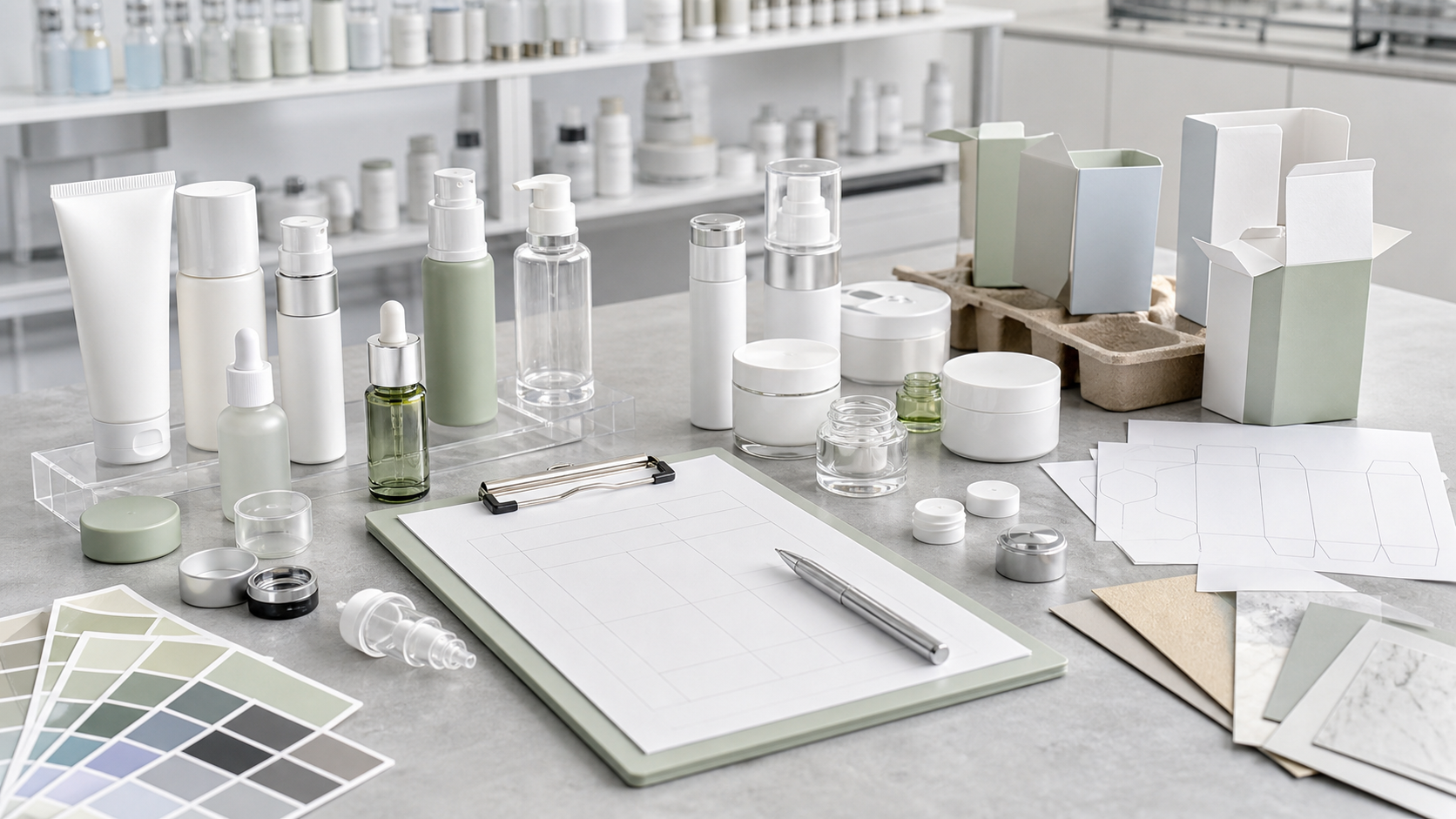
A packaging brief for private label skincare is a structured document that tells a cosmetic OEM manufacturer or cosmetic ODM manufacturer exactly what packaging the brand needs, why it matters, and which details must be confirmed before sampling and mass production. It should cover product format, capacity, material, decoration, dispensing, compatibility, artwork, MOQ, target market, and shipping requirements.
For overseas buyers, the brief turns packaging sourcing from a vague request into a clear procurement file. It helps the factory compare options faster, reduce sample rounds, and avoid late changes that can delay launch.
Quick Summary
- A packaging brief explains what container, closure, decoration, carton, and shipping requirements your private label skincare project needs.
- The best brief connects product viscosity, usage, target price, sales channel, and brand positioning to packaging decisions.
- Include must-have specifications, optional preferences, sample approval rules, artwork files, and compliance notes in one shared record.
- Mooyam Cosmetic can support OEM/ODM skincare manufacturing, packaging sourcing, sample development, quality control, mass production, and export support.
What Is a Packaging Brief in Cosmetic Manufacturing?
A packaging brief is a buyer-facing project document used to guide packaging selection and development. It is usually created before the factory starts sourcing bottles, jars, tubes, pumps, caps, cartons, labels, or decoration samples.
In a private label skincare project, the formula may come from a stock base, a modified base, or a new custom formulation. Packaging must still fit the product texture, filling method, target quantity, retail channel, and brand image. A clear brief helps the project manager understand whether the brand needs a fast standard package, a premium custom component, a refillable concept, or a cost-conscious launch pack.
The brief is not a regulatory approval document. If the package carries claims, label content, ingredient lists, warnings, or recycling symbols, requirements can vary by target market and should be checked with qualified advisers before final artwork approval.
Why Packaging Briefs Matter for B2B Buyers
Packaging decisions affect more than appearance. They influence MOQ, tooling, lead time, sample cost, filling compatibility, freight volume, breakage risk, and the buyer’s final retail margin. When a brand only says “we need a luxury jar” or “please find a serum bottle,” the factory must guess too many details.
A procurement-ready brief helps a private label skincare manufacturer compare suitable packaging faster. It also creates a shared reference for the brand owner, sourcing manager, designer, formula team, packaging supplier, and freight forwarder.
For DTC, Amazon, salon, spa, distributor, and retail buyers, the brief should also explain how the product will be sold. An e-commerce serum may need stronger leakage protection and outer box durability, while a professional spa mask may prioritize easy dispensing, larger capacity, and treatment-room handling.
Packaging Brief Template: Key Fields to Include
| Brief Field | What to Specify | Why It Matters |
|---|---|---|
| Product and formula type | Serum, cream, cleanser, mask, toner, ampoule, balm, gel, scrub, or kit; include viscosity and fill volume | Helps match the formula to a suitable bottle, jar, tube, pump, dropper, or cap |
| Target capacity | For example 15 ml, 30 ml, 50 ml, 100 ml, travel size, sample size, or professional size | Controls packaging availability, carton size, shipping weight, and price positioning |
| Material preference | PET, PP, PE tube, glass, acrylic, aluminum, PCR material, mono-material, or refillable option | Affects cost, appearance, durability, recycling claims, MOQ, and target market expectations |
| Closure and dispensing | Pump, airless pump, dropper, flip cap, screw cap, spatula, mist sprayer, or squeeze tube | Connects product texture with user experience and filling compatibility |
| Decoration method | Label, silk screen, hot stamping, matte coating, color spray, embossing, carton printing, or sleeve | Defines artwork files, sample cost, color matching, lead time, and brand presentation |
| Sales and logistics channel | Amazon, Shopify, retail shelf, distributor carton, salon use, gift set, travel retail, or subscription box | Guides carton strength, leakage testing, unit protection, barcode placement, and export packing |
How to Write a Useful Packaging Brief
Start with the product experience
Packaging should fit how the customer uses the product. A low-viscosity serum may need a tight closure and controlled dispensing. A thick cream may need a wide-mouth jar or airless system tested for output. A clay mask may not work well with a narrow pump. The brief should describe the formula texture and expected use, even if the formula is still being finalized through custom formulation support.
Separate must-haves from preferences
Many delays happen because every detail is treated as mandatory. Put non-negotiable items in one section: capacity, material restrictions, budget range, timeline, sales channel, and target market. Put flexible preferences in another section: color direction, finish, decoration style, or similar reference packs. This helps the factory suggest practical alternatives when one component has a high MOQ or long lead time.
Include reference packaging carefully
Reference images are useful, but they should not be treated as instructions to copy another brand. Explain what the reference means: shape, finish, pump style, carton structure, refill idea, or retail feeling. The goal is to guide packaging sourcing and sample development without infringing brand identity or creating unrealistic expectations.
Buyer Checklist Before Sending the Brief
Packaging Brief Checklist
- Confirm the product type, fill volume, estimated order quantity, and target launch date.
- Describe formula texture, dispensing needs, and any known packaging compatibility concerns.
- List required packaging components: primary container, cap, pump, inner plug, label, carton, insert, shipper, or set box.
- Share target unit cost range and whether standard packaging or custom tooling is acceptable.
- State the target market and sales channel, while remembering that labeling and compliance requirements vary by market.
- Provide logo files, artwork direction, color references, barcode needs, and carton information when available.
- Ask the factory which items affect MOQ, mold cost, decoration cost, sample fee, and lead time.
- Set clear approval steps for packaging sample, artwork proof, filling test, pre-production sample, and mass production.
How Packaging Briefs Fit the OEM/ODM Workflow
A packaging brief should be created early, but it does not need to be perfect on day one. In a practical OEM/ODM workflow, the buyer first shares the product idea, brand positioning, target market, and rough budget. The factory then reviews possible formulas, packaging directions, MOQ, and production feasibility.
After the product direction is clear, Mooyam’s packaging sourcing and customization support can help compare stock components, decoration methods, cartons, sample costs, and production lead times. The brief then becomes the basis for quotation, packaging samples, artwork checks, and compatibility review.
Before mass production, the final approved brief should match the purchase order, artwork file, packaging sample, formula sample, quality control plan, and export packing plan. If one item changes, the buyer and factory should update the brief so the production team works from the latest version.
Common Mistakes to Avoid
The first mistake is focusing only on appearance. A beautiful bottle can still fail if it leaks, dispenses poorly, cracks in shipment, or does not match the filling process. The second mistake is ignoring MOQ and lead time. Custom colors, special coatings, molded caps, and premium cartons may require more time and higher order quantities than a startup expects.
The third mistake is approving artwork too late. Label size, carton dieline, barcode, claims, ingredient list, warnings, and importer details can all affect timing. Claims and label content should be reviewed for the target market because a cosmetic factory cannot guarantee regulatory approval for every country.
The fourth mistake is sending packaging comments across scattered messages. A single brief file reduces confusion and supports better quality control. Buyers can also use Mooyam’s quality control and compliance guidance to plan practical checks such as visual inspection, closure fit, leakage observation, fill appearance, carton condition, and batch documentation.
FAQ
When should a brand prepare a packaging brief?
Prepare it before requesting packaging quotes or samples. Early information helps the manufacturer understand capacity, material, decoration, MOQ, and timeline before sourcing components.
Can I use a packaging brief if I do not know the exact bottle yet?
Yes. Start with product type, capacity, target price, sales channel, and style direction. The factory can then suggest available stock packaging or custom options.
Should formula development and packaging sourcing happen together?
Often yes. Formula texture and packaging choice affect each other, especially for pumps, droppers, tubes, jars, and airless systems. Parallel discussion can prevent late compatibility problems.
Does a packaging brief replace artwork approval?
No. The brief defines packaging requirements, while artwork approval confirms label, carton, print, color, barcode, and market-specific content before production.
What if my brand needs sustainable packaging?
State the goal clearly, such as PCR material, refillable format, mono-material packaging, reduced carton size, or lighter shipping weight. Availability, cost, and claims requirements may vary by market.
Can Mooyam help source packaging for private label skincare?
Yes. Mooyam Cosmetic can discuss standard and customized packaging options, sample development, decoration methods, quality control points, mass production planning, and export support for overseas B2B buyers.
Send Your Packaging Brief to Mooyam
Looking for a reliable cosmetic OEM/ODM manufacturer in China? Contact us to discuss your product idea, formula requirements, packaging options, MOQ, sample development, and production plan.