Packaging is often treated as the final design step in a skincare project. In real OEM/ODM production, it can influence MOQ, unit cost, lead time, filling risk, artwork schedule and even the formula route. A brand may approve a serum texture quickly, then discover that a custom bottle color, special pump, decorated carton or low-volume component order changes the entire commercial plan.
This guide explains how packaging choices affect MOQ and product cost for overseas beauty brands working with a cosmetic OEM manufacturer or cosmetic ODM manufacturer. It is written for private label skincare buyers, Amazon and DTC sellers, distributors and startup brands that need practical quotation clarity before sample development and bulk production.
Quick Summary
- Packaging affects MOQ because bottles, pumps, caps, cartons, labels and decoration often have their own supplier minimums.
- Stock packaging usually supports lower MOQ and faster launch, while custom molds, custom colors and special decoration require higher commitment.
- Cost should be reviewed as a total finished-product cost, not only the formula price or bottle price.
- Brands can reduce risk by confirming formula compatibility, decoration method, artwork, carton structure and export packing before production.
- Mooyam Cosmetic supports packaging sourcing, sample matching, compatibility review, quality control and export support for B2B OEM/ODM projects.
Why Packaging Changes MOQ in Cosmetic Manufacturing
MOQ is not decided by the factory alone. A finished skincare product combines formula, primary packaging, closures, labels, cartons, inserts, cartons for export and sometimes display boxes or sets. Each item may come from a different packaging supplier, and each supplier may set its own minimum order quantity. That is why two products with the same formula size can have very different MOQ requirements.
For example, a 30 ml serum in a stock clear glass dropper bottle may be possible at a relatively low MOQ if the bottle, dropper and carton are already available. The same serum in a custom frosted bottle, color-matched cap, embossed carton and metallic label may require higher component orders. The formula may not change, but the packaging supply chain does.
When you discuss cosmetic OEM and ODM service options, ask whether the quoted MOQ is based on formula production, packaging components, decoration, or the final assembled product. This prevents confusion later when design ideas become purchase orders.
Stock Packaging vs Custom Packaging
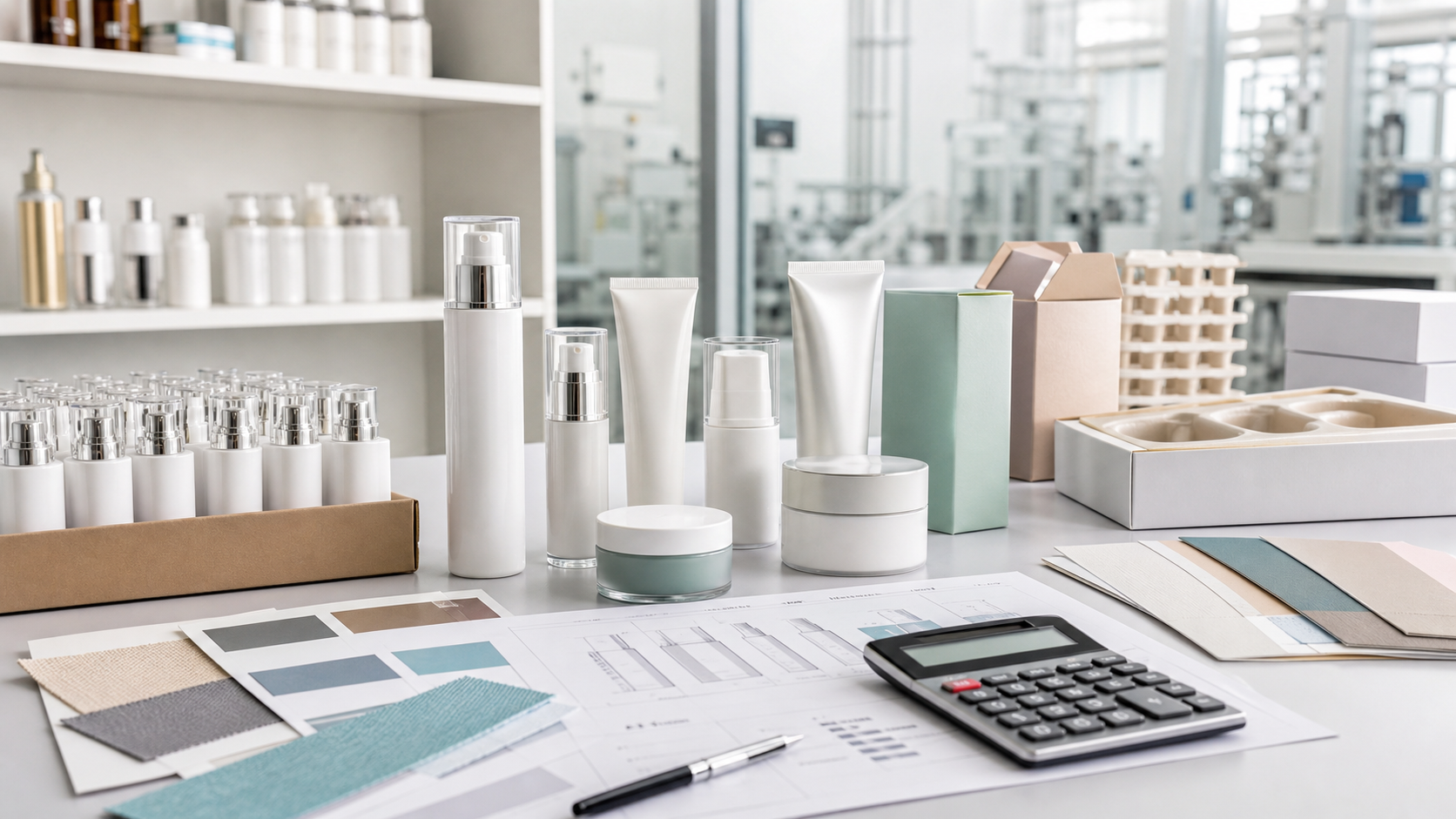
Stock packaging is usually the fastest route for new brands, small test launches and low MOQ projects. It uses existing bottles, jars, pumps, tubes or cartons that can be decorated with label, printing or simple finishing. Custom packaging gives stronger brand differentiation, but it can increase tooling cost, sampling time, supplier MOQ and production risk.
| Packaging route | Best fit | MOQ and cost impact | Buyer risk to check |
|---|---|---|---|
| Stock bottle with label | Startup launches, market testing, low MOQ private label skincare | Usually lower MOQ and faster quotation because components already exist | Label fit, bottle availability, decoration quality and brand differentiation |
| Stock bottle with custom color or printing | Brands that want a cleaner identity without new molds | Moderate MOQ increase due to color matching, screen printing or coating | Color tolerance, adhesion, scratch resistance and lead time |
| Custom mold packaging | Established brands, hero products and premium retail projects | Higher MOQ and tooling investment; longer development cycle | Mold ownership, sample approval, dimensional control and future reorder planning |
| Gift box or set packaging | Retail sets, distributor packs, holiday kits and launch bundles | Cost rises through carton structure, insert tray, assembly and shipping volume | Transit durability, barcode placement, carton collapse and export carton sizing |
Primary Packaging: Bottles, Jars, Tubes and Pumps
Primary packaging touches the formula directly, so it affects both cost and quality control. Pumps, airless bottles, jars, tubes, droppers and roll-ons all have different price ranges, minimum quantities and compatibility concerns. A lotion tube may look simple, but the shoulder, cap, inner seal and filling temperature can affect production. A serum dropper may look premium, but glass color, pipette fit and cap torque need review.
Formula compatibility is a practical cost issue. If a formula is too thick for a pump, too runny for a jar, sensitive to light in transparent packaging, or reactive with certain materials, the project may require reformulation or a different component. This is why custom formulation support and packaging review should happen together, not as separate conversations.
Secondary Packaging and Artwork Costs
Cartons, labels, inserts, sleeves and shipping cartons can add meaningful cost to each unit. They also affect production speed. A simple white carton with standard printing may be straightforward, while a rigid gift box with foil stamping, window film, insert tray and multiple SKUs requires longer artwork approval and higher material planning.
Design revisions can also create hidden cost. If ingredients, net weight, barcode, claims or importer information change after printing, the brand may need to reprint packaging. Requirements can vary by target market, so brands should review label text and claims before committing to decorated components. A factory can provide ingredient and production information, but final market compliance should be checked by the brand or its regulatory advisor.
How Packaging Choices Affect Unit Cost
Packaging cost is not only the price of the bottle. Buyers should look at the full landed product structure: formula, component cost, decoration, filling labor, assembly, inspection, export carton, shipping volume and inventory risk. A cheaper bottle may increase leakage risk or make the product look less competitive. A premium bottle may increase unit cost but support better shelf positioning and higher retail price.
| Cost driver | Why it matters | How buyers can control it |
|---|---|---|
| Component MOQ | Packaging suppliers may require more bottles, caps or pumps than the first formula batch needs. | Use stock packaging for early launches or plan enough reorders to absorb extra components. |
| Decoration method | Printing, coating, hot stamping, embossing and labels all have different setup costs. | Choose the decoration level that matches the sales channel and launch budget. |
| Packaging complexity | Multi-part boxes, inserts and set packs increase assembly and inspection work. | Keep first-launch structures simple unless the retail strategy requires premium presentation. |
| Compatibility testing | Poor compatibility can cause leakage, discoloration, pump failure or formula instability. | Test formula and packaging together before bulk production approval. |
| Export packing | Fragile glass, large cartons and heavy sets change freight and breakage risk. | Confirm carton strength, packing method and shipment plan early. |
Low MOQ Strategies for Packaging Decisions
Low MOQ does not mean ignoring packaging quality. It means choosing a route that matches the first launch stage. A new brand can begin with stock bottles, simple labels and a focused SKU count, then move into custom packaging after reorder data is clear. This keeps cash flow, inventory and development time under control.
For buyers exploring private label skincare manufacturing, the most efficient first step is to define the product size, package type, expected order quantity, design style and target market. Mooyam Cosmetic can then suggest component routes that fit the desired MOQ, pricing and production timeline.
Buyer Checklist Before Confirming Packaging
- Confirm whether the project uses stock packaging, semi-custom decoration or a fully custom package.
- Ask for MOQ by formula, bottle, pump, cap, carton, label and final assembled product.
- Check whether extra packaging components will remain after the first production run.
- Review formula compatibility with the bottle, pump, tube, jar or airless system.
- Approve artwork only after ingredient names, net content, barcode and target market label needs are reviewed.
- Request packaging defect standards for scratches, color difference, leakage, cap fit and printing alignment.
- Confirm export carton strength, packing method, pallet needs and shipment documentation.
How Mooyam Cosmetic Supports Packaging Planning
Mooyam Cosmetic works with overseas beauty brands on OEM/ODM skincare and cosmetics projects. Our team can help compare stock and custom component options, source packaging materials, coordinate label and carton requirements, and align packaging decisions with sample development and production. For projects that need customized cosmetic packaging, we can help evaluate component availability, decoration method, MOQ, compatibility checks and launch timeline.
Packaging is also connected to quality control and compliance support. Before bulk production, brands should confirm approved samples, packaging specifications, inspection standards and retained samples. This helps avoid late changes after packaging has already been ordered.
FAQ
Does packaging usually affect cosmetic MOQ?
Yes. Packaging components often have separate supplier MOQs, so the final MOQ may be driven by bottles, pumps, cartons or decoration rather than only the formula batch size.
Is stock packaging suitable for premium skincare brands?
It can be. A stock package with strong decoration, good artwork and a suitable formula can look professional. Fully custom packaging is useful when brand differentiation or retail positioning requires it.
Can low MOQ projects use custom packaging?
Sometimes, but the options are more limited. Semi-custom routes such as stock packaging with custom label, printing or color accents are often more practical for early launches.
Why should formula and packaging be tested together?
The formula may affect pump performance, leakage, color stability, odor, viscosity or package appearance. Compatibility checks reduce production and customer complaint risk.
What information should I provide for a packaging quotation?
Share product type, fill size, target MOQ, preferred package type, decoration method, label needs, target market, launch schedule and any benchmark products.
Does better packaging always mean higher sales?
No. Packaging should match the brand position, price point and channel. Overspending on packaging can create inventory pressure if the product is still being tested.
Can Mooyam help source packaging for private label skincare?
Yes. Mooyam Cosmetic can support packaging sourcing, sample matching, decoration coordination, compatibility review and bulk production planning for B2B brand projects.
Plan Packaging, MOQ and Cost with Mooyam Cosmetic
Looking for a reliable cosmetic OEM/ODM manufacturer for your next skincare or beauty product? Mooyam Cosmetic supports custom formulation, private label skincare, packaging sourcing, sample development, low MOQ planning, quality control and export support. We serve brand and wholesale OEM/ODM projects only and do not accept retail orders. Contact us to discuss your formula requirements, packaging options, MOQ and production solution.