MOQ is one of the first questions private label buyers ask, but the answer is rarely a single universal number. The minimum order quantity for private label cosmetics depends on product type, formula route, packaging components, decoration method, raw material planning, filling process, carton requirements, and the factory’s production arrangement.
This FAQ-style guide explains what MOQ means for overseas beauty brands, skincare startups, Amazon sellers, DTC brands, distributors, and sourcing managers working with a cosmetic OEM manufacturer or cosmetic ODM manufacturer. Mooyam Cosmetic supports B2B private label and OEM/ODM projects; we do not accept retail orders.
Quick Summary
- MOQ means the minimum quantity a factory can practically produce or package for one product, formula, shade, or SKU.
- Private label cosmetics MOQ is affected by formula, packaging, decoration, carton printing, raw materials, and production scheduling.
- Low MOQ is easier when buyers use standard formulas, stock packaging, simple labels, and focused SKU planning.
- A clear product brief helps the manufacturer quote realistic MOQ, cost, sample development, and bulk production terms.
What Does MOQ Mean in Private Label Cosmetics?
MOQ stands for minimum order quantity. In private label cosmetics, it usually refers to the smallest production quantity a manufacturer can accept for a specific product or SKU. However, there may be several MOQ layers inside one project: formula MOQ, packaging MOQ, shade MOQ, label MOQ, carton MOQ, and sometimes raw material MOQ.
This is why buyers should avoid asking only, “What is your MOQ?” A better question is, “What is the MOQ for this product type, formula route, packaging option, decoration method, and number of SKUs?” The answer will be more useful for budget planning and launch decisions.
Why MOQ Is Not the Same for Every Product
A cleanser in a standard tube, a serum in an airless pump, a cream in a jar, a face mask, a lipstick shade range, and a custom sunscreen-style product all have different production realities. Some products are easier to fill in small batches. Some require more complex packaging compatibility review, filling setup, color matching, or stability consideration.
Working with Mooyam Cosmetic’s OEM/ODM service helps buyers understand whether private label, ODM, or custom formulation is the best route for their MOQ target. A cosmetic OEM manufacturer may follow the buyer’s formula and specifications, while a cosmetic ODM manufacturer may help develop or adapt a product concept with factory support.
Main Factors That Affect Private Label MOQ
| MOQ Factor | Why It Matters | Startup-Friendly Option |
|---|---|---|
| Formula route | Existing formulas are usually easier to plan than highly customized formulas that require special raw materials. | Use private label skincare options when speed and low MOQ matter. |
| Packaging component | Bottles, pumps, droppers, jars, caps, tubes, and cartons may each have supplier minimums. | Choose stock packaging before moving to custom molds or special components. |
| Decoration method | Silk screen, hot stamping, coating, labels, and cartons can change the component MOQ. | Use clean labels or standard carton structures for the first run. |
| SKU count | Each fragrance, shade, product size, or formula may count as a separate SKU. | Launch fewer SKUs and reorder the best performers. |
| Quality control | Production needs enough quantity to run filling, inspection, retained samples, and batch records efficiently. | Confirm QC expectations before finalizing the order quantity. |
How Packaging Sourcing Changes MOQ
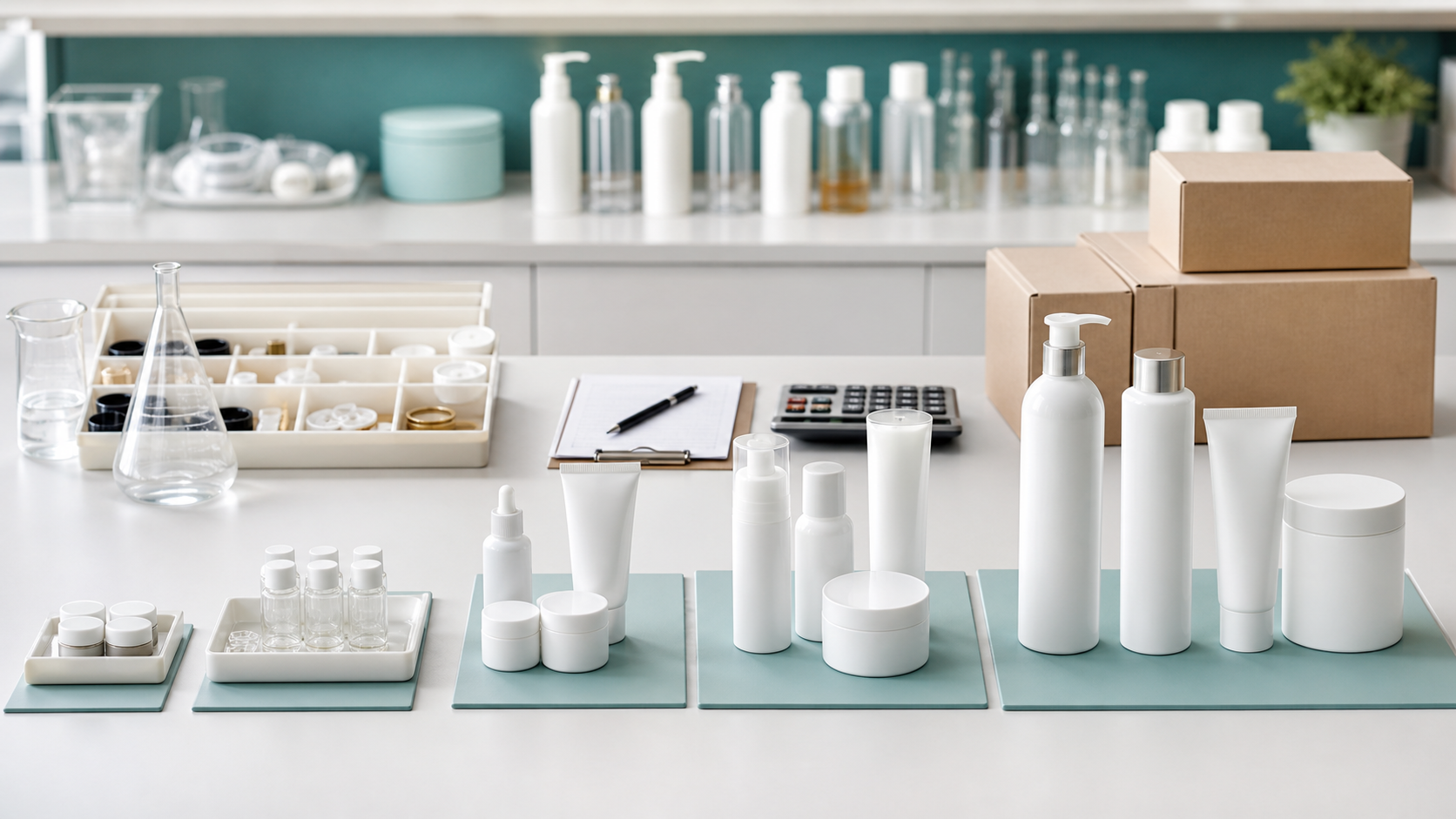
Packaging is often the biggest reason MOQ changes. A brand may want a low formula MOQ but choose a bottle, cap, pump, label material, or carton that has a higher supplier minimum. If the packaging must be custom colored, sprayed, printed, embossed, or paired with a special carton, the minimum may increase.
Mooyam Cosmetic can help buyers compare packaging sourcing options before they lock the launch plan. For many startup projects, stock bottles or jars with suitable label decoration are more practical than custom components. This approach can reduce cash pressure, shorten lead time, and make the first order easier to manage.
Low MOQ Does Not Mean Low Standards
Low MOQ should not mean weak quality control. Even smaller orders need clear sample approval, raw material checks, filling standards, packaging inspection, label review, carton condition checks, batch records, and retained samples. Buyers should ask how the factory will compare bulk production with the approved sample.
Mooyam Cosmetic’s quality control and compliance support helps buyers understand production checks and documentation planning. Exact compliance requirements vary by destination market, claim language, sales channel, product type, and importer responsibility, so broad regulatory guarantees should be avoided.
How to Reduce MOQ Pressure
There are practical ways to make MOQ easier. First, start with a focused product line. Second, choose packaging that is already available. Third, avoid too many shades, fragrances, sizes, or special decorations in the first run. Fourth, share a realistic target price and launch channel with the manufacturer. Fifth, plan reorders early so the first order does not need to carry the entire business plan.
For private label skincare projects, buyers can often begin with products that have established formula bases and flexible packaging choices. For color cosmetics or highly customized products, MOQ may depend more heavily on shade count, component fit, filling method, and special raw materials.
What Information Should You Send for an MOQ Quote?
A useful MOQ quote needs more than a product name. Send the manufacturer product type, target texture, formula route, packaging preference, number of SKUs, target quantity, target market, sales channel, artwork status, launch timing, and any benchmark samples. If you have a budget range, share it. A factory cannot recommend the right route if it does not know whether you are planning a trial launch, distributor order, Amazon launch, or retail chain proposal.
Sample development should also be discussed with MOQ. The factory may need to prepare lab samples, packaging samples, decoration samples, or pre-production samples before bulk production. Good communication reduces the risk of approving a product that is difficult to manufacture at the planned quantity.
Buyer Checklist for MOQ Planning
- Define the product type, formula route, number of SKUs, and target launch channel.
- Ask whether MOQ applies by formula, shade, fragrance, packaging component, carton, or finished SKU.
- Choose stock packaging if low MOQ and speed are more important than custom packaging.
- Confirm sample development, packaging approval, artwork deadline, and bulk production timeline.
- Review quality control standards even for smaller orders.
- Plan reorder timing, export support needs, carton specifications, and inventory risk.
- Use a clear brief so the manufacturer can quote MOQ, cost, lead time, and production solution accurately.
How Mooyam Cosmetic Helps With MOQ Decisions
Mooyam Cosmetic helps overseas buyers compare private label, OEM, ODM, and custom manufacturing routes with MOQ reality in mind. Our team can support formula selection, sample development, packaging sourcing, low MOQ planning, bulk production, quality control, and export support for brand and wholesale projects.
The best MOQ solution is not always the lowest number. It is the quantity that fits your formula, packaging, quality expectations, budget, sales channel, and reorder plan. A realistic MOQ protects both the buyer and the factory from avoidable production problems.
Discuss Your Private Label Cosmetics MOQ
Looking for a reliable cosmetic OEM/ODM manufacturer for a private label cosmetics project? Mooyam Cosmetic can help with product route selection, custom formulation, packaging sourcing, sample development, low MOQ production, bulk manufacturing, quality control, and export support. Contact us to discuss your formula requirements, packaging options, MOQ, and production solution.
FAQ
What is the MOQ for private label cosmetics?
There is no single universal MOQ. It depends on product type, formula route, packaging, decoration, SKU count, and production requirements. The manufacturer should quote based on your actual brief.
Can I start with a low MOQ?
Low MOQ may be possible when you use standard formulas, stock packaging, simple decoration, and a focused SKU plan. Fully custom packaging or special formulas can increase the minimum.
Does MOQ apply per product or per total order?
It often applies per SKU, formula, shade, fragrance, or packaging component. A total order quantity may not be enough if each product has its own minimum.
Why does packaging affect MOQ so much?
Packaging suppliers may require minimums for bottles, caps, pumps, labels, cartons, printing, spraying, or special decoration. These component minimums can shape the finished product MOQ.
Is private label lower MOQ than custom formulation?
Often yes, but not always. Private label can be easier because the formula route is established, while custom formulation may require special raw materials, testing, and more sample rounds.
Can Mooyam Cosmetic help with packaging and MOQ together?
Yes. Mooyam Cosmetic can help compare packaging choices, formula route, sample development, and MOQ planning so buyers can choose a practical first production solution.
Does a low MOQ order still need quality control?
Yes. Smaller orders still need checks for formula appearance, filling, packaging function, label accuracy, carton condition, batch records, and retained samples.
Does Mooyam Cosmetic accept retail orders?
No. Mooyam Cosmetic supports B2B cosmetic OEM/ODM, private label, distributor, and wholesale manufacturing projects. We do not accept retail orders.