Aesthetic clinics and beauty centers can launch private label skincare by choosing a focused retail product range, defining safe cosmetic claims, approving samples carefully, and working with a cosmetic OEM/ODM manufacturer that can coordinate formula, packaging, quality control, and export support. The products should support the clinic’s retail and client-care strategy without making medical, treatment, or regulatory approval promises.
In B2B manufacturing, private label skincare for aesthetic clinics means creating branded cosmetic products such as cleansers, moisturizers, serums, masks, ampoules, or post-service retail kits using an approved formula route, branded packaging, documented sample development, and controlled mass production.
Quick Summary
- Aesthetic clinics and beauty centers should build a concise retail skincare line that fits their audience, price point, and consultation workflow.
- A cosmetic OEM manufacturer or cosmetic ODM manufacturer can support private label skincare, custom formulation, packaging sourcing, sample development, mass production, quality control, and export support.
- Claims must stay cosmetic unless a qualified regulatory review confirms another pathway; requirements vary by target market.
- The best projects approve formula, packaging, artwork, claim wording, QC expectations, and reorder planning before production starts.
Why Aesthetic Clinics Develop Private Label Skincare
Aesthetic clinics, med-spa style beauty centers, facial studios, and professional skincare rooms often want products that extend their brand beyond the appointment. A small branded skincare range can support client retention, retail revenue, gift sets, membership programs, and after-consultation routines. For overseas buyers, the goal is usually not to create a huge product catalog. The stronger strategy is a focused line with clear roles and controlled claims.
Clinic-adjacent skincare must be handled carefully. The product may be sold in a professional environment, but most private label skincare remains cosmetic unless it is developed, classified, and supported under a different regulatory route. A manufacturer can organize formula information, packaging, batch records, and quality control, but the clinic or brand owner must confirm local product classification, label rules, claim limits, and importer responsibilities for each market.
This is where a capable OEM/ODM service partner is useful. The factory helps turn a business idea into a manufacturable product line, while the buyer keeps control of brand positioning, market compliance review, retail training, and sales channel decisions.
Choose the Right Product Line Architecture
Aesthetic clinic buyers often start with too many product ideas. A more practical launch begins with one hero product and a few support products. The line should be easy for staff to explain, simple for customers to purchase, and realistic for inventory management.
| Product Role | Useful Examples | Buyer Decision |
|---|---|---|
| Daily routine base | Gentle cleanser, hydrating toner, lightweight moisturizer | Choose textures that feel professional but are easy to recommend for broad retail use. |
| Hero retail SKU | Hydrating serum, bright-looking skin serum, barrier-support cream | Define one clear cosmetic benefit story and avoid medical or treatment-style wording. |
| Service support kit | Mini cleanser, calming-feel mask, moisturizer, sunscreen-adjacent cosmetic only where appropriate | Check target-market rules, especially for SPF or any product that may be regulated differently. |
| Gift or membership set | Travel kit, seasonal set, starter routine, VIP client bundle | Plan packaging, MOQ, expiry management, and reorder timing before launch. |
Private Label, Modified Formula, or Custom Formulation?
A private label skincare program usually starts from an existing formula base. This can reduce development time and make the first launch easier. The buyer then customizes packaging, fragrance direction where feasible, artwork, product naming, and brand presentation.
Modified formulas work when the clinic wants a more specific texture, ingredient preference, fragrance level, viscosity, color, or skin feel. Full custom formulation development is better when the brand needs a differentiated product concept, but it usually requires more sample rounds, a longer timeline, and clearer technical approvals.
The right route depends on brand positioning, MOQ, budget, launch deadline, and how unique the product must be. A startup beauty center may choose private label first, while an established clinic group may invest in custom formulation for a signature serum or professional retail cream.
Claim Language for Clinic-Adjacent Products
Because aesthetic clinics work near professional beauty services, claim control is especially important. Cosmetic claim language may discuss cleansing, moisturizing, refreshing, smoothing the appearance of skin, improving the look of radiance, or supporting a routine. It should not promise to treat disease, heal wounds, replace procedures, guarantee outcomes, or imply regulatory approval unless the product has been reviewed under the correct market pathway.
Requirements vary by target market, product type, ingredient system, label wording, and sales channel. A cosmetic ODM manufacturer can help keep formula documents and artwork versions organized, but it should not guarantee approval or make medical claims on behalf of the buyer. The clinic should review final claims with qualified market-specific support before printing packaging or launching online listings.
Packaging Sourcing and Retail Presentation
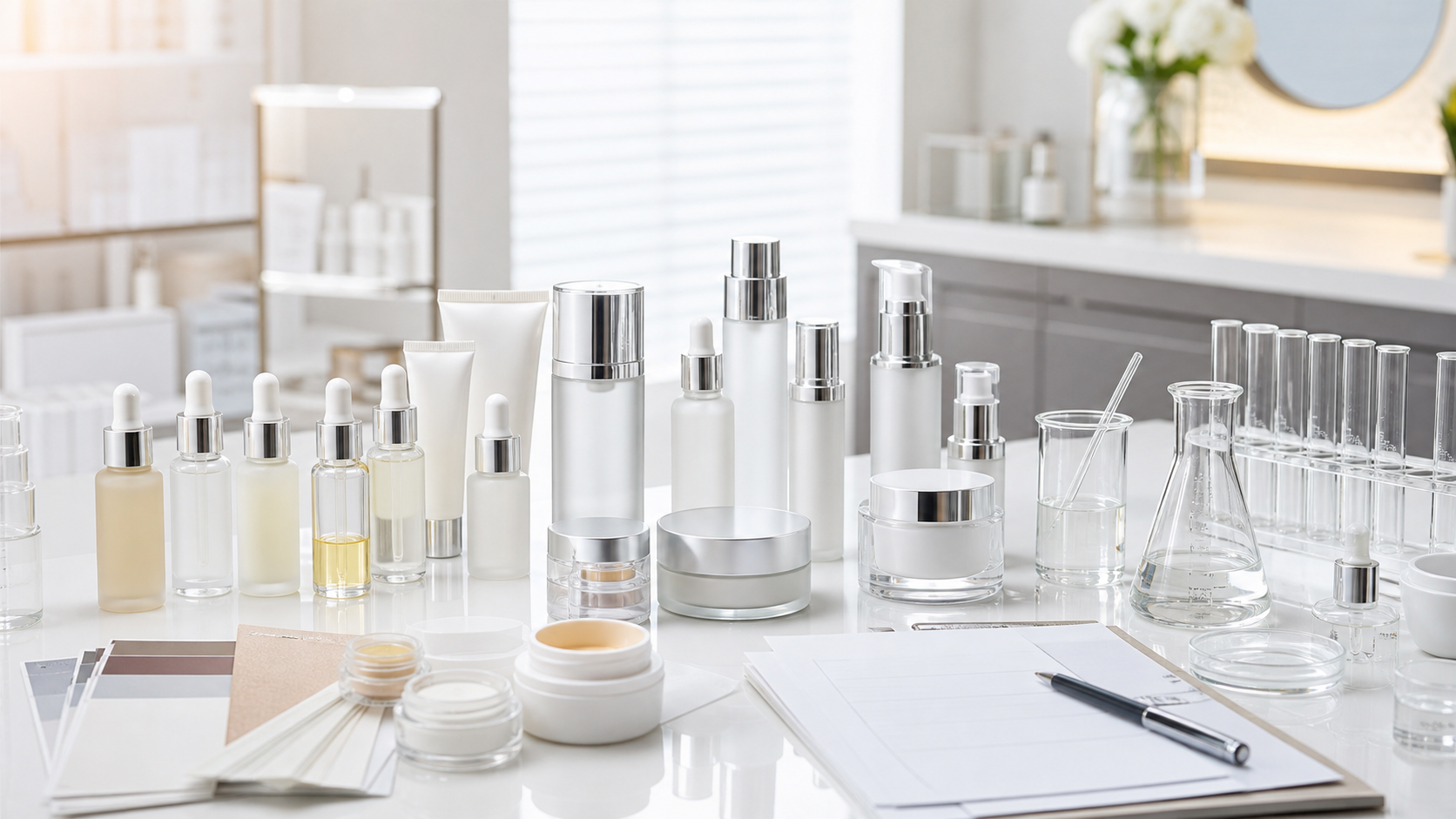
Clinic retail products need to look professional and function reliably. Packaging choices may include airless pumps, serum bottles, tubes, jars, sachets, ampoules, mini-size kits, cartons, and display sets. The best option depends on formula viscosity, dispensing needs, retail price, shipping channel, and shelf presentation.
Through packaging sourcing and customization support, buyers can compare stock packaging, decorated components, cartons, labels, and set boxes. Stock packaging may support lower minimums and faster delivery. Custom molds, special decoration, and complex kits require more time and stronger forecast planning.
Packaging should be tested with the actual formula before mass production. A premium pump is not useful if the serum is too viscous, a jar may not fit a hygiene-focused positioning, and a beautiful carton may fail if it cannot survive export or e-commerce shipment.
Sample Development and Approval Workflow
Sample development should be organized as a controlled decision process. The buyer provides target product roles, benchmark textures, ingredient preferences, avoid lists, packaging direction, claim boundaries, estimated MOQ, and launch timing. The factory then recommends formula routes, prepares samples, records feedback, and advises on packaging compatibility.
Feedback should be specific. Instead of saying a moisturizer should feel more professional, say whether it should absorb faster, feel less waxy, reduce fragrance strength, have a lighter texture, or match a particular benchmark more closely. Clear comments help the lab revise the sample efficiently.
Before production, keep approved samples for formula, fragrance, color, texture, packaging, artwork, and carton. Written approval reduces confusion when several people are involved, such as clinic owners, procurement managers, marketing teams, and local distributors.
Quality Control, Compliance, and Export Support
Quality control for clinic retail skincare should be discussed before the purchase order. Important checkpoints may include raw material review, packaging inspection, in-process controls, appearance, odor, fill weight, packaging function, leakage, label placement, carton accuracy, batch coding, retained samples, and final inspection.
Mooyam’s quality control and compliance support helps buyers understand typical manufacturing documents and inspection steps. The exact documentation package depends on product type, destination, buyer requirements, and order scope.
Export support may include carton marks, packing list, commercial invoice coordination, freight-forwarder communication, and production schedule alignment. The buyer should confirm import, registration, notification, labeling, claims, and responsible-party duties in the destination market.
Procurement Checklist for Aesthetic Clinic Buyers
- Define the target buyer: clinic client, beauty center customer, distributor, online buyer, or retail partner.
- Choose the launch structure: hero serum, daily routine, service support kit, retail bundle, or travel set.
- Decide the formula route: private label, modified stock formula, or full custom formulation.
- Prepare benchmark products, texture notes, fragrance preferences, ingredient avoid list, and claim boundaries.
- Confirm packaging format, decoration level, carton needs, MOQ, target unit cost, and reorder forecast.
- Review target-market rules for ingredients, labels, claims, importer duties, and product classification.
- Approve final formula samples, packaging samples, artwork, QC expectations, and shipment documents in writing.
Common Mistakes to Avoid
Making procedure-style product promises
Clinic-adjacent skincare should not claim to heal, treat, cure, prevent, or replace professional services unless it is developed and authorized under the appropriate route. Keep cosmetic benefit language realistic and evidence-aware.
Launching too many SKUs at once
A large first range increases sample work, packaging complexity, inventory risk, and staff training needs. A focused routine is easier to sell and reorder.
Choosing packaging before checking formula fit
Packaging should match viscosity, fill method, hygiene positioning, carton requirements, and transport conditions. Always review real components with the intended formula.
Ignoring reorder planning
A clinic range can lose momentum if packaging or formula materials are not available for reorders. Discuss lead times, MOQ, component stock, and forecast planning before the first production run.
How Mooyam Cosmetic Supports Clinic and Beauty Center Projects
Mooyam Cosmetic supports overseas B2B buyers with cosmetic OEM and ODM manufacturing, private label skincare, sample development, packaging sourcing, mass production, quality control, and export support. For aesthetic clinics and beauty centers, our role is to help structure the product brief, select the right formula route, coordinate packaging, prepare production standards, and support launch-ready manufacturing decisions.
We do not sell retail single units and we do not make medical treatment promises. Our team works with brand owners, sourcing managers, distributors, clinic groups, and beauty center buyers that need a professional manufacturing partner for branded cosmetic products.
Start Your Private Label Skincare Project
Looking for a reliable cosmetic OEM/ODM manufacturer in China? Contact Mooyam Cosmetic to discuss your product idea, formula requirements, packaging options, MOQ, sample development, and production plan.
FAQ
Can aesthetic clinics sell private label skincare under their own brand?
Yes. Many aesthetic clinics and beauty centers develop branded cosmetic skincare for retail sale, client routines, membership programs, and gift sets. The brand should confirm local labeling, claims, and responsible-party requirements before selling.
What products are best for a first clinic skincare line?
A practical first line often includes a cleanser, moisturizer, serum, mask, or mini routine kit. The exact choice depends on the clinic’s audience, price point, service menu, and sales channel.
Is private label faster than custom formulation?
Usually yes. Private label uses an existing formula route, while custom formulation requires more development, sample review, and technical approval. Custom work may be worthwhile for a signature product.
Can a cosmetic manufacturer help with packaging?
Yes. A manufacturer can support packaging sourcing, component comparison, decoration, carton planning, and filling compatibility. The buyer should still approve the final design, label content, and market-facing claims.
Who is responsible for clinic skincare compliance?
The brand owner, importer, distributor, or responsible party should confirm compliance obligations in each target market. A manufacturer can provide technical and production support, but requirements vary by market and product.
Can Mooyam support export orders for clinic retail skincare?
Yes. Mooyam Cosmetic can support export communication, production planning, packing coordination, and shipment documents for B2B orders, depending on the project scope and destination requirements.
Does Mooyam guarantee product results or regulatory approval?
No. We support cosmetic manufacturing, sample development, packaging, quality control, and export planning, but we do not guarantee consumer results or regulatory approval. Claims and requirements must be reviewed for the target market.