
A refillable skincare product line should be planned as a complete packaging and production system, not only as a jar with a replacement cup. Beauty brands need to align the formula, refill unit, outer reusable pack, artwork, filling method, quality control, and reorder model before mass production.
In cosmetic OEM/ODM manufacturing, a refillable skincare line means the consumer keeps part of the package and replaces only the inner pod, pouch, cartridge, bottle, or refill container. This guide explains how overseas brands can plan refillable private label skincare with a cosmetic OEM manufacturer or cosmetic ODM manufacturer in China.
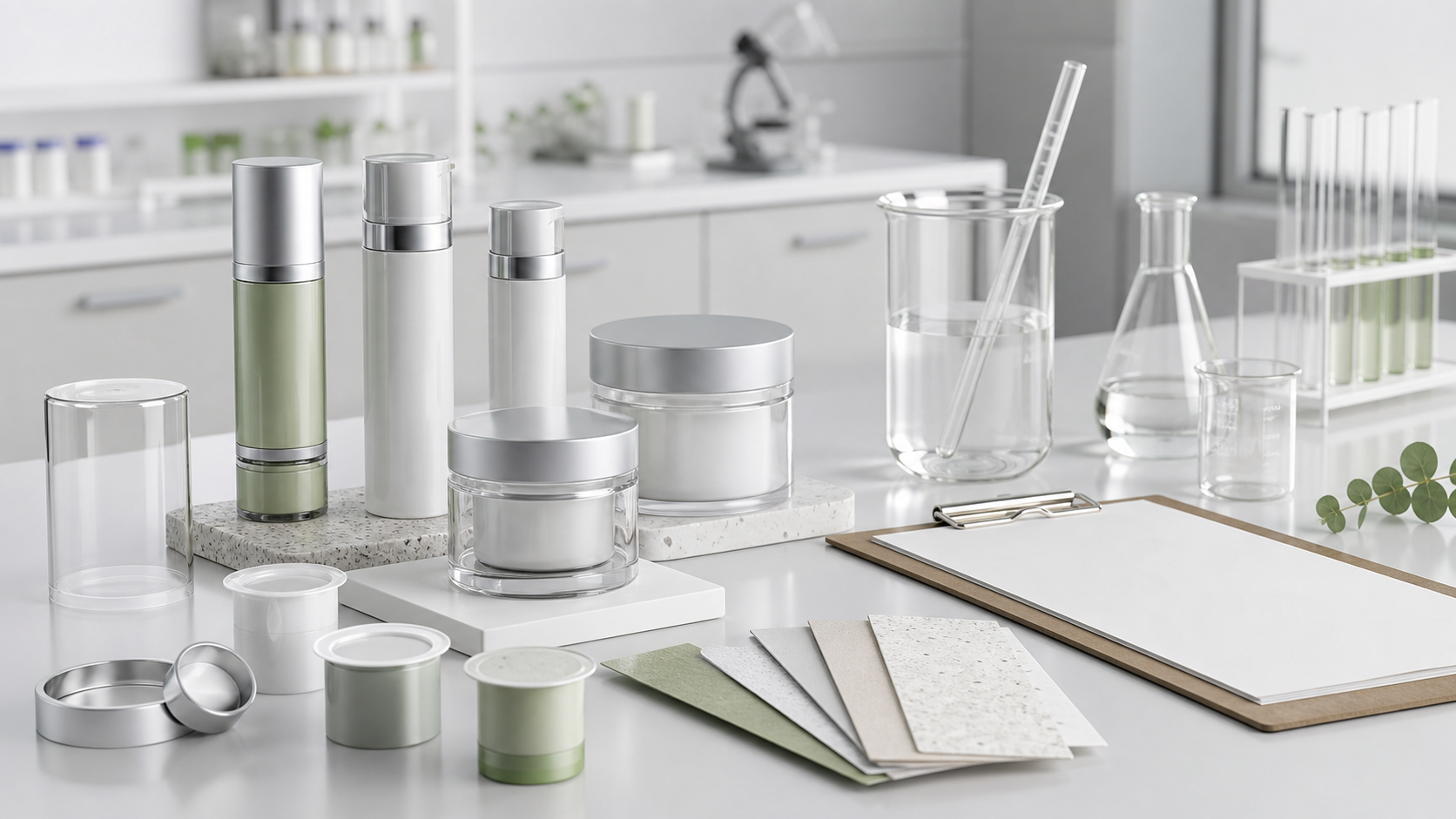
Quick Summary
- Refillable skincare works best when the brand defines the durable outer pack, refill format, formula compatibility, and consumer use model early.
- Packaging sourcing is usually the critical path because refill systems require tighter fit, sealing, decoration, and assembly checks than basic single-use packs.
- Sample development should test both the formula and the refill mechanism before the brand approves artwork or printed packaging.
- Quality control must cover leakage, fill weight, component match, batch coding, carton separation, and market-specific label requirements.
- A full-service cosmetic OEM/ODM service partner can coordinate formulation, packaging, sample revisions, mass production, and export support.
What Is a Refillable Skincare Product Line?
A refillable skincare product line is a group of products designed so the user can keep the main package and replace the product-containing part after use. The refill may be an inner jar cup, soft pouch, airless cartridge, bottle insert, aluminum tube, or simplified replacement bottle. For B2B buyers, the important point is that the refill format changes the manufacturing workflow.
A basic cream jar project may need one jar, one lid, one liner, one label, and one carton. A refillable cream project may need an outer jar, an inner cup, a sealing film, a refill carton, instructions, separate batch code areas, and a plan for repeat orders. If the brand wants a serum, toner, cleanser, cream, and mask line, each SKU may need its own refill logic and packaging compatibility review.
Refillable packaging can support a premium, practical, or lower-waste brand story, but the wording must stay accurate. Do not promise environmental impact unless the brand has evidence for the target market. Claims, labeling, recycling language, and importer requirements can vary by target market.
Choose the Right Refill Model
The first business decision is how the customer will buy and use the refill. A refillable skincare project should be easy to understand, clean to replace, and realistic for e-commerce shipping or retail display. The right model depends on formula viscosity, pack size, retail price, MOQ, decoration goals, and user experience.
| Refill Model | Best Use Case | OEM/ODM Development Focus |
|---|---|---|
| Inner jar cup | Creams, balms, masks, eye creams, and premium gift sets. | Cup fit, sealing film, lid compatibility, removal tab, filling cleanliness, and carton separation. |
| Airless cartridge | Serums, lotions, emulsions, and formulas that need controlled dispensing. | Pump matching, piston movement, leakage, actuator feel, fill volume, and formula viscosity. |
| Refill pouch | Cleansers, toners, body care, and larger refill volumes. | Spout design, pouch material, formula compatibility, shipping durability, and user pouring control. |
| Replacement bottle | Lower-complexity private label skincare sets and quick reorder programs. | Clear SKU separation, artwork, carton labeling, refill pricing, and inventory planning. |
Start with a Product and Packaging Brief
Before asking for a quotation, the brand should prepare a product brief that explains the formula type, target texture, refill model, capacity, sales channel, retail price range, target market, and launch quantity. This helps the factory judge whether a stock formula, modified formula, or full custom formulation route is the best fit.
For a first refillable line, many brands start with one hero product and one or two support products. For example, a cream jar with refill cups can launch before a full serum, cleanser, and mask system. This reduces packaging risk and makes sample development easier to control.
Define the Durable Pack and the Refill SKU Separately
The durable outer pack and the refill unit are related but should be tracked as separate items. The outer pack may use a premium cap, custom color, decoration, or gift box. The refill unit may use simpler decoration, a different carton, and a separate barcode. This affects artwork, MOQ, purchase orders, quality control, and reorders.
Formula Compatibility Comes Before Final Packaging
Refillable skincare can use private label skincare formulas, modified stock formulas, or custom formulas. The formula route should be decided before final packaging commitment because viscosity, pH range, fragrance, oils, solvents, pigments, and filling temperature may affect the refill component.
A cream refill cup needs clean filling and a reliable seal. A serum cartridge needs pump compatibility and smooth dispensing. A pouch refill needs a material that can handle the formula and shipping conditions. During sample development, the cosmetic ODM manufacturer should check texture, odor, color, filling behavior, component fit, and early compatibility observations before the brand signs off.
Brands should avoid changing the formula after the refill mechanism is approved. Even a small texture adjustment can affect filling speed, leakage risk, pump performance, or how the product settles inside the refill unit.
Packaging Sourcing and Artwork Planning
Refillable packaging requires more coordination than basic packaging sourcing. The brand may need an outer jar supplier, an inner cup supplier, a seal film, a cap, a carton, and possibly different packaging for starter kits and refill-only SKUs. Mooyam Cosmetic can help buyers review custom packaging options, component samples, decoration choices, and carton requirements before final production.
Artwork should clearly separate the starter product from the refill product. The product name, net content, INCI list, batch code space, barcode, instructions, responsible company details, and destination-market information should be checked before printing. The factory can support production information and documentation, but brands should confirm compliance wording with qualified local advisors because requirements vary by target market.
Buyer Checklist Before Sampling a Refillable Line
- Choose the first refill model: inner jar cup, cartridge, pouch, or replacement bottle.
- Prepare a product brief with formula type, texture, capacity, target price, market, and launch quantity.
- Define which SKUs are starter packs and which are refill-only SKUs.
- Ask for packaging samples and check component fit before approving decoration.
- Test formula filling, sealing, leakage, dispensing, and user replacement steps.
- Confirm separate artwork, barcodes, batch code areas, and carton marks for starter and refill SKUs.
- Set quality control standards for appearance, fill weight, leakage, component match, and finished goods packing.
- Discuss reorder timing, export support, and carton configuration before mass production.
Sample Development Workflow
A practical refillable project usually moves through concept review, packaging screening, formula sampling, component fit testing, artwork proofing, pre-production approval, and mass production. The sequence can overlap, but buyers should avoid approving final packaging before they have seen formula-filled samples.
During sample development, the brand should test the product like a real buyer would use it. Can the refill be inserted without touching too much product? Does the cap close smoothly? Does the pump still work after shipping simulation? Is the refill carton clear enough for warehouse teams? These questions are as important as texture and fragrance feedback.
Mass Production and Quality Control
Mass production should follow the approved sample, approved component list, and approved artwork files. For refillable lines, the production team must separate starter packs and refill SKUs carefully. A small packing error can create customer service problems if a starter carton contains a refill-only unit or if a refill SKU is missing its insert.
Quality control should cover incoming packaging inspection, bulk formula checks, filling records, seal checks, finished product appearance, carton marks, and retained samples. Mooyam’s quality control and compliance support can help overseas buyers define reasonable checkpoints for formula, packaging, labeling, finished goods, and shipment preparation.
How Mooyam Cosmetic Can Support Your Project
Mooyam Cosmetic supports overseas beauty brands, Amazon sellers, Shopify/DTC brands, distributors, salons, spas, and private label buyers with OEM/ODM skincare manufacturing. For refillable skincare, our team can help with formula route selection, packaging sourcing, sample development, component review, MOQ discussion, mass production planning, quality control, and export support.
For brands that want a faster launch, private label skincare options may be combined with refillable packaging when suitable. For brands that need a more differentiated texture or ingredient story, custom formulation may be the better route. The best choice depends on timeline, budget, target market, product claims, and packaging availability.
Start a Refillable Skincare OEM/ODM Project
Looking for a reliable cosmetic OEM/ODM manufacturer in China? Contact us to discuss your product idea, formula requirements, packaging options, MOQ, sample development, and production plan. Share your refill model, target products, packaging references, order quantity, and destination market so our team can review the next practical steps.
FAQ
Is refillable skincare harder to manufacture than regular skincare?
It can be more complex because the refill unit, outer package, seal, artwork, filling method, and packing plan must work together. A clear brief and early component testing reduce the risk.
Which skincare products are suitable for refillable packaging?
Creams, lotions, serums, cleansers, toners, masks, and body care can be considered, depending on formula compatibility and packaging availability. The best choice depends on viscosity, filling method, capacity, and user experience.
Can a refillable line use stock formulas?
Yes, in some cases. A stock or modified stock formula can support a faster launch, but the formula still needs to be checked with the selected refill component before mass production.
Does refillable packaging always reduce cost?
Not always. The starter pack may cost more because it includes a durable outer package. Refill SKUs may become more efficient later, but cost depends on components, MOQ, decoration, packing, and reorder volume.
What should brands test before approving production?
Brands should test formula texture, filling behavior, seal quality, leakage, pump or cap function, refill replacement steps, artwork accuracy, carton marks, and finished product appearance.
Can Mooyam help source refillable packaging?
Yes. Mooyam can help review packaging options, component samples, decoration methods, filling compatibility, MOQ, and production planning for refillable skincare projects.
Are refillable skincare claims regulated?
Claims and labeling requirements can vary by target market. Brands should avoid broad environmental or compliance promises unless they have suitable evidence and local regulatory review.