Retinol skincare can be a strong launch direction for beauty brands, but it also needs more careful planning than many basic moisturizing products. Buyers must think about ingredient positioning, packaging protection, formula stability, claim language, sample approval and target market requirements before moving into bulk production.
This guide is written for overseas beauty brands, private label buyers, Amazon sellers, DTC teams, distributors and sourcing managers who want to launch a retinol skincare product with a cosmetic OEM manufacturer or cosmetic ODM manufacturer. Mooyam Cosmetic supports wholesale and brand OEM/ODM projects only and does not accept retail orders.
Quick Summary
- Retinol projects should start with claim boundaries, target market, ingredient route, packaging protection and usage positioning.
- Airless bottles, opaque tubes and amber packaging are common because light and air exposure can affect product quality.
- Custom formulation may be useful for differentiated texture or supporting ingredients, while private label skincare can shorten launch time.
- Final claims, warnings and labels vary by target market, so brands should review regulatory requirements before printing packaging.
Why Retinol Skincare Requires Careful OEM Planning
Retinol products are popular because consumers recognize the ingredient, but strong awareness also creates higher expectations. A product that is poorly positioned, unstable, irritating in use, or packaged in the wrong container can create returns and brand complaints. For B2B buyers, the goal is not to make aggressive claims. The goal is to develop a cosmetic product that fits the brand’s market, channel, price point and compliance route.
A retinol project may be a serum, cream, lotion, eye product or night treatment. Each format has different packaging and formula needs. A lightweight serum may require an airless bottle and specific viscosity. A cream may need a tube or jar alternative, although jars should be reviewed carefully because repeated opening can expose the product to air and light.
Start With Product Positioning and Claims
Before requesting samples, decide what the product is meant to be. Is it an entry-level night serum for a startup line, a premium cream for DTC subscribers, a salon/spa retail product, or a distributor SKU for multiple markets? The position affects formula strength, texture, packaging cost, label language and MOQ.
Retinol-related claims must be handled carefully. Avoid medical language, guaranteed results or statements that exceed cosmetic positioning. Market requirements vary, and some regions may have limits, warnings or special expectations for vitamin A derivatives. Mooyam can help prepare a manufacturing brief, but final claim and label approval should match your target market review.
Choose a Manufacturing Route
There are several ways to build a retinol skincare product. A stock private label formula may be enough for a first SKU if the buyer wants speed and lower development complexity. An adjusted formula can help refine texture, fragrance direction or supporting ingredient story. A full custom formula can support a more specific brand concept, but it usually needs more sample rounds and testing.
| Route | Best Fit | Key Risk to Manage |
|---|---|---|
| Private label formula | Startup brands, Amazon sellers and buyers needing faster launch. | Confirm claim fit, packaging compatibility, available MOQ and differentiation. |
| Adjusted base formula | Brands that want a familiar base with selected sensory or ingredient changes. | Any change may affect stability, cost and sample timeline. |
| Custom formulation | DTC brands, premium lines and buyers needing a more unique product story. | Plan enough time for sample revisions, compatibility review and production setup. |
Mooyam supports private label skincare and custom formulation routes, so buyers can choose a path that matches budget, lead time and brand positioning.
Formula and Packaging Decisions
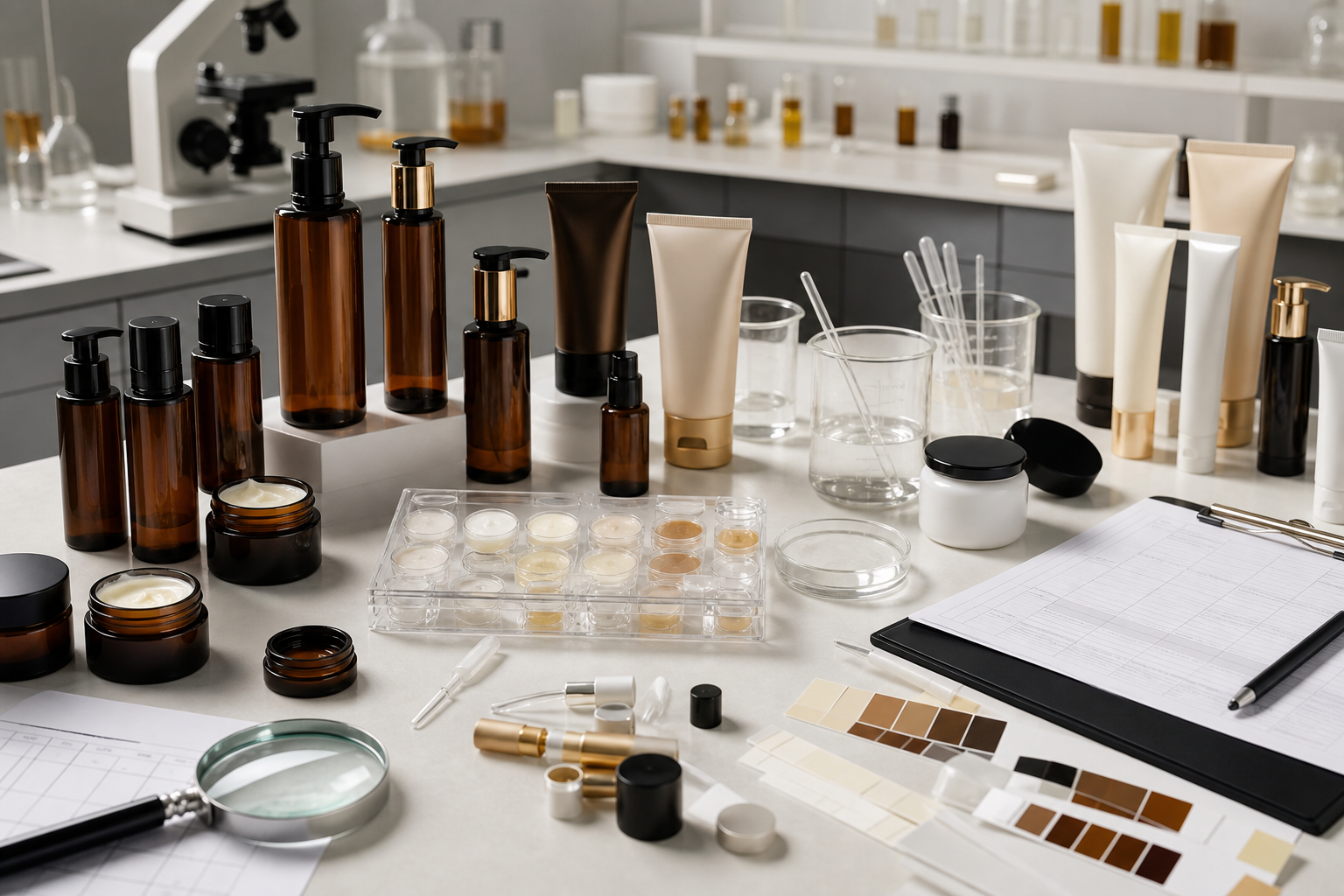
Retinol products need packaging that supports the formula. Amber bottles, opaque tubes and airless containers are often considered because they help reduce unnecessary exposure to light and air. The exact choice depends on formula viscosity, fill weight, target price, user experience and supplier MOQ.
Packaging sourcing should begin early because component lead time can become the bottleneck. Decoration methods, label materials, carton structure and outer carton strength all affect final presentation and production readiness. Mooyam Cosmetic can assist with customized packaging, including bottle comparison, carton planning and component compatibility checks.
| Decision Area | Buyer Options | Factory Checkpoint |
|---|---|---|
| Product Format | Serum, cream, lotion, night product or set item. | Confirm texture, fill process, packaging fit and use instructions. |
| Packaging | Amber pump, airless bottle, opaque tube or protected cream packaging. | Check light protection, leakage, pump output, decoration and MOQ. |
| Claim Direction | Cosmetic skin appearance, texture or routine-support wording. | Review target market rules and avoid medical or guaranteed claims. |
| Launch Plan | Single hero SKU, paired moisturizer, trial kit or full skincare routine. | Align sample approval, carton artwork, QC plan and bulk production timing. |
Sample Development Workflow
A good sample process should be structured. Provide the factory with benchmark products, desired texture, target market, packaging preference, ingredient restrictions, fragrance direction, MOQ target and price level. After the first sample, evaluate texture, absorption, odor, appearance, packaging match and label concept. Comments should be specific and tied to the brief.
If a buyer changes the active story, packaging or texture after several rounds, the project may need additional checks. Retinol product development is not a place for rushed last-minute changes. A controlled approval process helps protect timeline and reduce bulk production risk.
Buyer Checklist Before Ordering
- Define whether the product is a serum, cream, lotion, night treatment or routine set.
- Confirm the target market and review retinol-related label requirements before final artwork.
- Choose private label, adjusted base or custom formulation based on launch speed and differentiation.
- Select packaging that supports formula protection, dispensing and channel presentation.
- Approve texture, odor, appearance, pH or other relevant quality ranges before production.
- Align low MOQ options, sample timing, bulk production lead time, carton packing and export support.
Quality Control and Compliance Awareness
Quality control for retinol skincare should include formula appearance, odor, viscosity, filling accuracy, packaging cleanliness, pump or tube performance, label accuracy, carton inspection and batch traceability. Stability and compatibility expectations should be discussed based on formula and packaging. Buyers should also confirm whether extra documentation is needed for the import country.
Mooyam’s quality control and compliance support helps buyers understand production checkpoints, but compliance requirements depend on the target market, product type and claims. The brand should review final labels and sales copy before launch.
FAQ
Can Mooyam manufacture private label retinol skincare?
Yes. Mooyam can support private label and OEM/ODM retinol skincare projects for brand and wholesale orders, depending on formula route, packaging and MOQ.
What packaging is best for retinol products?
Amber, opaque or airless packaging is often considered. The best choice depends on formula viscosity, protection needs, decoration method, MOQ and target price.
Can I make strong anti-aging claims?
Claims should be conservative and market-specific. Avoid medical promises or guaranteed results, and review target market requirements before printing labels.
Is custom formulation necessary?
Not always. Private label may be better for a first launch, while custom formulation is useful when the brand needs a more differentiated texture or ingredient story.
How long does sample development take?
Timing depends on brief clarity, formula route, packaging availability and revision rounds. A clear brief can reduce avoidable delays.
Does Mooyam support export orders?
Yes. Mooyam can support export coordination for OEM/ODM projects, while import and label requirements vary by destination market.
Develop Retinol Skincare with Mooyam Cosmetic
Need a reliable cosmetic OEM/ODM manufacturer for a retinol skincare launch? Mooyam Cosmetic can help with formula route selection, private label skincare, custom formulation, packaging sourcing, sample development, low MOQ planning, bulk production, quality control and export support. Contact us to discuss your product idea, packaging options, MOQ and production plan.