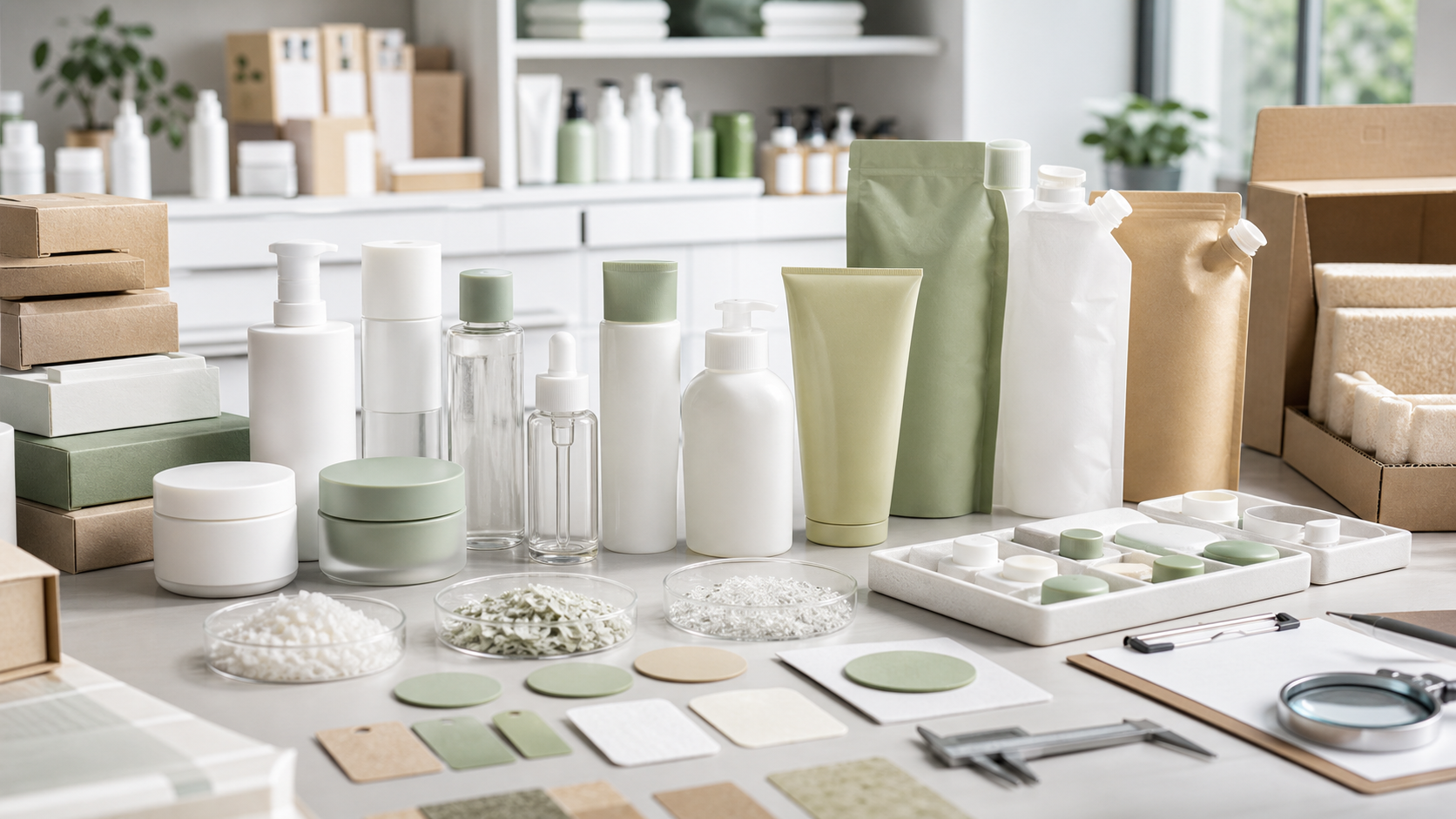
Sustainable cosmetic packaging is now part of product planning for many beauty brands, but it should not be treated as a simple marketing word. A bottle, tube, jar, carton or refill pack must still protect the formula, support the sales channel, meet cost targets, survive shipping and fit the buyer’s MOQ and production schedule.
This guide explains what overseas beauty brands, Amazon sellers, DTC founders, distributors and private label buyers should consider when discussing sustainable packaging with a cosmetic OEM manufacturer or cosmetic ODM manufacturer. Mooyam Cosmetic supports B2B private label skincare and wholesale OEM/ODM projects only; we do not accept retail orders.
Quick Summary
- Sustainable packaging should balance material choice, formula protection, cost, MOQ, decoration, shipping weight and claim accuracy.
- Common routes include reduced packaging, lighter components, PCR material, mono-material packaging, refill systems, paper cartons and reusable formats.
- Eco claims must be checked carefully because requirements vary by target market and unsupported statements can create risk.
- Buyers should test the final formula and packaging together before approving samples, artwork or bulk production.
- Mooyam Cosmetic can support packaging sourcing, custom formulation, private label skincare, quality control, bulk production and export support.
What Sustainable Packaging Means in Cosmetic Manufacturing
In cosmetic manufacturing, sustainable packaging can mean different things depending on the brand goal. It may mean using less material, choosing lighter components, reducing empty space, selecting PCR material, designing refill packs, simplifying cartons, improving recyclability or building a reusable package. It does not automatically mean that one material is always best.
A glass jar may look environmentally responsible but can increase shipping weight and breakage. A paper carton may reduce plastic appearance but still needs printing, glue and transport protection. A refill system can reduce repeat packaging, but it adds complexity in leakage control, hygiene, consumer instructions and MOQ. A responsible packaging plan compares the full project, not only the headline material.
For cosmetic OEM/ODM manufacturing, the practical question is: which packaging route supports the formula, user experience, channel and launch budget with the least avoidable waste and risk?
Start With the Product and Sales Channel
Sustainable packaging should begin with how the product is used and sold. A daily cleanser in a shower environment has different packaging needs from a facial oil, a premium cream, a sheet mask, a body lotion or a professional spa product. The sales channel also matters. Amazon and DTC shipments need strong leakage and carton protection, while retail shelves may need more visual impact and scannable information.
Brands should define the target market, sales channel, price point, formula type, expected MOQ, launch timeline and refill or reorder strategy before requesting packaging options. This helps the factory recommend realistic packaging sourcing and customization routes instead of sending generic eco-style samples.
| Packaging Route | What It Can Improve | Buyer Watchouts |
|---|---|---|
| Lightweight packaging | Lower freight weight, easier handling and sometimes lower unit cost. | Must still protect the formula and survive filling, storage and shipping. |
| PCR or recycled-content plastic | Supports reduced virgin plastic positioning where available. | Color consistency, odor, supply availability, cost and claim rules vary. |
| Mono-material packaging | May simplify recycling compared with mixed components. | Pump, cap, label and decoration choices can complicate the claim. |
| Refill pack or refillable system | Can reduce repeat primary packaging and support loyal customers. | Needs leakage checks, hygiene planning, instructions, MOQ and stronger launch education. |
| Reduced carton or shipper | Can lower material use and dimensional weight. | Must still protect product, barcode area, ingredient list and export handling needs. |
Formula Compatibility Comes First
A sustainable packaging idea is only useful if the formula remains stable and usable. Serums, creams, masks, oils, toners, scrubs and cleansers may interact differently with recycled materials, paper-based packs, aluminum tubes, glass, pumps, liners and labels. Formula viscosity also affects pump output, tube recovery, refill pouch filling and user experience.
When a brand uses custom formulation support, packaging should be discussed during sampling. If the brand uses private label skincare, the base formula may already have packaging history, but the final package, decoration and carton still need review. Any change to fragrance, color, active direction or packaging contact surface can create a new compatibility question.
Be Careful With Eco Claims
Many buyers want labels that say recyclable, recycled, biodegradable, compostable, refillable, clean, plastic-free or sustainable. These words can be regulated or challenged depending on the target market. Requirements vary by country, product category, material, claim wording, proof and consumer disposal system. A factory should not guarantee universal approval for an environmental claim.
A safer approach is to keep claims specific and evidence-based. Instead of broad language, a brand can state the concrete packaging decision if it has support, such as reduced carton size, selected recycled-content component, refill pouch option or lighter shipping pack. The brand should confirm final market-facing claims with qualified advisers before printing artwork.
MOQ, Cost and Lead Time Tradeoffs
Sustainable packaging is sometimes more expensive, but not always. Reducing material, using stock packaging or simplifying cartons can lower cost. PCR material, custom molded refill systems, special paper structures or unusual mono-material components may increase MOQ and lead time. Buyers should ask for component-level MOQ and realistic delivery timing before committing to launch dates.
Cost should include sample fees, mold or tooling cost, decoration, labels, cartons, compatibility checks, production scrap risk, freight weight and reorder availability. A sustainable packaging route that cannot be reordered consistently may create more operational waste than a simpler, stable package.
Buyer Checklist for Sustainable Packaging Projects
- Define the sustainability goal: less material, lighter weight, PCR, refill, mono-material, reduced carton or reusable format.
- Confirm product type, formula viscosity, ingredient sensitivity and target fill volume.
- Compare packaging options against target market, sales channel, price point, MOQ and launch timeline.
- Request physical samples and formula-filled samples before approving artwork.
- Check leakage, pump output, tube recovery, closure fit, label adhesion, carton strength and shipping protection.
- Ask what claims can be supported with documents and which claims need market-specific legal review.
- Review component-level MOQ, decoration MOQ, sample cost, production lead time and reorder availability.
- Keep approved standards for packaging appearance, function, carton condition and finished goods inspection.
Quality Control for Sustainable Packaging
Quality control should not be reduced because the packaging is sustainability-led. In some cases, it needs more attention because new materials, lighter components or refill systems can create different risks. Useful checks include incoming component inspection, color consistency, odor, surface defects, pump or cap function, leakage, fill weight, label adhesion, carton compression and transport protection.
Mooyam Cosmetic can help buyers connect packaging decisions with quality control and compliance planning. This includes reviewing practical inspection points before bulk production and keeping retained samples for future reorders. For export support, carton marks, packing lists, shipment conditions and freight method should be aligned early.
How to Build a Practical Packaging Brief
A strong packaging brief helps the factory compare sustainable options quickly. Include product type, capacity, target order quantity, sales channel, budget range, material preferences, claim boundaries, decoration method, carton needs, shipment destination and launch timing. Separate must-have requirements from flexible preferences so the sourcing team can suggest alternatives when one option has high MOQ or long lead time.
Reference images can help, but do not ask the factory to copy another brand. Instead, explain what the reference means: refill structure, matte finish, reduced carton, pump style, bottle shape or natural color direction. The goal is to create a manufacturable package that supports your own brand position and production plan.
How Mooyam Cosmetic Supports Packaging Decisions
Mooyam Cosmetic works with overseas brands, distributors, sourcing managers, Amazon sellers and DTC teams on B2B OEM/ODM projects. We can help review formula route, sample development, low MOQ options, packaging sourcing, bulk production, inspection and export support. For sustainable packaging discussions, our role is to help buyers compare realistic options and avoid unsupported promises.
The best project starts with a clear brief and an honest tradeoff review. If the brand needs a fast launch, stock packaging with reduced carton material may be more practical than a custom refill system. If the brand has repeat volume, a more customized sustainable packaging direction may become realistic after the first successful production cycle.
FAQ
What is sustainable cosmetic packaging?
It is packaging designed to reduce environmental impact in a practical way, such as using less material, lighter components, recycled content, refill systems or easier-to-sort structures.
Is glass always more sustainable than plastic?
No. Glass can be recyclable and premium, but it is heavier and can break. The best choice depends on formula, shipping, refill strategy, local recycling systems and product use.
Can low MOQ brands use sustainable packaging?
Yes, but options may be more limited. Stock components, reduced cartons and careful material choices are often more realistic than custom molds for a first launch.
Can Mooyam source PCR or refill packaging?
Mooyam can discuss available packaging routes, including PCR-style options and refill concepts when suitable, but availability, MOQ and claims support must be confirmed for the project.
Can I print recyclable or biodegradable claims on the package?
Only if the claim is accurate and supported for the target market. Requirements vary, so brands should verify environmental claims with qualified advisers before printing.
Does sustainable packaging affect formula stability?
It can. Any package material, closure, liner, pump or refill pouch should be tested with the actual formula before approval.
Does Mooyam accept retail orders?
No. Mooyam Cosmetic supports B2B beauty brands, private label buyers, distributors and wholesale OEM/ODM projects only.
Plan Sustainable Packaging With Mooyam
Looking for a reliable cosmetic OEM/ODM manufacturer for sustainable cosmetic packaging, formula planning and production? Contact Mooyam Cosmetic to discuss your product idea, packaging options, MOQ, sample development, quality control and export support.