Waterless skincare manufacturing means developing products with little or no added water, such as balms, sticks, powders, tablets, cleansing bars, and concentrated formats. For beauty brands, the main question is not only whether the format looks sustainable or trendy; it is whether the formula, filling method, packaging, quality control, and consumer instructions can work reliably at scale.
This guide explains what overseas buyers should consider before starting a waterless skincare OEM/ODM project with a cosmetic OEM manufacturer or cosmetic ODM manufacturer in China. It is written for private label skincare buyers, Amazon and Shopify sellers, distributors, salon and spa brands, and sourcing managers planning a practical product launch.
Quick Summary
- Waterless skincare can reduce formula water content, but it still needs serious work on texture, stability, packaging, usage instructions, and quality control.
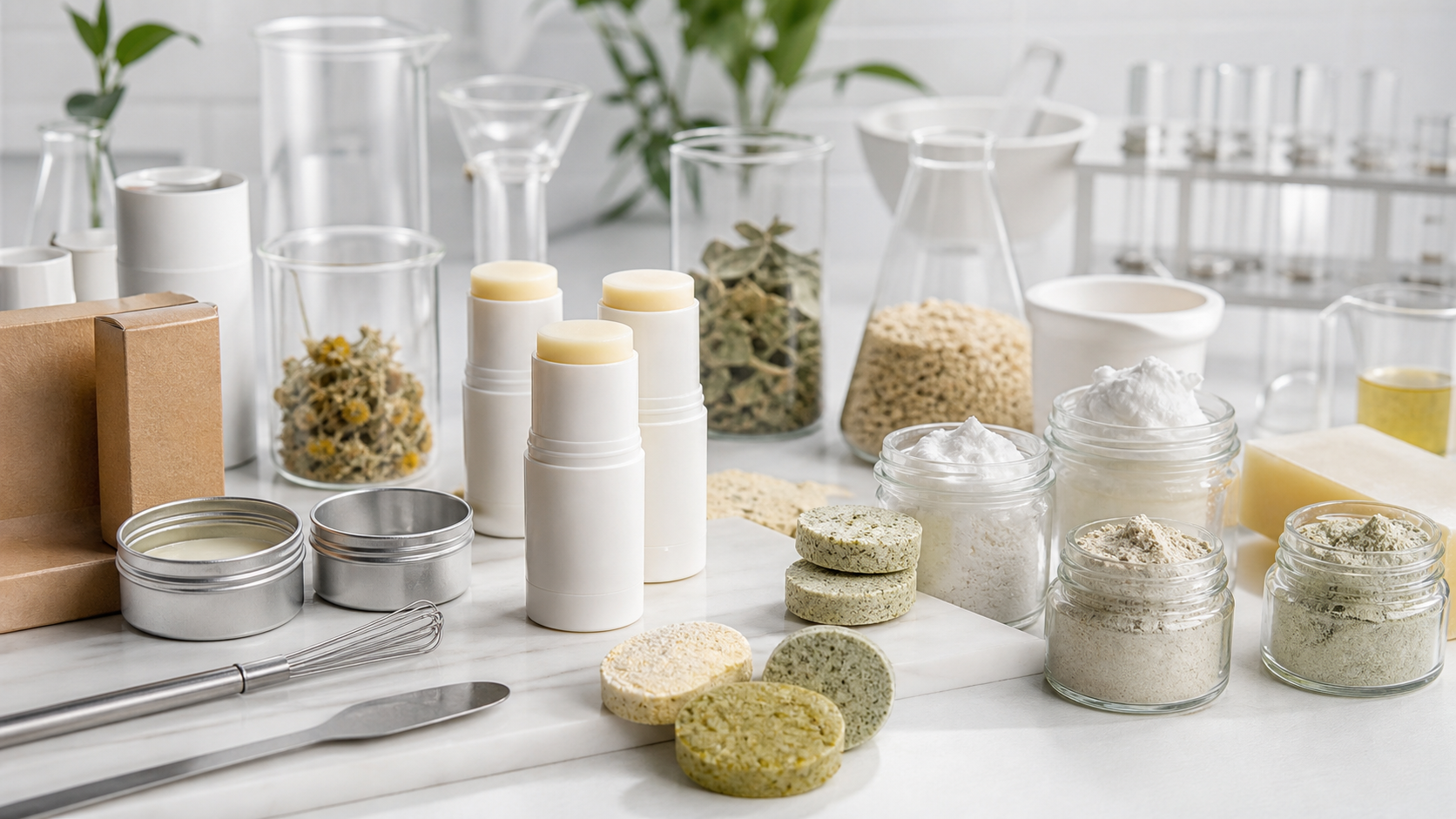
- Common formats include cleansing balms, solid cleansing bars, powder cleansers, balm sticks, pressed tablets, concentrates, and anhydrous body care.
- Packaging sourcing is critical because waterless products often need moisture protection, controlled dispensing, heat resistance, and clear consumer directions.
- Brands should test formula feel, filling behavior, pack compatibility, storage conditions, and target-market labeling before mass production.
- A full cosmetic OEM/ODM service partner can coordinate custom formulation, sample development, packaging, QC, and export support.
What Is Waterless Skincare?
Waterless skincare refers to cosmetic products designed with little or no added water in the formula. Some products are fully anhydrous, such as oil balms or balm sticks. Others are dry until use, such as powder cleansers or tablets that activate when mixed with water by the consumer. Concentrated formats may still contain some liquid ingredients, but they are positioned around reduced water content or compact usage.
For brands, waterless skincare is a product format decision, not a magic claim. It can support compact packaging, travel-friendly use, refill concepts, or a differentiated texture story. Claims and labeling requirements vary by target market, so wording should be reviewed carefully before artwork approval.
Why Brands Consider Waterless Formats
Waterless formats can help a brand stand out in crowded skincare categories. A balm cleanser, solid moisturizer stick, powder wash, or pressed tablet is easy to demonstrate in short video content and can support gifting, travel retail, sampling, or subscription programs when usage is simple.
From a manufacturing perspective, the opportunity comes with different technical questions. A formula with less water may need different heating, mixing, cooling, grinding, pressing, filling, or molding steps. The product may be sensitive to temperature, humidity, oxidation, fragrance volatility, or package seal quality. A professional cosmetic ODM manufacturer should review these points during sample development instead of treating the project as a standard lotion or cream.
Common Waterless Skincare Product Formats
| Format | Buyer Use Case | OEM/ODM Development Focus |
|---|---|---|
| Cleansing balm | DTC hero cleanser, double-cleansing set, premium routine product. | Melting point, rinse feel, fragrance, jar or tin compatibility, spatula option, leakage risk. |
| Solid cleansing bar | Travel retail, low-plastic brand concept, spa or hotel amenity. | Hardness, foam, cracking, drying time, wrapper protection, consumer instructions. |
| Powder cleanser | Amazon, Shopify, travel kit, refill pouch, sensitive-positioning concept. | Particle size, flowability, clumping risk, activation feel, moisture barrier packaging. |
| Balm stick or serum stick | On-the-go skincare, targeted application, sampling, gift sets. | Stick stability, twist-up function, heat tolerance, glide, fill weight, cap fit. |
| Pressed tablets or concentrates | Refill system, kit format, compact shipping, subscription model. | Tablet hardness, dissolution, pack seal, usage directions, batch consistency. |
Start with a Clear Product Brief
A waterless project should begin with a detailed product brief. The brief should define the format, target user, sales channel, target market, benchmark products, texture, fragrance direction, ingredient preferences, claims boundaries, price position, MOQ expectations, packaging idea, and launch timing. Without these details, the factory may develop a technically possible sample that does not match the buyer’s channel or retail story.
Private label skincare may be possible for some waterless formats if the factory already has suitable bases or semi-custom options. For more distinctive formats, a custom formulation route is usually more realistic because texture, melting behavior, powder flow, activation, fragrance, color, and packaging compatibility must be tuned together.
Define the Consumer Usage Step
Waterless skincare often asks the consumer to do something slightly different: scoop a balm, wet a bar, mix a powder, press a tablet, or apply a stick. That step must be intuitive. If the usage experience is confusing, the product can receive poor reviews even when the formula is well made. During sample development, the brand should test the product with people who have not read the internal brief.
Formula and Manufacturing Considerations
Anhydrous balms and sticks depend on the balance of oils, waxes, butters, esters, powders, and sensory modifiers. The factory must manage heating and cooling so the product sets evenly without graininess, sweating, cracking, or shrinkage. Powder products depend on ingredient particle size, powder flow, clumping control, fragrance distribution, and moisture protection.
Solid bars and tablets may require molding, pressing, drying, or curing steps. These choices affect lead time, unit weight, breakage risk, and packaging. If a brand changes fragrance, color, active direction, or pack size after sample approval, the project may need new compatibility or stability observations. The approved sample should be linked to a specification for appearance, odor, texture, weight, and packaging.
Brands should avoid medical claims or guaranteed results. Cosmetic benefit language such as cleansing, moisturizing feel, smoother appearance, soft skin feel, convenient use, or travel-friendly format is usually easier to manage than treatment-style claims. If the product will be sold in the US, EU, UK, GCC, Southeast Asia, or another market, ingredient limits, labels, claims, responsible party details, and documentation expectations may differ.
Packaging Sourcing for Waterless Products
Packaging is often the most important risk point. Powders need strong moisture protection. Balms and sticks need heat and leakage review. Bars need wrapping that protects the product while allowing realistic storage and shipping. Tablets and concentrates need clear instructions and, often, separate carton or sachet planning.
Mooyam Cosmetic can help buyers compare custom packaging options such as tins, jars, sticks, pouches, bottles, cartons, trays, wraps, and refill packs. Packaging sourcing should happen early because component MOQ, decoration, lead time, and compatibility can change the quotation and production schedule.
Buyer Checklist Before Sampling Waterless Skincare
- Choose the exact format: balm, bar, powder, tablet, concentrate, stick, or kit.
- Define target market, sales channel, pack size, retail price range, and launch date.
- List ingredient preferences, avoided ingredients, fragrance direction, color, and claim limits.
- Confirm whether the route is stock base, modified base, private label, OEM transfer, or custom formulation.
- Ask for packaging samples before approving formula viscosity, hardness, powder flow, or fill method.
- Test consumer usage steps, storage conditions, leakage, clumping, breakage, and heat exposure.
- Confirm artwork, INCI, net content, batch code area, instructions, carton marks, and export documents.
- Set quality control checkpoints before mass production, including retained samples and finished-goods inspection.
Quality Control Points for Waterless Skincare
Quality control should match the product format. A balm may need checks for appearance, odor, color, melting point range, fill weight, surface finish, container seal, leakage, and heat exposure. A powder cleanser may need checks for powder flow, clumping, moisture pickup, odor, color, particle consistency, fill weight, and pouch or bottle seal. A stick may need twist-up function, cap fit, breakage resistance, and glide.
Mooyam’s quality control and compliance support can help overseas buyers define practical checkpoints for formula, packaging, artwork, finished goods, and export preparation. The factory can support production records and documentation, but brands should confirm market-specific compliance with qualified local advisers because requirements vary by target market.
How to Plan Sample Development and Mass Production
A practical waterless project usually moves through concept review, formula direction, packaging screening, first samples, consumer-use review, formula revision, packaging compatibility observation, artwork proofing, pre-production approval, and mass production. This sequence should not be rushed only because the format appears simple.
During sample development, give measurable feedback: lower balm melt, less powder clumping, smoother stick glide, stronger tablet structure, or a lighter fragrance. Clear feedback helps R&D adjust the product without changing the whole concept.
Mass production should follow the approved sample, approved packaging, approved artwork, and agreed quality standard. For export support, carton configuration, shipping marks, batch coding, documents, and destination-market information should be confirmed before production is finished. This reduces delays at packing and shipment stages.
How Mooyam Cosmetic Can Support Your Project
Mooyam Cosmetic supports overseas beauty brands, Amazon sellers, Shopify/DTC brands, distributors, salons, spas, and sourcing teams with OEM/ODM skincare manufacturing. For waterless skincare, our team can help review product feasibility, formula route, sample development, packaging sourcing, quality control, mass production planning, and export support.
For brands that want a faster path, private label skincare options may be considered when a suitable base exists. For brands that need a distinct texture, usage step, or product story, custom formulation is usually the better path.
Start a Waterless Skincare OEM/ODM Project
Looking for a reliable cosmetic OEM/ODM manufacturer in China? Contact us to discuss your product idea, formula requirements, packaging options, MOQ, sample development, and production plan. Share your target waterless format, benchmark products, packaging references, order quantity, and destination market so our team can review the next practical steps.
FAQ
Is waterless skincare the same as preservative-free skincare?
No. Some anhydrous products may have different preservation needs than water-based formulas, but this does not automatically mean every waterless product is preservative-free or risk-free. The formula, packaging, use conditions, and target market should be reviewed case by case.
Which waterless product is easiest for a new brand to launch?
A cleansing balm, balm stick, or powder cleanser may be more practical than a complex tablet system, depending on packaging availability and MOQ. The easiest option depends on formula requirements, target channel, and packaging sourcing.
Can waterless skincare use private label formulas?
Sometimes. If the manufacturer has a suitable existing base, private label skincare may shorten development time. More differentiated textures, formats, and claims usually require custom formulation and additional sample rounds.
What packaging is best for powder skincare?
Powder skincare usually needs packaging with strong moisture protection, controlled dispensing, and clear closure performance. Bottles, jars, sachets, pouches, or refill packs can be considered after testing powder flow and clumping risk.
Do waterless products have lower MOQ?
Not automatically. MOQ depends on formula batch size, packaging MOQ, decoration method, filling process, and component availability. Some simple formats can support flexible MOQ, while custom packaging or pressed formats may require larger quantities.
Can Mooyam help with waterless product packaging?
Yes. Mooyam Cosmetic can help compare jars, tins, sticks, pouches, cartons, wraps, refill packs, and other packaging options for waterless OEM/ODM projects.
Does waterless skincare guarantee regulatory approval?
No. No format guarantees approval in every market. Ingredient rules, labeling, claims, documents, and importer responsibilities vary by target market, so brands should confirm requirements before final artwork and shipment.