Working with a cosmetic OEM factory for the first time can feel unfamiliar, especially when your brand is moving from an idea, benchmark sample, or mood board into real product development. The right factory partner should help you understand what information to prepare, how sample development works, which decisions affect cost, and what must be approved before bulk production.
This guide explains the first-time OEM workflow for overseas beauty brands, private label buyers, Amazon sellers, DTC founders, distributors, and sourcing managers. Mooyam Cosmetic supports B2B cosmetic OEM and ODM projects for brand and wholesale orders; we do not accept retail single-unit orders.
Quick Summary
- A first OEM project works best when the brand defines product type, target market, formula direction, packaging needs, MOQ range, and launch timeline early.
- Sampling, packaging sourcing, quotation, stability checks, artwork confirmation, and bulk production are connected steps, not separate decisions.
- Mooyam Cosmetic can support private label skincare, custom formulation, low MOQ planning, sample development, quality control, and export support for qualified B2B buyers.
- Clear communication reduces revisions, delays, packaging mismatch, and unexpected cost changes.
What a Cosmetic OEM Factory Does
A cosmetic OEM manufacturer produces products according to an agreed formula, packaging specification, artwork file, quality standard, and order quantity. Some buyers bring their own formula or reference sample. Others start with a stock formula and adjust texture, fragrance, color, active story, or packaging to fit their brand positioning.
An experienced cosmetic ODM manufacturer can also help with product concepts, formula routes, packaging suggestions, sample iterations, and production planning. For new brands, the practical difference is simple: OEM is usually more buyer-directed, while ODM includes more factory-side development support. Many real projects combine both models.
If you are building a private label skincare line, review Mooyam Cosmetic’s OEM/ODM manufacturing service and private label skincare support before sending your brief.
Step 1: Prepare a Clear Product Brief
Your first message to a factory does not need to be perfect, but it should answer the main sourcing questions. What product do you want to make? Who is the target customer? What texture, skin feel, packaging format, ingredient direction, and price range are you considering? Which market will you sell in? Do you need low MOQ testing or a larger wholesale launch?
A useful brief can include benchmark products, preferred packaging, target retail price, order quantity expectation, ingredient avoid list, fragrance preference, vegan or clean-positioning notes if relevant, and launch deadline. Avoid asking only, “How much is a serum?” without product details; the quotation will be too broad to guide a purchasing decision.
| Buyer Input | Why It Matters | Example Detail |
|---|---|---|
| Product type | Controls formula route and filling method | Facial cleanser, serum, moisturizer, mask, toner, body lotion |
| Formula direction | Guides custom formulation and sample revisions | Light gel serum, fragrance-free cream, gentle cleanser |
| Packaging format | Affects MOQ, cost, lead time, artwork, and compatibility | Airless bottle, tube, jar, dropper bottle, carton box |
| Target market | Helps plan labeling, claims, and document needs | US, EU, UK, Middle East, Southeast Asia, Amazon marketplace |
| Order quantity | Shapes low MOQ feasibility and bulk production cost | Test order, launch order, distributor order, reorder forecast |
Step 2: Choose Stock Formula, Customized Formula, or Full Custom Development
First-time buyers often want a fully custom product, but not every launch needs the same development depth. A stock formula with private label packaging can be faster and more cost-efficient. A customized formula may adjust scent, texture, color, viscosity, hero ingredients, or positioning. Full custom formulation is better when the brand needs a unique concept, special sensory profile, or more differentiated product story.
Mooyam Cosmetic can help evaluate the right route through custom formulation development. The decision should consider timeline, budget, MOQ, testing needs, and how much difference your brand needs from market benchmarks. For regulated or claim-sensitive categories, requirements vary by target market, so claims and labeling should be reviewed carefully before launch.
Step 3: Develop and Review Samples
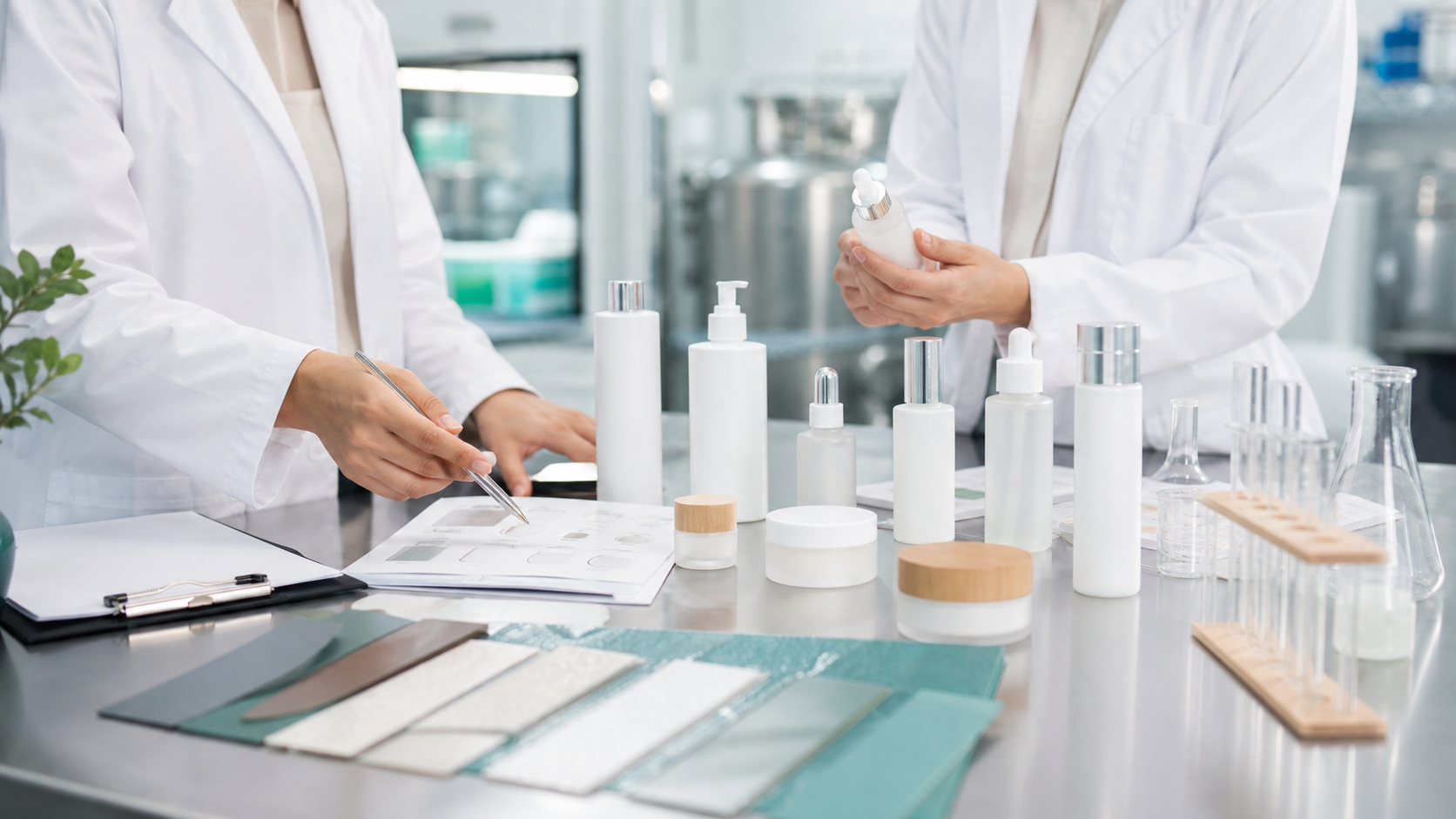
Sample development turns your brief into a physical product. During this stage, the factory may prepare formula samples, packaging mockups, texture references, fragrance options, color trials, or filling compatibility checks. Your feedback should be specific: “too sticky after two minutes,” “fragrance too strong,” “pump output too low,” or “carton finish should feel more premium” is more useful than “make it better.”
For private label skincare, many projects need two or three sample rounds. More rounds may be required when the buyer changes the brief, switches packaging, adds a new claim direction, or requests a texture that conflicts with the target cost. A first-time buyer should approve the formula, packaging component, artwork layout, fill volume, and outer carton before bulk production begins.
Step 4: Confirm Packaging, MOQ, and Quotation
Packaging is not just a design choice. It affects tooling, decoration method, label size, carton structure, minimum order quantity, transport protection, and total landed cost. Mooyam can support cosmetic packaging sourcing for bottles, jars, tubes, pumps, cartons, labels, and finished presentation sets.
A reliable quotation should show product name, formula route, packaging specification, MOQ, unit price, sample cost if any, production lead time, payment terms, packaging decoration method, and what is included or excluded. If two suppliers quote very different prices, compare formula quality, packaging thickness, decoration method, testing scope, order quantity, and export support before deciding.
| Project Stage | Factory Output | Buyer Approval Needed |
|---|---|---|
| Brief review | Development route, questions, initial feasibility | Product concept, target MOQ, market, timeline |
| Sampling | Formula sample, packaging options, revision notes | Texture, scent, color, skin feel, packaging direction |
| Quotation | Unit price, MOQ, lead time, packaging scope | Budget, quantity, payment and launch plan |
| Pre-production | Artwork check, material preparation, QC plan | Final artwork, formula sample, packaging sample |
| Bulk production | Manufacturing, filling, packing, inspection | Shipment release after agreed checks |
Step 5: Plan Quality Control Before Mass Production
Quality control should be discussed before the order is placed, not only after production is finished. Buyers should ask how raw materials are checked, how packaging is inspected, what in-process checks are used, how finished goods are reviewed, and what records are available for the order.
Mooyam Cosmetic’s quality control and compliance support can include formula checks, packaging inspection, fill weight checks, appearance review, sample retention, and export document coordination according to project requirements. Compliance requirements, ingredient restrictions, labeling rules, and claims review vary by target market, so buyers should confirm local obligations with qualified advisors when needed.
First-Time Buyer Checklist
- Prepare product type, target customer, benchmark sample, formula direction, and packaging preference.
- State your target market, sales channel, MOQ expectation, and launch date.
- Choose whether you need stock formula, adjusted formula, or full custom formulation.
- Review samples with clear comments on texture, scent, appearance, packaging, and usability.
- Confirm packaging specifications, artwork files, carton layout, and barcode needs before production.
- Ask about quality control steps, sample retention, production records, and export support.
- Keep one decision owner on your team to avoid conflicting feedback.
Common First-Project Mistakes
The most common mistakes are changing the brief after samples are approved, choosing packaging only by appearance, comparing quotes without checking specifications, underestimating artwork lead time, and delaying feedback. Another mistake is launching too many SKUs at once. A focused first line with two to four products is often easier to test, improve, and reorder than a large range with weak inventory control.
How Mooyam Cosmetic Supports First-Time OEM Buyers
Mooyam Cosmetic supports overseas brands with OEM/ODM project planning, private label skincare, custom formulation, low MOQ discussion, packaging sourcing, sample development, bulk production, quality control, and export support. Our team helps turn a product idea into a manufacturable plan with clear approvals and realistic production steps.
If you are preparing your first cosmetic OEM project, contact Mooyam Cosmetic to discuss your product idea, formula requirements, packaging options, MOQ, timeline, and production solution.
FAQ
Do I need a finished formula before contacting an OEM factory?
No. You can contact Mooyam with a product idea, benchmark sample, or formula requirement. If you already own a formula, the project can be reviewed as an OEM manufacturing request.
Can a first-time brand start with low MOQ?
Many projects can be discussed with low MOQ planning, depending on formula type, packaging availability, decoration method, and component supplier requirements.
How many samples are usually needed?
Many skincare projects need two or three sample rounds, but the number depends on how clear the brief is and how much the buyer changes the direction.
Can Mooyam help with packaging?
Yes. Mooyam can help source bottles, jars, tubes, pumps, labels, cartons, and other packaging components for OEM/ODM projects.
When should artwork be prepared?
Artwork should begin after packaging size and decoration method are confirmed. Final artwork must be approved before mass production packaging is printed.
Does Mooyam provide export support?
Yes. Mooyam can support export coordination and project documents according to the order scope, while market-specific regulatory requirements should be confirmed for the target market.
Does Mooyam accept retail orders?
No. Mooyam Cosmetic focuses on B2B OEM/ODM manufacturing, private label, and wholesale brand projects, not retail single-product orders.
Start Your OEM Project
Looking for a reliable cosmetic OEM/ODM manufacturer? Contact Mooyam Cosmetic to discuss your product idea, formula requirements, packaging options, MOQ, sample development, quality control, and bulk production plan.