Clean beauty is no longer only a consumer-facing marketing phrase. For overseas beauty brands, it has become a manufacturing brief that affects formula design, ingredient review, packaging sourcing, claim language, MOQ planning, sample development, quality control, and export communication. Buyers need a practical way to turn a clean-positioned idea into a product that can actually be produced and reordered.
This guide explains what beauty brands should know about clean beauty manufacturing when working with a cosmetic OEM manufacturer, cosmetic ODM manufacturer, or private label skincare partner. Mooyam Cosmetic supports brand and wholesale OEM/ODM projects for business clients only; we do not accept retail orders.
Quick Summary
- Clean beauty manufacturing should be treated as a clear product development brief, not a vague trend word.
- Successful projects connect ingredient selection, texture, claims, packaging, MOQ, testing direction, and bulk production controls.
- Claims such as clean, vegan, natural, fragrance-free, or sensitive-skin friendly need market-specific review and suitable documentation.
- Mooyam Cosmetic supports private label skincare, custom formulation, packaging sourcing, sample development, quality control, and export support for B2B buyers.
What Clean Beauty Manufacturing Means for B2B Buyers
Clean beauty does not have one universal legal definition across all markets. For a brand buyer, the term usually means a product concept built around ingredient transparency, modern formula preferences, responsible claim language, and packaging choices that fit the brand’s values. Because requirements vary by destination market, sales channel, and claim wording, buyers should not ask a factory to guarantee that one product is automatically accepted everywhere.
A better approach is to create a clean beauty brief. The brief should define target market, excluded ingredients, preferred ingredient story, fragrance direction, formula texture, packaging material, price target, MOQ, and claims that need review. This helps the manufacturer recommend a realistic route through OEM/ODM manufacturing, private label skincare, or deeper custom formulation.
Start With a Clear Ingredient and Claim Direction
Many clean beauty projects fail because the buyer starts with a broad request such as “make it clean and natural.” The factory needs more detail. Do you want fragrance-free, essential-oil-free, vegan-positioned, silicone-free, sulfate-free, mineral-oil-free, or a botanical ingredient story? Are there retailer restricted-substance lists, importer requirements, or regional rules to consider? Are the claims cosmetic in nature, or do they sound like medical treatment claims that should be avoided?
A good cosmetic ODM manufacturer will help translate brand language into practical formula choices. This may include choosing a preservative system, adjusting texture, controlling odor, selecting compatible actives, and checking whether the product story can be supported without exaggerated promises. The goal is to build a formula that is commercially usable, not just attractive on a concept sheet.
| Decision Area | Buyer Should Define | Factory Should Review |
|---|---|---|
| Ingredient policy | Excluded ingredients, preferred ingredients, vegan or fragrance-free direction. | Formula feasibility, raw material sourcing, preservative route, stability risk, and cost. |
| Product format | Cleanser, toner, serum, cream, mask, balm, body care, or makeup item. | Texture system, filling process, packaging compatibility, and bulk production controls. |
| Claims | Clean, gentle, natural-inspired, vegan, fragrance-free, or conscious packaging story. | Evidence support, label wording, target-market limits, and avoidance of medical claims. |
| Packaging | Glass, PCR plastic, mono-material tube, refill concept, carton, label, or minimal pack. | MOQ, lead time, decoration method, leakage, compatibility, and shipping protection. |
| Commercial plan | Launch channel, price tier, MOQ expectation, reorder schedule, and SKU count. | Private label route, custom route, sample plan, production lead time, and export support. |
Choose the Right Development Route
Private Label for Faster Clean-Positioned Launches
Private label can be practical when a brand wants to test a clean-positioned line quickly. Existing formulas may already fit certain ingredient preferences or can be matched with suitable packaging. This route is useful for startups, Amazon sellers, salon brands, and distributors that need lower development complexity and a more predictable launch timeline.
Custom Formulation for Stronger Differentiation
Custom formulation is better when the brand has a specific ingredient philosophy, sensory benchmark, claim boundary, or performance expectation. It can support a more differentiated product, but it also requires clearer decisions and more sample rounds. Buyers should prepare benchmark samples, target texture, fragrance preference, ingredient restrictions, packaging ideas, and target cost before requesting lab work.
Packaging Sourcing for Clean Beauty Products
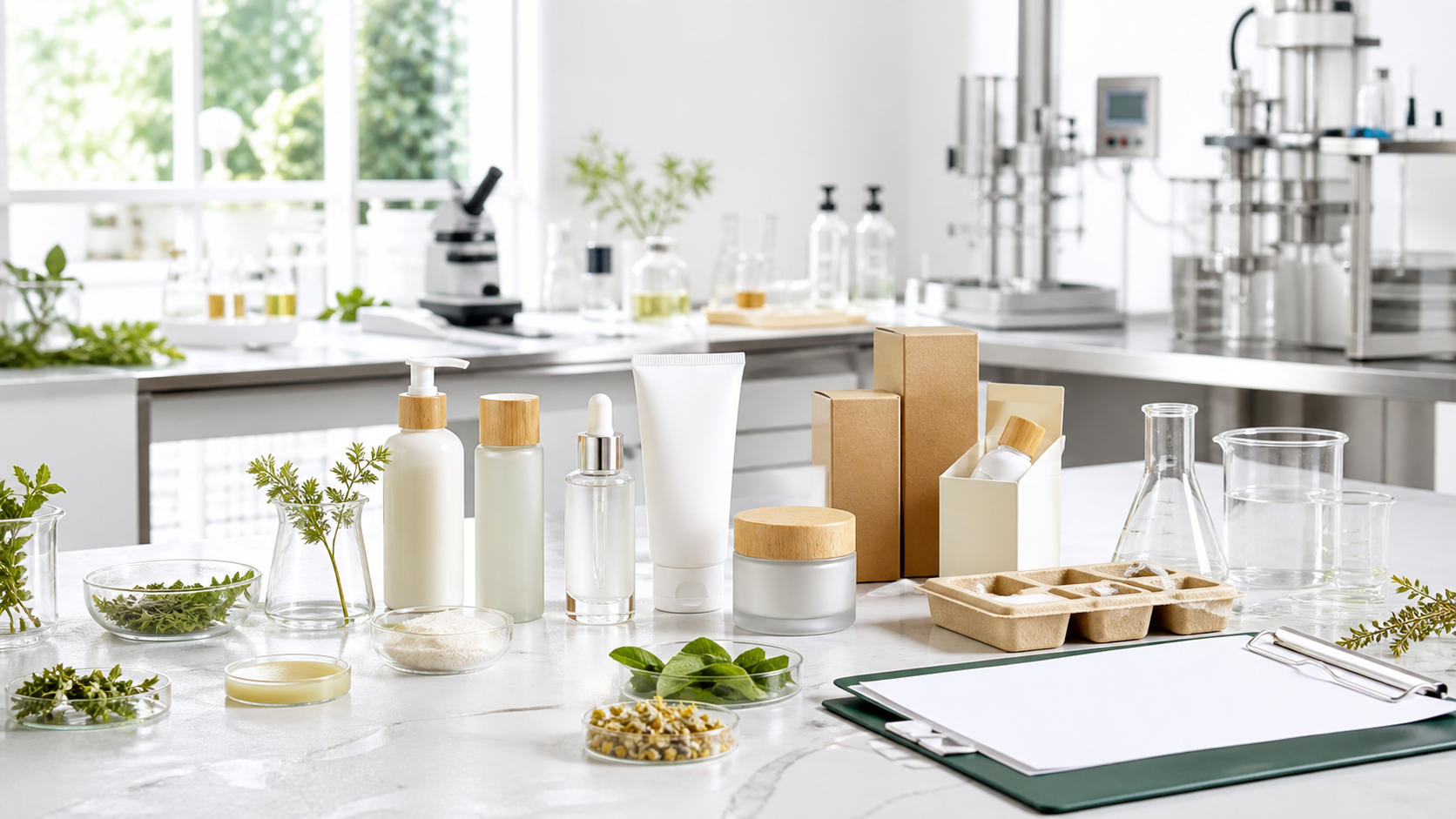
Packaging is often part of the clean beauty story, but it must still be practical for manufacturing. Glass bottles can look premium, but they may increase freight weight and breakage risk. PCR plastic may support a sustainability message, but color consistency and component availability should be reviewed. Minimal cartons can reduce material use, but they still need to protect the product during export shipping.
Mooyam Cosmetic’s packaging sourcing support helps buyers compare bottles, jars, tubes, airless pumps, cartons, labels, decoration methods, and component MOQ. Packaging should be reviewed with the formula because viscosity, oils, fragrance, pH, fill temperature, and shipping route can affect component compatibility.
Quality Control and Compliance Considerations
Clean beauty buyers should ask how the factory controls raw material quality, formula batching, appearance, odor, viscosity, pH where relevant, microbial review, filling weight, packaging inspection, carton packing, retained samples, and production records. A clean-positioned product still needs the same manufacturing discipline as any other cosmetic product.
Mooyam Cosmetic provides quality control and compliance support to help business buyers align approved samples, bulk production standards, and product information. However, exact requirements for ingredients, labels, claims, importer responsibilities, and retail-channel documentation vary by target market.
Buyer Checklist Before Requesting Samples
- Define what clean beauty means for your brand instead of using the term alone.
- List excluded ingredients, preferred ingredients, fragrance direction, and claim boundaries.
- Decide whether the project should use private label skincare, ODM adjustment, OEM production, or custom formulation.
- Share target market, channel, price tier, MOQ expectation, and launch schedule.
- Choose packaging goals early, including bottle material, decoration, carton, and export packing needs.
- Ask how sample development, stability direction, packaging compatibility, and retained samples will be handled.
- Review label and claim language for the destination market before printing.
Common Mistakes to Avoid
One common mistake is asking for every clean beauty preference at once without considering cost, texture, preservation, or stability. Another is choosing packaging for its sustainability story without checking MOQ, compatibility, and shipping protection. Buyers should also avoid copying a retail product or asking the manufacturer to promise claims that belong to local regulatory review.
The safest path is to prioritize the values that matter most to the brand and customer. A focused clean beauty brief is easier to develop, test, manufacture, and reorder than a long list of restrictions that does not match the budget or timeline.
How Mooyam Cosmetic Supports Clean Beauty Projects
Mooyam Cosmetic helps overseas beauty brands, skincare startups, Amazon and DTC sellers, distributors, and private label buyers develop clean-positioned cosmetic projects. Our support can include formula route selection, private label options, custom formulation, low MOQ planning, packaging sourcing, sample development, bulk production, quality control, and export support.
Develop Clean-Positioned Products With Mooyam
Looking for a reliable cosmetic OEM/ODM manufacturer for a clean beauty project? Send your product idea, target market, formula preferences, packaging direction, MOQ expectation, and launch schedule. Contact us to discuss a practical OEM/ODM solution for your brand or wholesale project.
FAQ
Is clean beauty legally defined everywhere?
No. Clean beauty definitions vary by brand, retailer, and market. Buyers should define their own ingredient and claim requirements, then review local market rules before selling.
Can clean beauty products be private label?
Yes. Private label skincare can be suitable when existing formulas and packaging fit the brand’s clean-positioned brief, MOQ, and launch timeline.
When should a brand choose custom formulation?
Choose custom formulation when you need a specific ingredient policy, texture, claim direction, packaging compatibility, or stronger differentiation than a stock formula can provide.
Does clean packaging always mean lower cost?
No. Glass, PCR materials, special cartons, refill packs, and custom decoration can increase MOQ, lead time, or shipping cost. Review commercial impact early.
Can a manufacturer guarantee clean beauty approval?
No responsible manufacturer should guarantee universal approval. Requirements depend on target market, claims, retailer standards, ingredient list, and importer responsibility.
What should I prepare before contacting Mooyam Cosmetic?
Prepare your product category, target market, ingredient preferences, packaging direction, MOQ expectation, benchmark texture, price tier, and launch timeline.
Does Mooyam Cosmetic accept retail orders?
No. Mooyam Cosmetic supports B2B brand, distributor, private label, and wholesale OEM/ODM manufacturing projects only.
Related manufacturing guides: Sustainable launch planning also benefits from small-batch cosmetic manufacturing and solid skincare private-label options.