Small batch cosmetic manufacturing is often the bridge between a product idea and a confident market launch. For beauty startups, Amazon sellers, DTC brands, distributors, and private label buyers, it can reduce inventory risk while still giving the team a real commercial product to test with customers.
But small batch does not mean casual production. A serious cosmetic OEM manufacturer still needs a clear formula brief, approved packaging, quality control standards, and a plan for future bulk production. This guide explains how overseas buyers can use small batch programs wisely and how Mooyam Cosmetic supports B2B OEM/ODM projects without accepting retail orders.
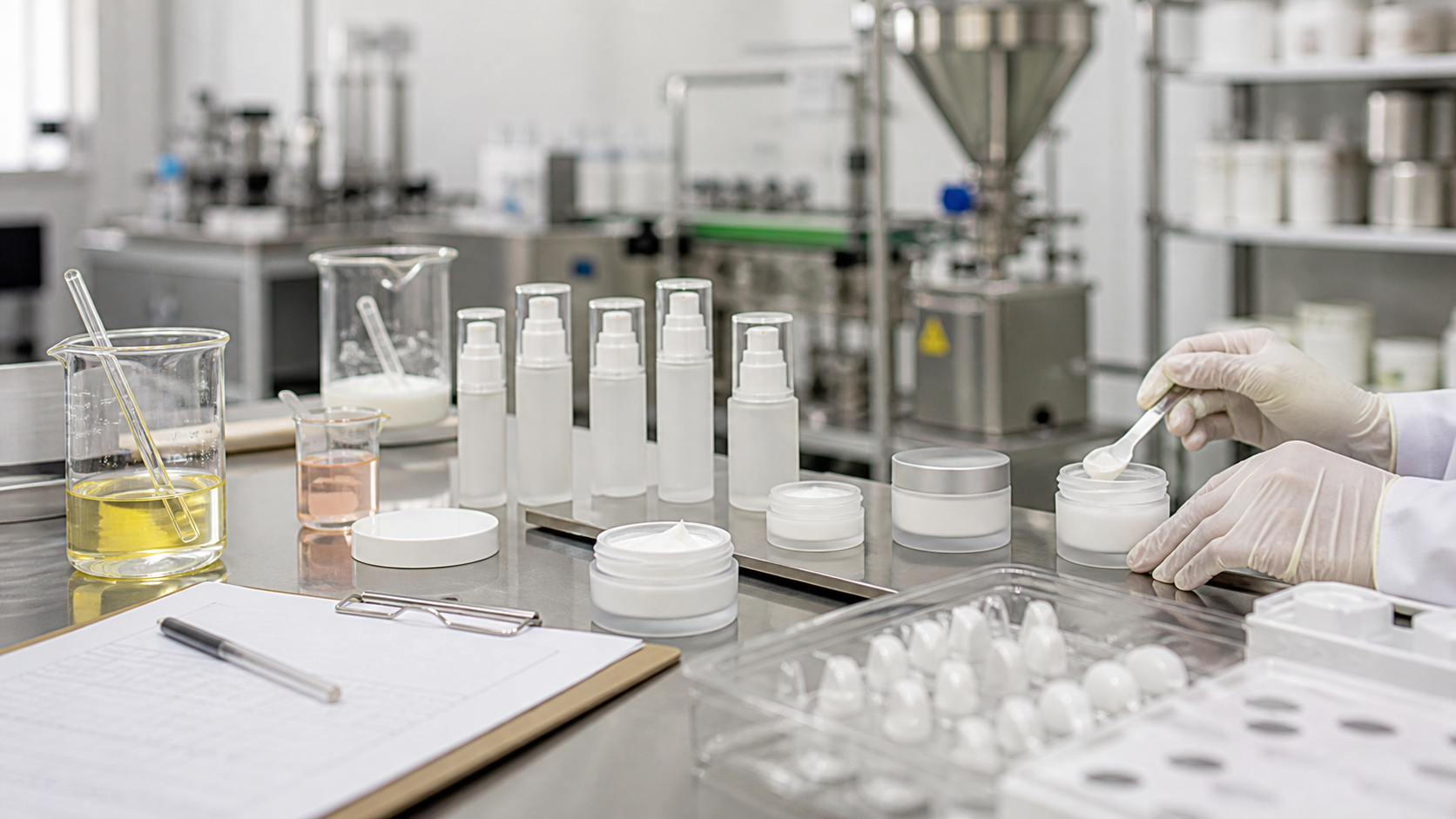
- Small batch manufacturing helps brands test demand, refine positioning, and manage cash flow before scaling.
- Low MOQ is useful only when formula, packaging, unit cost, and quality expectations are realistic.
- Buyers should confirm sample approval, packaging sourcing, stability checks, filling standards, and reorder timing.
- Mooyam Cosmetic supports brand owners with OEM/ODM development, private label skincare, custom formulation, packaging, quality control, and export support.
What Small Batch Cosmetic Manufacturing Means
Small batch cosmetic manufacturing usually refers to producing a lower commercial quantity than a full-scale mass production order. The exact MOQ depends on the formula type, packaging components, raw material availability, filling process, decoration method, and supplier workflow. A stock private label product may support a lower starting quantity, while a fully custom formulation with special packaging may need a higher MOQ to remain stable and cost-effective.
For B2B buyers, the goal is not simply to buy the smallest possible quantity. The goal is to build a launch batch that is large enough for sales testing, photography, influencer seeding, distributor samples, marketplace setup, and early customer feedback while keeping inventory exposure under control.
When Small Batch Production Makes Sense
Small batch production is useful when a brand is validating a new category, entering a new market, preparing a seasonal collection, or testing a different packaging format. It can also help distributors introduce a new private label skincare line before committing to a larger annual forecast.
The approach works best when the buyer understands that low MOQ can increase unit cost. Smaller orders spread setup, material handling, quality checks, packaging decoration, and production scheduling across fewer units. A professional private label skincare supplier should explain these trade-offs clearly rather than promising unrealistic low prices.
| Small Batch Situation | Business Advantage | Risk to Control |
|---|---|---|
| First product launch | Limits inventory exposure while the brand tests demand and reviews customer feedback. | Unit cost may be higher, so retail pricing and margin must be checked early. |
| New formula concept | Allows the team to validate texture, scent, claims direction, and market fit. | Formula changes after production can create waste and delay the launch. |
| New packaging format | Helps confirm pump, jar, tube, dropper, label, and carton performance before scaling. | Packaging MOQ may be higher than formula MOQ, especially for custom colors or molds. |
| Distributor market test | Provides real products for sales meetings, B2B samples, and channel feedback. | Reorder timing must be planned so the brand does not sell out too early. |
Key Decisions Before Requesting a Quote
Formula Route
Buyers can choose stock formulas, adjusted base formulas, or full custom development. Stock formulas are usually faster and more suitable for low MOQ. Adjusted formulas may allow fragrance, texture, color, or hero ingredient changes. A full custom formulation gives more differentiation, but it needs more development time, testing, and purchasing coordination.
Packaging Route
Packaging can determine whether a small batch is feasible. Standard bottles, jars, tubes, and cartons usually support faster launches, while custom molds, special caps, metallic finishes, and printed components may require higher order quantities. Mooyam Cosmetic can help buyers review packaging sourcing and customization options that match the product concept and budget.
Quality and Testing Scope
Even a small batch should follow documented quality control. Buyers should discuss appearance standards, odor, color, viscosity, pH where relevant, filling weight, packaging compatibility, microbial checks, retained samples, and finished goods inspection. Target market requirements vary, so compliance review should be handled before final artwork and claims are printed. Mooyam’s quality control and compliance support helps buyers define practical checks for B2B projects.
How a Small Batch OEM/ODM Project Usually Works
The process starts with a buyer brief. A useful brief includes product category, target market, benchmark texture, claim direction, ingredient preferences, restricted ingredients, packaging preference, desired MOQ, price target, and launch schedule. The factory then reviews feasibility and proposes a route: private label, formula adjustment, or custom development.
After sample development, the buyer should test samples in realistic use conditions and provide specific feedback. Comments such as “more slip,” “less tack,” “lighter fragrance,” or “faster absorption” are more useful than general comments like “make it premium.” Once the final sample is approved, packaging and artwork should be locked. The factory can then prepare materials, production scheduling, filling, inspection, packing, and export support.
| Stage | Factory Output | Buyer Responsibility |
|---|---|---|
| 1. Project brief | Feasibility review, MOQ direction, formula route, estimated timeline. | Share target market, product idea, benchmarks, packaging preference, and forecast. |
| 2. Sample development | Lab samples, texture options, fragrance or active direction if needed. | Test samples and approve clear changes before moving forward. |
| 3. Packaging confirmation | Component options, decoration plan, carton structure, filling compatibility review. | Approve bottle, cap, label, box, barcode, language, and artwork files. |
| 4. Production and QC | Batch manufacturing, filling, coding, inspection, retained samples, packing. | Approve final pre-production details and plan payment, shipment, and reorder timing. |
Buyer Checklist for Small Batch Projects
- Confirm whether the product should use stock formula, adjusted formula, or full custom formulation.
- Ask for MOQ by formula, packaging component, label, carton, and decoration method.
- Check unit cost at the launch quantity and at the expected reorder quantity.
- Approve samples in the final or near-final packaging whenever possible.
- Review label claims, ingredient list format, warnings, and language requirements for the target market.
- Ask how the factory controls raw materials, filling weight, packaging inspection, batch records, and retained samples.
- Plan reorder timing before launch so marketing success does not create a stock gap.
Common Mistakes to Avoid
The first mistake is chasing the lowest MOQ without checking whether the product can still meet the brand’s margin and quality expectations. The second is choosing custom packaging too early, before validating demand. The third is changing the formula after artwork, packaging, or production materials are already prepared. The fourth is treating small batch production as a shortcut around testing or documentation.
A reliable cosmetic ODM manufacturer should help buyers understand what can be flexible and what should be locked before production. This reduces delays, hidden costs, and inconsistent product quality.
Develop a Small Batch Skincare Project With Mooyam Cosmetic
Mooyam Cosmetic supports international brands, startups, Amazon and DTC sellers, distributors, and wholesale buyers with private label skincare, OEM/ODM development, sample development, packaging sourcing, low MOQ planning, bulk production, quality control, and export support. If you are preparing a small batch launch, contact us with your product idea, target market, packaging preference, MOQ expectations, and launch timeline. We work with business clients and brand projects only; we do not accept retail orders.
FAQ
Is small batch cosmetic manufacturing the same as low MOQ?
They are closely related, but not always the same. Low MOQ describes the minimum order quantity, while small batch describes a practical production approach for limited launch quantities. The actual MOQ depends on formula, packaging, and production requirements.
Can I use custom packaging for a small batch order?
Sometimes, but standard packaging is usually easier for low MOQ. Custom colors, molds, caps, printing, and special cartons may require higher quantities or longer lead times.
Is private label better than custom formulation for small batches?
Private label is often faster and more cost-effective for first launches. Custom formulation is better when the brand needs a unique texture, ingredient story, or performance positioning, but it requires more development and testing time.
How long does a small batch skincare project take?
Timelines vary by formula complexity, sample revisions, packaging availability, artwork approval, testing, and production schedule. Buyers should discuss sample lead time, packaging lead time, production lead time, and shipping plan before confirming launch dates.
What quality checks are needed for small batch production?
Typical checks may include raw material review, appearance, odor, color, viscosity, pH where relevant, microbial checks, filling weight, packaging compatibility, coding, carton packing, and retained samples. Requirements vary by product and target market.
Does Mooyam Cosmetic sell ready-made products to consumers?
No. Mooyam Cosmetic is a B2B cosmetics and makeup OEM/ODM factory. We support brand owners, distributors, and wholesale projects, not retail orders.
Related manufacturing guides: For scalable launch planning, consider clean beauty manufacturing requirements and solid skincare private-label options.